
Educational quiz app · Ages 5-10
This is what learning looks like


Educational quiz app · Ages 5-10
This is what learning looks like
No nagging required. Keep the learning going after the worksheet, with every question read aloud and Owee guiding each step.
Scan with your phone camera
- Family-friendly
- No ads
- Private
Free Year 4 maths worksheets (age 8-9)
Year 4 maths, for ages 8 to 9, asks children to recall all their times tables up to 12 × 12. They work with four-digit numbers and place value, round to the nearest 10, 100 or 1,000, and read Roman numerals to 100. Decimals arrive, with tenths and hundredths, and children learn that a quarter is 0.25 and a half is 0.5.
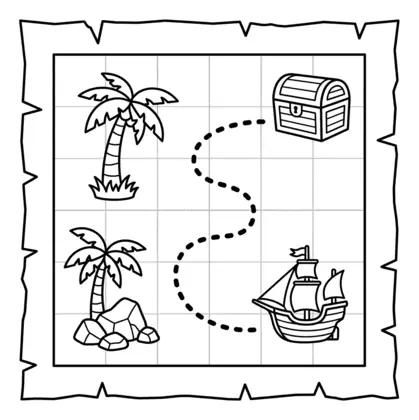
In geometry, children identify acute and obtuse angles, find lines of symmetry and describe positions on a grid as coordinates. They also find area by counting squares and work out perimeter. These sheets cover each of those, from treasure map coordinates to a garden area puzzle, plus Year 3 sheets on the 8 times table and fractions.
In Northern Ireland, Year 4 maths is Primary 5, and in Scotland roughly Primary 5. Wales uses Year 4.
Also known as: Scotland P5 · Northern Ireland P5 · Wales Year 4
Place value
All place value worksheets →Children learn what each digit in a number is worth, from tens and ones in Year 2 to thousands in Year 4 and millions by Year 6. It helps them compare, order and calculate with numbers.
Addition and subtraction
All addition and subtraction worksheets →Children start by combining and taking away small groups, learn number bonds to 10 and 20, then move on to mental methods and written column methods with bigger numbers.
Multiplication and division
Children see multiplication as equal groups and arrays, then learn to write and solve multiplication and division facts and use written methods for larger numbers.
Times tables
All times tables worksheets →Children learn the 2, 5 and 10 times tables in Year 2, the 3, 4 and 8 in Year 3, and all tables up to 12 × 12 by the end of Year 4, when there is a short online check.
Years 3–4Sheet 105
The 3 Times Table
Print free →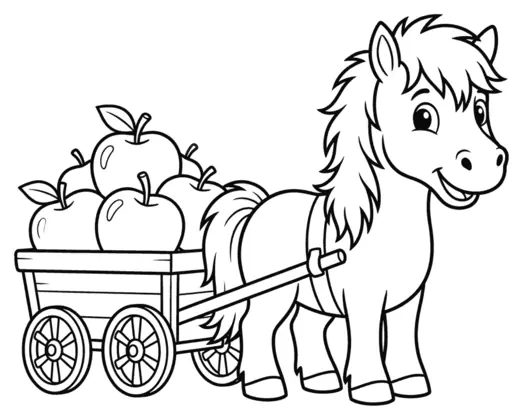
Years 3–4Sheet 106
The 4 Times Table
Print free →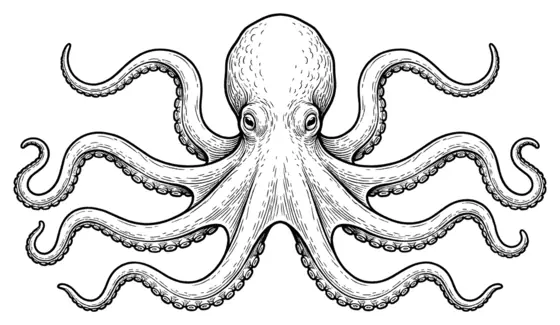
Years 3–4Sheet 107
The 8 Times Table
Print free →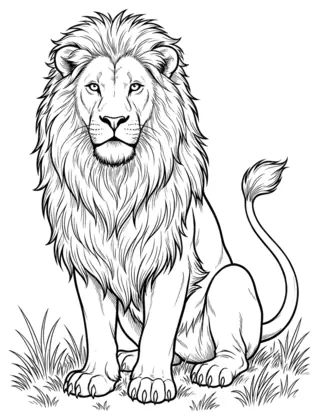
Years 3–4Sheet 141
Lion Times Tables Colour-by-Number
Print free →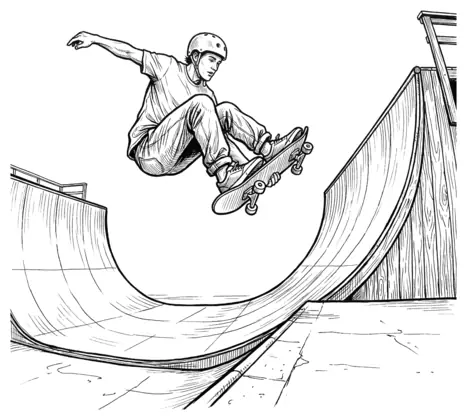
Years 4–5Sheet 142
Mixed Times Tables to 12
Print free →
Year 4Sheet 143
Multiplication Tables Check Practice
Print free →
Years 4–5Sheet 144
The 11 Times Table
Print free →
Years 4–5Sheet 145
The 12 Times Table
Print free →
Years 4–5Sheet 146
The 6 Times Table
Print free →
Years 4–5Sheet 147
The 7 Times Table
Print free →
Years 4–5Sheet 148
The 9 Times Table
Print free →Fractions
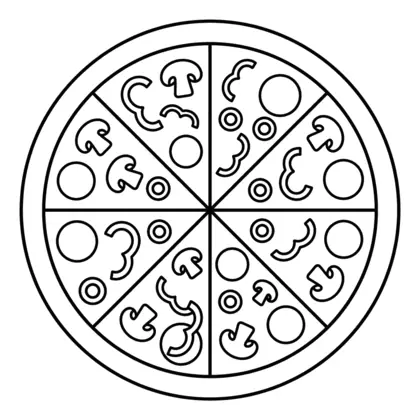
All fractions worksheets →Children begin with halves and quarters of shapes and amounts, then learn thirds, eighths and equivalent fractions, and later add, subtract and multiply fractions.
Decimals
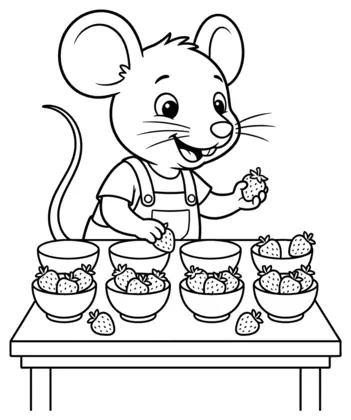
Children learn that tenths and hundredths can be written as decimals, match decimals to fractions such as a half and a quarter, and later round and calculate with them.
Telling the time
All telling the time worksheets →Children learn to read o'clock and half past in Year 1, then quarter past, quarter to and five-minute times, and later the 12-hour and 24-hour clock.
Roman numerals
Children read Roman numerals from I to XII on a clock face in Year 3, then to 100 in Year 4 and to 1,000 in Year 5, where they also read years written in Roman numerals.
Symmetry
Children learn that a symmetrical shape has two matching halves, find a line of symmetry, and complete a picture so that both sides match.

Angles
Children learn that an angle is an amount of turn, spot right angles, and sort angles into acute and obtuse. Later they measure angles in degrees.
Coordinates
Children read and plot points on a grid, going across first and then up, and use coordinates to describe positions and draw shapes.
Perimeter and area
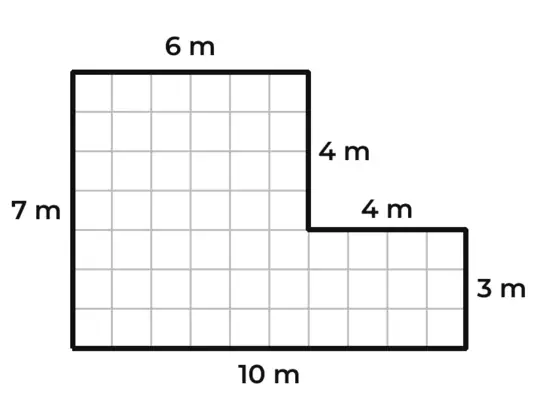
Children learn that perimeter is the distance around a shape and area is the space inside it, first by counting squares and later by calculating.
The multiplication tables check
Year 4 children in England take a short online times tables check in June. It has 25 questions covering tables up to 12 × 12, and children have 6 seconds to answer each one. There is no pass mark. Quick recall is the aim, so a few minutes of practice most days, using the times table sheets here, works better than cramming.
Making decimals click
Money is the easiest way into decimals. £1.25 is one pound and 25 pence, just as 1.25 is one whole and 25 hundredths. A metre stick shows hundredths too, because each centimetre is 0.01 of a metre. Then link back to fractions: 0.5 is a half, 0.25 is a quarter and 0.75 is three quarters.
Questions parents ask
What are coordinates?
Coordinates are a pair of numbers that give a position on a grid, such as (3, 5). Year 4 children read across first, then up, in the first quadrant, where both numbers are positive. 'Along the corridor, then up the stairs' is a handy reminder.
How can I help with times tables?
Focus on one table at a time, starting with one your child half knows. Look for patterns, such as the digits of the 9 times table adding up to 9 as far as 9 × 10. Practise for a few minutes a day, out loud as well as on paper.
Can tutors and schools print these?
Yes. Tutors, teachers and parents can print as many copies as they need, free of charge. You will not be asked to sign up or share an email address.
Educational quiz app · Ages 5-10
More learning in the Owee app
Owee turns topics like this into quizzes for children aged 5 to 10, and a treehouse grows as they learn. No ads, no chat, no strangers.
- Family-friendly
- No ads
- Private
Educational quiz app · Ages 5-10
More learning in the Owee app
Owee turns topics like this into quizzes for children aged 5 to 10, and a treehouse grows as they learn. No ads, no chat, no strangers.
Scan with your phone camera
- Family-friendly
- No ads
- Private