Educational quiz app · Ages 5-10
This is what learning looks like


Educational quiz app · Ages 5-10
This is what learning looks like
No nagging required. Keep the learning going after the worksheet, with every question read aloud and Owee guiding each step.
Scan with your phone camera
- Family-friendly
- No ads
- Private
Maths · Decimals and fractions matching worksheet
Decimals and Fractions Worksheet (Free KS2 Maths)
This free printable worksheet helps children in Year 4 connect the fractions they already know to their decimal equivalents. It focuses on tenths and on the everyday fractions one half, one quarter and three quarters, which are exactly the equivalents named in the Year 4 maths curriculum.
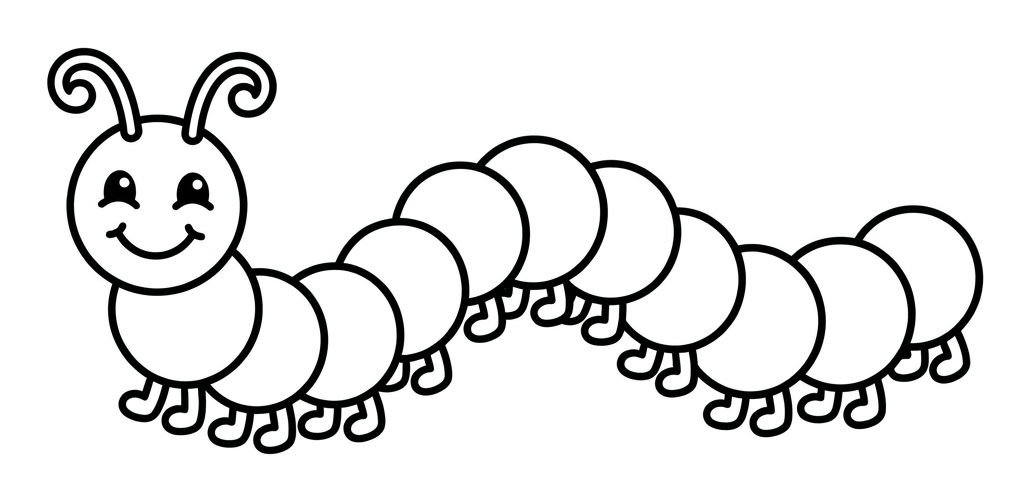
Children write tenths, halves and quarters as decimals, then decide whether five statements about decimals are true or false, including one about where 0.5 sits on a number line. A long, friendly caterpillar gives them something cheerful to colour once the maths is done. It prints neatly on a single A4 page for use at home or in the classroom.
What your child is learning
‘recognise and write decimal equivalents of any number of tenths or hundredths’
Year 4 Maths: Number – fractions (including decimals), National Curriculum in England. Source and licence

Decimals and Fractions Caterpillar
Free Maths worksheet · Ages 8 to 10
Write the decimal
Write each fraction as a decimal in the box.
- 1/10
- 3/10
- 7/10
- one half (1/2)
- one quarter (1/4)
- three quarters (3/4)
True or false?
Tick each statement that is true. Cross out each one that is false. Then colour the caterpillar.
- On a number line, 0.5 sits exactly halfway between 0 and 1.
- One quarter is the same as 0.25.
- 5/10 and 0.5 are the same amount.
- One quarter is the same as 0.4.
- Three quarters is smaller than one half.
 Decimals and Fractions CaterpillarSheet 137
Answers: Decimals and Fractions Caterpillar
Sheet 137
- 1/10 — 0.1
- 3/10 — 0.3
- 7/10 — 0.7
- one half (1/2) — 0.5
- one quarter (1/4) — 0.25
- three quarters (3/4) — 0.75
- On a number line, 0.5 sits exactly halfway between 0 and 1. — True
- One quarter is the same as 0.25. — True
- 5/10 and 0.5 are the same amount. — True
- One quarter is the same as 0.4. — False: one quarter is 0.25
- Three quarters is smaller than one half. — False: three quarters (0.75) is bigger than one half (0.5)
For grown-ups. Free worksheets and the Owee quiz app at owee.world
Answer key
- 1/10 — 0.1
- 3/10 — 0.3
- 7/10 — 0.7
- one half (1/2) — 0.5
- one quarter (1/4) — 0.25
- three quarters (3/4) — 0.75
- On a number line, 0.5 sits exactly halfway between 0 and 1. — True
- One quarter is the same as 0.25. — True
- 5/10 and 0.5 are the same amount. — True
- One quarter is the same as 0.4. — False: one quarter is 0.25
- Three quarters is smaller than one half. — False: three quarters (0.75) is bigger than one half (0.5)
What this worksheet covers
The first task asks children to write decimal equivalents of tenths (such as 3/10 = 0.3) and of the common fractions one half, one quarter and three quarters (0.5, 0.25 and 0.75). The second is a true-or-false check with two deliberate traps: that one quarter is 0.4, and that three quarters is smaller than one half. Together the tasks rehearse the idea that a fraction and a decimal can describe exactly the same amount, written in different ways, and that decimals can be compared by size just like whole numbers.
Why decimal equivalents matter in Year 4
Decimal notation is introduced in Year 4 and becomes central to money, measurement and later work on percentages and place value. Children who can move fluently between 1/2 and 0.5, or 1/4 and 0.25, find it far easier to read prices, measure in centimetres and metres, and reason about quantities. Practising a small, well-chosen set of equivalents first builds the confidence needed for hundredths and more complex conversions in Years 5 and 6.
How to use it at home or in class
Begin by reminding your child that ‘tenths’ means a whole split into ten equal parts. A strip of paper folded and marked into ten equal sections, or a metre stick marked every 10 centimetres, shows this well. Encourage them to say each value aloud, for example ‘three tenths is the same as zero point three’. For the half, quarter and three-quarter equivalents, a clock face can help: half past is 0.5 of the way round and quarter past is 0.25. Keep sessions short and let colouring the caterpillar be a relaxed reward once the maths is done.
Common mix-ups to watch for
A frequent error is writing 1/4 as 0.4 instead of 0.25, because children read the '4' as the digit after the point. Gently model that a quarter is half of a half, so it must be less than 0.5. Another mix-up is treating 0.5 and 0.05 as the same; placing values on a number line helps show that 0.5 sits halfway between 0 and 1. Saying values precisely as 'five tenths' rather than 'point five' often clears up the confusion.
Frequently asked questions
What age is this decimals and fractions worksheet for?
It is aimed at children aged 8 to 10, covering Year 4 (KS2) objectives on decimal equivalents of tenths and of one half, one quarter and three quarters. Confident Year 3 children and Year 5 children needing revision can use it too.
Is the worksheet free to print?
Yes. The worksheet is completely free to download and print. It is laid out to fit on a single A4 page so it is easy to use at home or in the classroom.
What is the decimal equivalent of one half, one quarter and three quarters?
One half is 0.5, one quarter is 0.25 and three quarters is 0.75. These are the exact equivalents children are expected to recognise and write in Year 4 maths.
How do you write tenths as decimals?
Tenths are written with one digit after the decimal point, in the tenths column, so 1/10 is 0.1, 3/10 is 0.3 and 7/10 is 0.7. The worksheet gives children practice writing several tenths in this form.
Which curriculum does this worksheet follow?
It follows the England National Curriculum for mathematics, specifically the Year 4 fractions (including decimals) objectives on writing decimal equivalents of tenths and of 1/4, 1/2 and 3/4.
Curriculum links
- Year 4 Maths: Number – fractions (including decimals) (statutory): 'recognise and write decimal equivalents of any number of tenths or hundredths'
Quoted word for word from Department for Education documents: the National Curriculum in England, the EYFS framework or the RSHE guidance. Contains public sector information licensed under the Open Government Licence v3.0.
Made by The Owee education team. Updated 13/10/2026. Free to print and share.
More maths worksheets
All Year 4 Maths worksheets →
Year 4 · Addition and subtractionSheet 134
4-Digit Column Addition
Years 3–4 · AnglesSheet 135
Acute, Right and Obtuse Angles Castle

Years 2–4 · SymmetrySheet 63
Butterfly Lines of Symmetry
Years 3–4 · Addition and subtractionSheet 96
Column Addition
Years 3–4 · Addition and subtractionSheet 97
Column Subtraction
Years 4–5 · Multiplication and divisionSheet 168
Division with Remainders
Educational quiz app · Ages 5-10
More learning in the Owee app
Owee turns topics like this into quizzes for children aged 5 to 10, and a treehouse grows as they learn. No ads, no chat, no strangers.
- Family-friendly
- No ads
- Private
Educational quiz app · Ages 5-10
More learning in the Owee app
Owee turns topics like this into quizzes for children aged 5 to 10, and a treehouse grows as they learn. No ads, no chat, no strangers.
Scan with your phone camera
- Family-friendly
- No ads
- Private