Educational quiz app · Ages 5-10
This is what learning looks like


Educational quiz app · Ages 5-10
This is what learning looks like
No nagging required. Keep the learning going after the worksheet, with every question read aloud and Owee guiding each step.
Scan with your phone camera
- Family-friendly
- No ads
- Private
Maths · Counting and short-answer worksheet
Perimeter and Area Worksheet (Free KS2 Maths Printable)
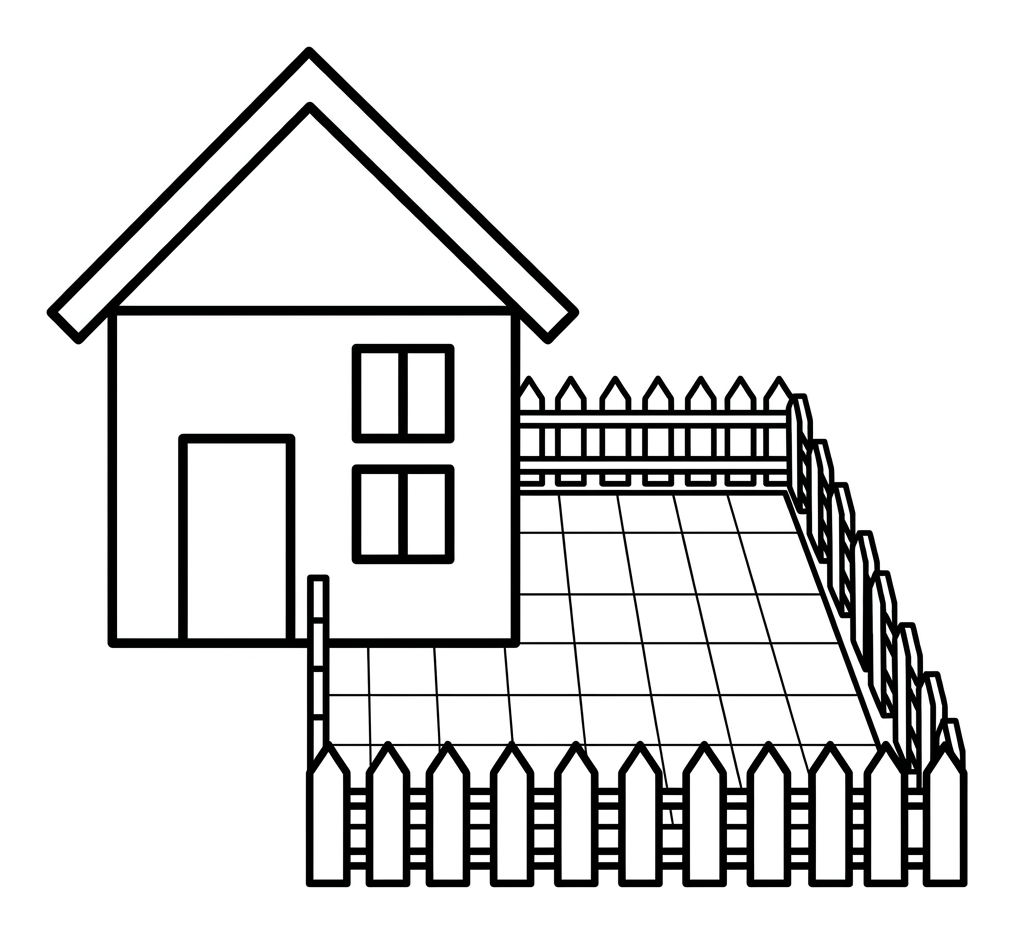
This free printable practises perimeter and area with an L-shaped garden drawn on a squared grid, where each square is one metre. Built for the Year 5 measurement curriculum, it labels the six side lengths, asks children to add them for the perimeter, then split the L into two rectangles and multiply to find the area, counting the squares to check.\n\nThe L-shaped plot is a composite rectilinear shape, one of the shapes the Year 5 curriculum names. It is free to print and share, with the answers on a separate page.
What your child is learning
‘calculate and compare the area of rectangles (including squares), including using standard units, square centimetres (cm²) and square metres (m²), and estimate the area of irregular shapes’
Year 5 Maths: Measurement, National Curriculum in England. Source and licence

Perimeter and Area of the Garden
Free Maths worksheet · Ages 9 to 11
Perimeter of the garden
Each square on the grid is 1 metre. Go round the edge of the garden and add up the six sides.
What is the perimeter of the garden?
Fencing costs £5 a metre. How much does it cost to fence all the way round?
Area of the garden
Draw a line to split the L-shape into two rectangles: one 10 m by 3 m, the other 6 m by 4 m. Count the squares to check your answers.
What is the area of each rectangle?
What is the total area of the garden?
A rectangular garden 9 m by 6 m has the same area. What is its perimeter?
Why is area measured in m² but perimeter in m?
 Perimeter and Area of the GardenSheet 169
Answers: Perimeter and Area of the Garden
Sheet 169
- What is the perimeter of the garden? — 34 m (10 + 7 + 6 + 4 + 4 + 3)
- Fencing costs £5 a metre. How much does it cost to fence all the way round? — £170 (34 × £5)
- What is the area of each rectangle? — 30 m² (10 × 3) and 24 m² (6 × 4)
- What is the total area of the garden? — 54 m²
- A rectangular garden 9 m by 6 m has the same area. What is its perimeter? — 30 m, so the same area can have a different perimeter
- Why is area measured in m² but perimeter in m? — Area counts the squares that cover a surface; perimeter is a length, the distance around the edge.
For grown-ups. Free worksheets and the Owee quiz app at owee.world
Answer key
- What is the perimeter of the garden? — 34 m (10 + 7 + 6 + 4 + 4 + 3)
- Fencing costs £5 a metre. How much does it cost to fence all the way round? — £170 (34 × £5)
- What is the area of each rectangle? — 30 m² (10 × 3) and 24 m² (6 × 4)
- What is the total area of the garden? — 54 m²
- A rectangular garden 9 m by 6 m has the same area. What is its perimeter? — 30 m, so the same area can have a different perimeter
- Why is area measured in m² but perimeter in m? — Area counts the squares that cover a surface; perimeter is a length, the distance around the edge.
What this worksheet teaches
Children measure and calculate the perimeter (the total distance all the way around the edge) and the area (the amount of surface a shape covers) of an L-shaped garden. The garden measures 10 m by 7 m overall, with a 4 m by 4 m corner cut out, so its perimeter is 34 m and its area is 54 m². Children find the area by splitting it into a 10 m by 3 m rectangle and a 6 m by 4 m rectangle and adding the two areas. Because the garden is L-shaped, it is a composite rectilinear shape made from two rectangles joined together. This nudges children away from simply learning 'length times width' as a rule and towards thinking carefully about a real outline, exactly the kind of problem-solving the upper-key-stage-2 curriculum expects.
Perimeter and area explained simply
It helps to keep the two ideas firmly separate, because children often muddle them. Perimeter is a length, measured in units such as centimetres or metres, and is found by adding together the lengths of every side. Area is a measure of surface, recorded in square units such as square centimetres (cm²) or square metres (m²), and is found by counting unit squares or by multiplying side lengths. A useful image is fencing versus turf: the fence runs around the perimeter, while the turf covers the area. Encourage your child to say which unit they are using and why, as confident use of square units is an explicit Year 5 expectation.
How to use it at home or in class
Start by asking your child to sketch the L-shape and label its six sides; squared paper with one square for each metre works well. Tracing a finger right around the outside shows what perimeter means. For area, they draw a line to split the L into the two rectangles given, multiply to find each area, then add. On squared paper they can count the squares as a check: there should be 54. A common mistake is to multiply the two longest sides (10 × 7 = 70) and forget the corner where the house stands. The picture can be coloured in once the calculations are finished.
Moving towards Year 6 reasoning
Once children are secure with this sheet, stretch them with reasoning questions: ‘If every side of the garden were twice as long, what would happen to the perimeter? And to the area?’ (the perimeter doubles, but the area becomes four times as big) or ‘Can you find a garden with the same perimeter as this one but a bigger area?’ These questions prepare children for Year 6, where they estimate the area of irregular shapes and recognise that shapes with the same area can have different perimeters. Linking the maths to a real garden, fence and lawn keeps the learning concrete and shows children why these measures matter beyond the classroom.
Frequently asked questions
What is the difference between perimeter and area?
Perimeter is the total distance all the way around the outside edge of a shape, measured in units of length such as centimetres or metres. Area is the amount of surface a shape covers, measured in square units such as cm² or m². On this worksheet children find the perimeter by adding the side lengths and the area by multiplying the sides of two rectangles.
Is this perimeter and area worksheet free to print?
Yes. The worksheet is free to print and share, with no sign-up. It fits on one A4 page, with the garden drawn on a squared grid so children can count squares to check their area, and the answers print on a separate page.
What age and year group is this worksheet for?
It is aimed at children aged 9 to 11, which is Years 5 and 6 in Key Stage 2. The composite L-shaped plot matches the Year 5 objective on the perimeter of composite rectilinear shapes, and the reasoning extensions reach into Year 6.
How do you find the area of an L-shaped garden?
Split the L-shape into two rectangles by drawing a straight line across it. Find the area of each rectangle by multiplying its length by its width, then add the two areas together. As a check, children can draw the shape on squared paper and count the unit squares inside it, which should give the same answer.
What units should children use for area?
Area is always recorded in square units. On squared paper each square is one square unit; in real measurements children should write square centimetres (cm²) or square metres (m²). Using and explaining square units correctly is an explicit Year 5 expectation in the National Curriculum.
Curriculum links
- Year 5 Maths: Measurement (statutory): 'calculate and compare the area of rectangles (including squares), including using standard units, square centimetres (cm²) and square metres (m²), and estimate the area of irregular shapes'
- Year 5 Measurement: 'measure and calculate the perimeter of composite rectilinear shapes in centimetres and metres'
- Year 6 Measurement: 'recognise that shapes with the same areas can have different perimeters and vice versa'
Quoted word for word from Department for Education documents: the National Curriculum in England, the EYFS framework or the RSHE guidance. Contains public sector information licensed under the Open Government Licence v3.0.
Made by The Owee education team. Updated 13/10/2026. Free to print and share.
More maths worksheets
All Year 5 Maths worksheets →
Year 4 · Addition and subtractionSheet 134
4-Digit Column Addition
Years 3–4 · AnglesSheet 135
Acute, Right and Obtuse Angles Castle

Years 2–4 · SymmetrySheet 63
Butterfly Lines of Symmetry
Years 3–4 · Addition and subtractionSheet 96
Column Addition
Years 3–4 · Addition and subtractionSheet 97
Column Subtraction
Years 4–5 · DecimalsSheet 137
Decimals and Fractions Caterpillar
Educational quiz app · Ages 5-10
More learning in the Owee app
Owee turns topics like this into quizzes for children aged 5 to 10, and a treehouse grows as they learn. No ads, no chat, no strangers.
- Family-friendly
- No ads
- Private
Educational quiz app · Ages 5-10
More learning in the Owee app
Owee turns topics like this into quizzes for children aged 5 to 10, and a treehouse grows as they learn. No ads, no chat, no strangers.
Scan with your phone camera
- Family-friendly
- No ads
- Private