Educational quiz app · Ages 5-10
This is what learning looks like


Educational quiz app · Ages 5-10
This is what learning looks like
No nagging required. Keep the learning going after the worksheet, with every question read aloud and Owee guiding each step.
Scan with your phone camera
- Family-friendly
- No ads
- Private
Maths · Labelling and tracing worksheet
Roman Numerals Clock Worksheet (I to XII) - Free KS2 Printable
This free printable worksheet introduces Roman numerals from I to XII and links them directly to the numbers 1 to 12 that children already know from an analogue clock. It supports the Year 3 maths objective of telling and writing the time using Roman numerals, and it prints neatly onto a single A4 page.
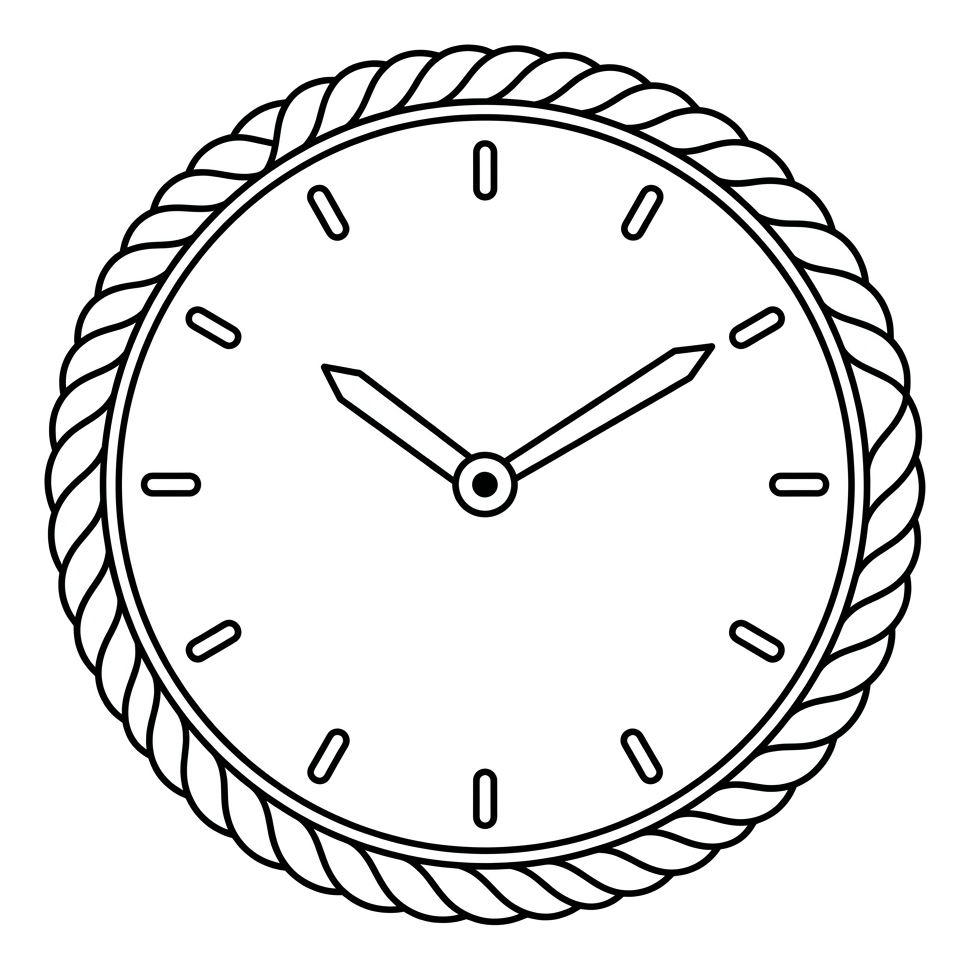
Children write the ordinary number for nine Roman numerals, number the blank clock face from I to XII, read the time it shows and trace the five trickiest numerals. The clock can be coloured at the end, which makes the page friendly for children who are still building confidence with the symbols.
What your child is learning
‘tell and write the time from an analogue clock, including using Roman numerals from I to XII, and 12-hour and 24-hour clocks’
Year 3 Maths: Measurement, National Curriculum in England. Source and licence

Roman Numerals Clock to XII
Free Maths worksheet · Ages 7 to 8
What number is it?
Write the ordinary number for each Roman numeral.
- 1.IV =
- 2.VII =
- 3.IX =
- 4.XI =
- 5.XII =
- 6.III =
- 7.VI =
- 8.X =
- 9.VIII =
Number the clock
Write the Roman numerals I to XII next to the marks on the clock. Put XII at the top, then go round clockwise.
Read the clock
Look at where the hands point.
What time does the clock show?
Trace the tricky numerals
Trace each Roman numeral. Then colour the clock.
 Roman Numerals Clock to XIISheet 103
Answers: Roman Numerals Clock to XII
Sheet 103
- IV = 4
- VII = 7
- IX = 9
- XI = 11
- XII = 12
- III = 3
- VI = 6
- X = 10
- VIII = 8
- What time does the clock show? — Ten past ten (10:10)
For grown-ups. Free worksheets and the Owee quiz app at owee.world
Answer key
- IV = 4
- VII = 7
- IX = 9
- XI = 11
- XII = 12
- III = 3
- VI = 6
- X = 10
- VIII = 8
- What time does the clock show? — Ten past ten (10:10)
How Roman numerals work from I to XII
Roman numerals use a small set of letters to stand for numbers. For a clock face, children only need to know I = 1, V = 5 and X = 10. The numerals one to twelve are built from these: I, II and III simply repeat the symbol for one, while IV (one before five) and IX (one before ten) use a smaller letter in front to mean 'one less'. VI, VII and VIII add ones after the five, and XI and XII add ones after the ten. Pointing out the pattern — repeat to add, place before to subtract — helps children read each numeral rather than memorise twelve separate shapes.
Why clocks use Roman numerals
Many traditional and decorative clocks display the hours as Roman numerals instead of ordinary digits, and the National Curriculum names them in the Year 3 time objective. Reading these clocks is a useful everyday skill: children meet Roman-numeral clock faces on church towers, station clocks, mantelpiece clocks and wristwatches. Connecting each numeral to its position on the dial (XII at the top, VI at the bottom, III on the right and IX on the left) gives children a reliable mental map and reinforces the order of the numbers one to twelve.
Using this worksheet at home or in class
Start with the first task and ask your child to say how each numeral is built (‘IX is one before ten, so nine’) rather than guessing from its shape. When they number the clock, remind them that XII sits at the top and the others follow in order clockwise; writing XII, III, VI and IX first makes the rest easier to place. Then ask them to read the time. The hour hand is just past X and the minute hand points to II, which means ten minutes past, so children have to remember that the minute hand counts in fives even when the numerals are Roman. The tracing row gives extra practice with IV, VI, IX, XI and XII.
Common mistakes and how to support
The most frequent slips are writing IIII for four instead of IV, and muddling IX (nine) with XI (eleven) because the same two letters appear in a different order. Remind children that a smaller letter before a larger one means 'take away', while a smaller letter after means 'add on'. It also helps to anchor the four key positions first — XII, III, VI and IX — and fill in the others between them. If a child finds the symbols overwhelming, cover the clock and practise just I to V before moving on.
Frequently asked questions
What are the Roman numerals from 1 to 12?
They are I (1), II (2), III (3), IV (4), V (5), VI (6), VII (7), VIII (8), IX (9), X (10), XI (11) and XII (12). These twelve numerals are exactly the ones a child needs to read the hours on a Roman-numeral clock face.
Why do clocks sometimes show IIII instead of IV for four?
Many traditional clocks use IIII for four. One common explanation is that it balances the look of the dial against the heavy VIII opposite it. The standard form is IV, and this worksheet uses IV. It is worth mentioning IIII to children so they are not confused when they spot it on a real clock.
What age and key stage is this Roman numerals worksheet for?
It is aimed at children aged 7 to 8 in Year 3 (KS2), matching the Year 3 measurement objective on telling the time using Roman numerals. Confident Year 2 children and Year 4 children revising the topic will also find it useful.
How can I help my child remember IV and IX?
Teach the rule that a smaller numeral placed before a larger one means 'one less'. So IV is one before five (4) and IX is one before ten (9). Compare them with VI (5 then 1 more = 6) and XI (10 then 1 more = 11) so the child sees the difference between subtracting and adding.
Is this worksheet free to print?
Yes. The worksheet is completely free to download and print, and it is designed to fit onto a single A4 page for easy use at home or in the classroom.
Curriculum links
- Year 3 Maths: Measurement (statutory): 'tell and write the time from an analogue clock, including using Roman numerals from I to XII, and 12-hour and 24-hour clocks'
- Year 3 Measurement: 'estimate and read time with increasing accuracy to the nearest minute'
Quoted word for word from Department for Education documents: the National Curriculum in England, the EYFS framework or the RSHE guidance. Contains public sector information licensed under the Open Government Licence v3.0.
Made by The Owee education team. Updated 13/10/2026. Free to print and share.
More maths worksheets
All Year 3 Maths worksheets →
Year 4 · Addition and subtractionSheet 134
4-Digit Column Addition

Years 3–4 · AnglesSheet 135
Acute, Right and Obtuse Angles Castle

Years 2–4 · SymmetrySheet 63
Butterfly Lines of Symmetry
Years 3–4 · Addition and subtractionSheet 96
Column Addition

Years 3–4 · Addition and subtractionSheet 97
Column Subtraction
Years 2–3 · CountingSheet 59
Counting in 3s
Educational quiz app · Ages 5-10
More learning in the Owee app
Owee turns topics like this into quizzes for children aged 5 to 10, and a treehouse grows as they learn. No ads, no chat, no strangers.
- Family-friendly
- No ads
- Private
Educational quiz app · Ages 5-10
More learning in the Owee app
Owee turns topics like this into quizzes for children aged 5 to 10, and a treehouse grows as they learn. No ads, no chat, no strangers.
Scan with your phone camera
- Family-friendly
- No ads
- Private