Educational quiz app · Ages 5-10
This is what learning looks like


Educational quiz app · Ages 5-10
This is what learning looks like
No nagging required. Keep the learning going after the worksheet, with every question read aloud and Owee guiding each step.
Scan with your phone camera
- Family-friendly
- No ads
- Private
Maths · Colouring and short-answer worksheet
Lines of Symmetry Worksheet (Free KS2 Butterfly Printable)
Lines of symmetry run through the geometry curriculum from Year 2 to Year 4, and a butterfly is one of the friendliest ways to practise them. Because the two wings mirror each other across the body, children can see at a glance how a line of symmetry divides a shape into two matching halves.
This free printable asks children to draw the line of symmetry with a ruler, colour the wings so they still match, and answer short questions, including whether a line across the butterfly works too. It prints to a single A4 page and needs only a pencil, a ruler and colouring pencils.
What your child is learning
‘identify and describe the properties of 2-D shapes, including the number of sides, and line symmetry in a vertical line’
Year 2 Maths: Geometry – properties of shapes, National Curriculum in England. Source and licence
Butterfly Lines of Symmetry
Free Maths worksheet · Ages 8 to 9
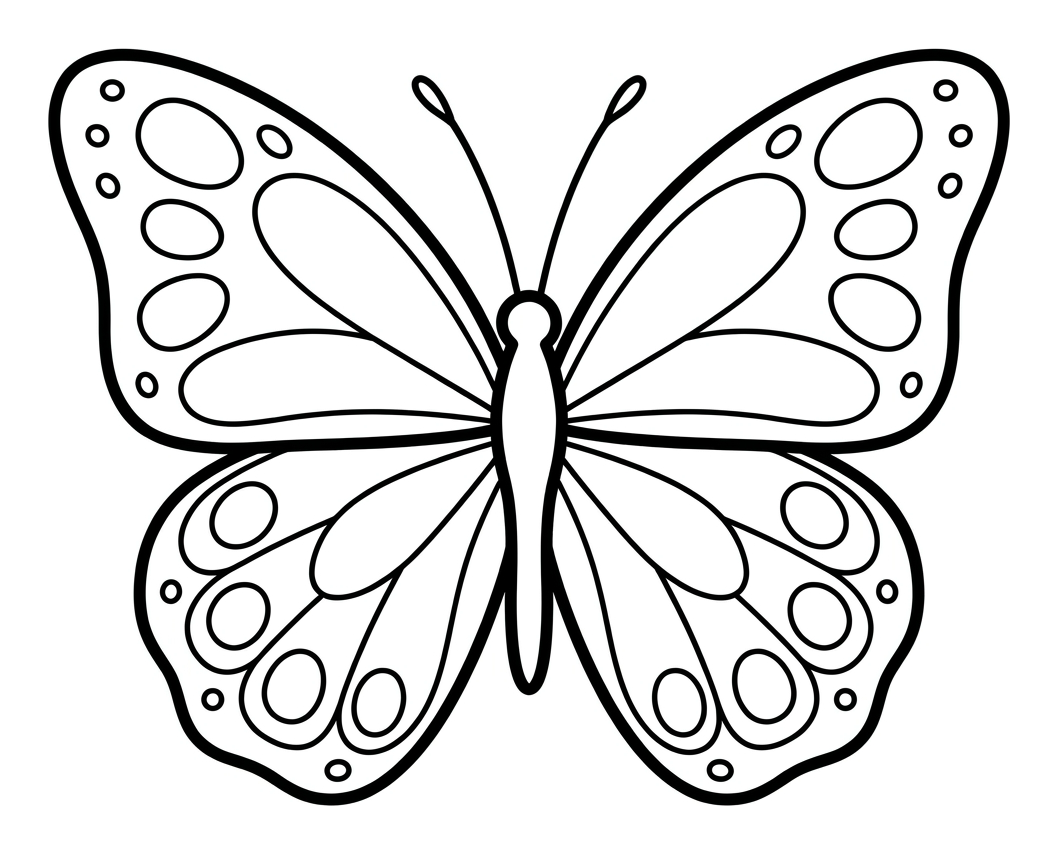
Colour the butterfly
Colour the butterfly so it stays symmetrical. Shapes that match on the left and right must be the same colour.
- Colour the body and the antennae.
- Colour each oval on the left wings the same colour as its partner on the right wings.
- Colour the small dots so both sides match.
Lines of symmetry
Answer the questions. Write your answers on the lines. The word bank may help you.
A line that splits a shape into two matching halves is called a line of __.
Use a ruler to draw the line of symmetry on the butterfly. How many lines of symmetry does it have?
Would a line across the butterfly, from side to side, be a line of symmetry? Explain why.
If you folded the butterfly along its line of symmetry, what would happen to the two wings?
 Butterfly Lines of SymmetrySheet 63
Answers: Butterfly Lines of Symmetry
Sheet 63
- A line that splits a shape into two matching halves is called a line of symmetry.
- Use a ruler to draw the line of symmetry on the butterfly. How many lines of symmetry does it have? — One (a vertical line down the middle of the body)
- Would a line across the butterfly, from side to side, be a line of symmetry? Explain why. — No. The top wings are a different shape and size from the bottom wings, so the two halves would not match.
- If you folded the butterfly along its line of symmetry, what would happen to the two wings? — They would sit exactly on top of each other, because each wing is a mirror image of the other.
For grown-ups. Free worksheets and the Owee quiz app at owee.world
Answer key
- A line that splits a shape into two matching halves is called a line of symmetry.
- Use a ruler to draw the line of symmetry on the butterfly. How many lines of symmetry does it have? — One (a vertical line down the middle of the body)
- Would a line across the butterfly, from side to side, be a line of symmetry? Explain why. — No. The top wings are a different shape and size from the bottom wings, so the two halves would not match.
- If you folded the butterfly along its line of symmetry, what would happen to the two wings? — They would sit exactly on top of each other, because each wing is a mirror image of the other.
What a line of symmetry actually means
A line of symmetry is a line that divides a shape into two halves that are exact mirror images of one another. If you could fold the shape along that line, the two parts would sit exactly on top of each other. A butterfly held straight on has a vertical line of symmetry running down its body: the left wing is the mirror image of the right. Helping a child see this matching relationship, rather than simply memorising the phrase, is the foundation for the rest of the topic. Encourage them to check by imagining the fold, or by holding a small mirror along the line and seeing whether the reflection completes the shape.
How this fits the Year 4 maths curriculum
In the National Curriculum for England, Year 4 pupils are expected to identify lines of symmetry in 2-D shapes presented in different orientations, and to complete a simple symmetric figure with respect to a specific line of symmetry. Children first meet line symmetry in Year 2, where they look for a vertical line. This worksheet practises that vertical case thoroughly: children draw the line of symmetry themselves, colour so that one wing still matches the other, and test whether a horizontal line would also work (it would not). Because the butterfly is shown in only one position, Year 4 children should go on to shapes turned at different angles. Once they are confident here, you can extend the work to squares, rectangles, triangles and letters, some of which have more than one line of symmetry and some of which have none.
Making symmetry concrete with everyday objects
Symmetry becomes much easier to grasp when children connect it to things they already know. Point out the symmetry in a leaf, a face, a snowflake, the front of a house, or the wings of a real butterfly. A practical test is to fold a piece of paper, cut a shape from the folded edge and open it out: the fold line is automatically a line of symmetry. A small handheld mirror is another excellent tool, because placing it on a line of symmetry shows the complete shape, while placing it anywhere else does not. These quick activities reinforce the idea that a line of symmetry is special, not just any line through the middle.
Using this worksheet at home or in class
For colouring, set the expectation early that matching shapes on the two wings should be coloured the same, so the finished butterfly stays symmetrical. This turns a simple colouring activity into a deliberate test of understanding. The written questions can be completed before or after colouring, and they are short enough to use as a starter or a plenary. To stretch a confident child, ask them to draw their own butterfly and add a second pattern that is symmetrical, or to find letters of the alphabet that have a line of symmetry. To support a child who is finding it tricky, offer a small mirror to place down the body line so the matching halves become obvious.
Frequently asked questions
What is a line of symmetry for KS2?
A line of symmetry is a line that splits a 2-D shape into two halves that are exact mirror images of each other. If you folded the shape along the line, the two halves would sit exactly on top of one another. In Year 4, children identify these lines in shapes shown in different orientations.
How many lines of symmetry does a butterfly have?
A butterfly shown straight on, like the one on this worksheet, has one vertical line of symmetry running down its body, because the left wing mirrors the right wing. Real butterflies are only symmetrical along this single line, not across their length.
What age do children learn about lines of symmetry?
In England, children first meet line symmetry in Year 2 (ages 6 to 7), when they look for a vertical line of symmetry in 2-D shapes. In Year 4 (ages 8 to 9) they find lines of symmetry in shapes shown in different orientations and complete simple symmetric figures.
Is this lines of symmetry worksheet free to print?
Yes. This worksheet is completely free to download and print. It is designed to fit on a single A4 page and works in black and white, so all you need is a printer, a pencil and some colouring pencils.
How can I help my child understand symmetry at home?
Use everyday examples such as leaves, faces and snowflakes, and try folding and cutting paper shapes so the fold line becomes a line of symmetry. A small handheld mirror is especially helpful: place it on a line of symmetry and the reflection completes the shape.
Curriculum links
- Year 2 Maths: Geometry – properties of shapes (statutory): 'identify and describe the properties of 2-D shapes, including the number of sides, and line symmetry in a vertical line'
- Year 4 Geometry, properties of shapes: 'identify lines of symmetry in 2-D shapes presented in different orientations'
- Year 4 Geometry, properties of shapes: 'complete a simple symmetric figure with respect to a specific line of symmetry'
Quoted word for word from Department for Education documents: the National Curriculum in England, the EYFS framework or the RSHE guidance. Contains public sector information licensed under the Open Government Licence v3.0.
Made by The Owee education team. Updated 13/10/2026. Free to print and share.
More maths worksheets
All Year 2 Maths worksheets →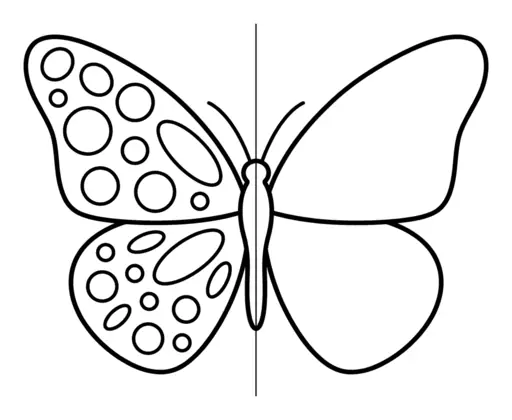
Years 1–2 · SymmetrySheet 64
Symmetry: Finish the Butterfly
Years 1–2 · 3D shapesSheet 11
3D Shapes Around Us
Year 4 · Addition and subtractionSheet 134
4-Digit Column Addition
Years 3–4 · AnglesSheet 135
Acute, Right and Obtuse Angles Castle
Years 3–4 · Addition and subtractionSheet 96
Column Addition
Years 3–4 · Addition and subtractionSheet 97
Column Subtraction
Educational quiz app · Ages 5-10
More learning in the Owee app
Owee turns topics like this into quizzes for children aged 5 to 10, and a treehouse grows as they learn. No ads, no chat, no strangers.
- Family-friendly
- No ads
- Private
Educational quiz app · Ages 5-10
More learning in the Owee app
Owee turns topics like this into quizzes for children aged 5 to 10, and a treehouse grows as they learn. No ads, no chat, no strangers.
Scan with your phone camera
- Family-friendly
- No ads
- Private