
Educational quiz app · Ages 5-10
This is what learning looks like


Educational quiz app · Ages 5-10
This is what learning looks like
No nagging required. Keep the learning going after the worksheet, with every question read aloud and Owee guiding each step.
Scan with your phone camera
- Family-friendly
- No ads
- Private
Free Year 3 English worksheets (age 7-8)
English in the national curriculum is set for Years 3 and 4 together, with grammar set year by year. In Year 3, children aged 7 to 8 use conjunctions, adverbs and prepositions to show when, where and why things happen, and learn to punctuate direct speech with inverted commas. They start to group ideas in paragraphs and use a dictionary to check words. Spelling adds prefixes such as dis-, mis- and re-.
The sheets here practise those skills: adverbs, prepositions, prefixes, alphabetical order, inverted commas and possessive apostrophes. Year 2 sheets on word classes, suffixes, plurals and homophones are also included, because Year 3 builds directly on them.
Children of this age are in Primary 4 in Northern Ireland and roughly Primary 4 in Scotland. In Wales this year is Year 3.
Also known as: Scotland P4 · Northern Ireland P4 · Wales Year 3
Spelling listYear 3 and 4 spelling list: all 100 words, ready to printSpelling
All spelling worksheets →Children learn spelling patterns and rules for each year, such as adding -s or -es, prefixes and suffixes, homophones like there and their, and tricky common exception words.

Grammar
All grammar worksheets →Children learn how words and sentences work: naming words (nouns), doing words (verbs), describing words (adjectives and adverbs), joining words (conjunctions) and words for position and time (prepositions).
Punctuation
Children start with capital letters and full stops, then learn question marks, commas, apostrophes and the inverted commas used for speech.
Dictionary skills
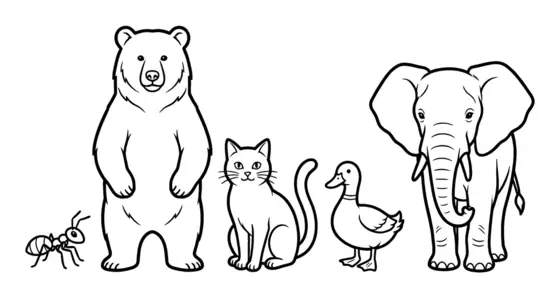
Children use alphabetical order, looking at the first, second and third letters, to find words quickly in a dictionary and check spellings and meanings.
Story writing
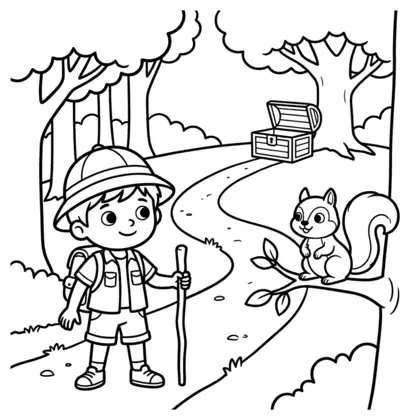
Children learn to plan and write stories with a clear beginning, middle and end, and later to build settings, characters and plot.
Speech marks made simple
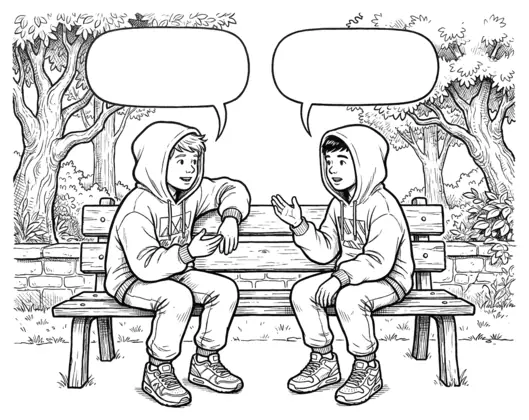
Inverted commas, often called speech marks, go around the words someone actually says. Year 3 introduces them, and Year 4 adds the rest of the punctuation: a comma after the reporting clause and the end punctuation inside the speech marks, as in Mum said, “Shoes on, please.” Turning the speech bubbles in a comic into written sentences is good practice.
Questions parents ask
What is a prefix?
A prefix is a group of letters added to the start of a word to change its meaning. Like un-, the prefixes dis- and mis- give a negative meaning (disagree, misbehave), and re- means again or back (redo). Years 3 and 4 also cover sub-, inter-, super- and others.
Does Year 3 have an English test?
There are no national English tests in Year 3. The next statutory English tests are the KS2 SATs in May of Year 6. Your child's school may use its own reading or spelling checks during the year.
How do I know if my child is working at Year 3 level?
Your child's teacher is the best guide, through parents' evenings and reports. If a Year 3 sheet feels too hard, try a similar Year 2 sheet first. If it feels easy, the Year 4 topics make a sensible stretch.
Educational quiz app · Ages 5-10
More learning in the Owee app
Owee turns topics like this into quizzes for children aged 5 to 10, and a treehouse grows as they learn. No ads, no chat, no strangers.
- Family-friendly
- No ads
- Private
Educational quiz app · Ages 5-10
More learning in the Owee app
Owee turns topics like this into quizzes for children aged 5 to 10, and a treehouse grows as they learn. No ads, no chat, no strangers.
Scan with your phone camera
- Family-friendly
- No ads
- Private