Educational quiz app · Ages 5-10
This is what learning looks like


Educational quiz app · Ages 5-10
This is what learning looks like
No nagging required. Keep the learning going after the worksheet, with every question read aloud and Owee guiding each step.
Scan with your phone camera
- Family-friendly
- No ads
- Private
English · Spelling and counting worksheet
Plurals Spelling Worksheet: -s, -es and Changing y to i (Free KS2 Printable)
Forming plurals is one of the first spelling patterns children meet where the rule changes depending on how a word ends. Most nouns simply take an -s, but words ending in s, x, ch or sh need -es, and words ending in a consonant plus y swap the y for ies. Knowing which rule to apply — and why — gives children the confidence to spell unfamiliar plurals correctly rather than guessing.
This free one-page worksheet pairs spelling practice with a friendly market-stall picture to colour and count. It is designed for Lower KS2 (Years 3 and 4), where the plural rules taught in Year 1 (-s and -es) and Year 2 (y to ies) are revisited and consolidated. It also suits confident Year 2 children. Print it on a single sheet of A4 and it is ready to use at home or in the classroom.
What your child is learning
‘Adding –es to nouns and verbs ending in –y’
Year 2 English: Spelling (Appendix 1), National Curriculum in England. Source and licence
Plurals: -s, -es and Changing y to i
Free English worksheet · Ages 7 to 9
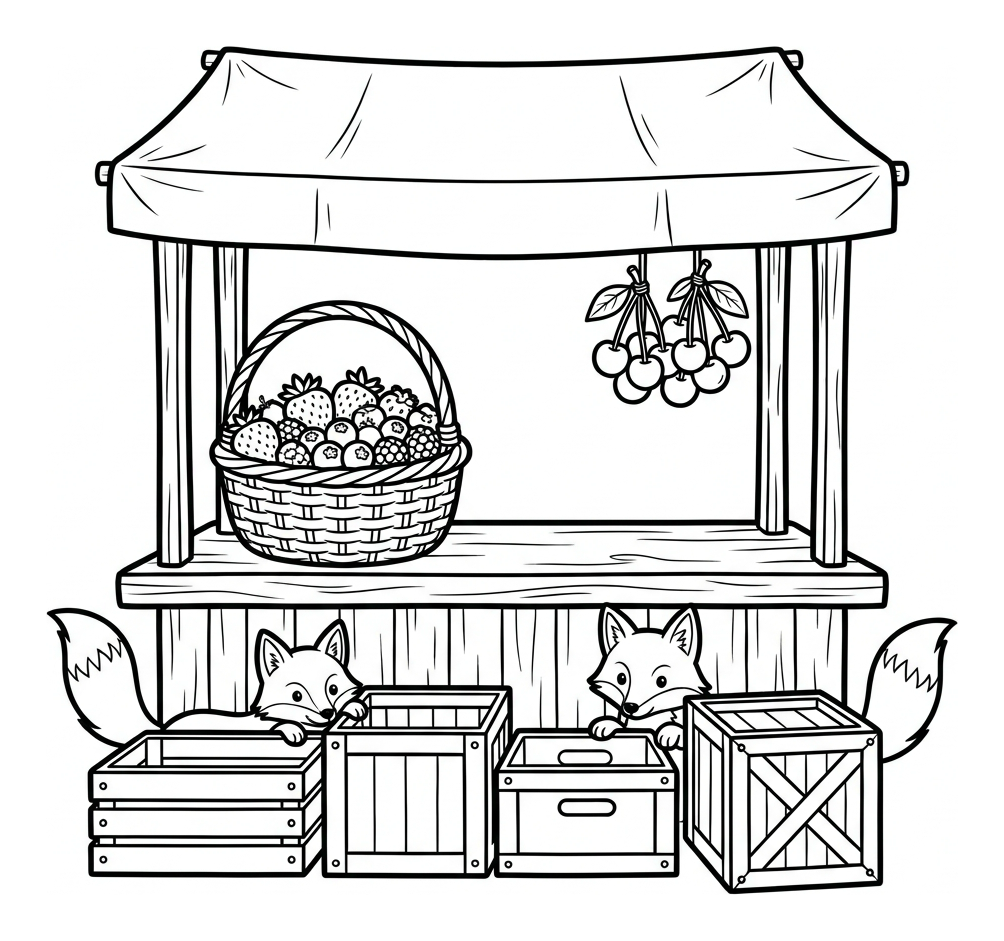
Count on the market stall
Count each group. Write the number in the box. Then say the plural word out loud.
- How many foxes are peeking out?
- How many boxes are in the row?
- How many bunches of cherries are hanging up?
Write the plural
Write the plural of each word. Add -s, add -es, or change y to ies.
one berry, lots of __
one basket, two __
one dish, two __
one key, two __
one bus, two __
one lady, two __
 Plurals: -s, -es and Changing y to iSheet 76
Answers: Plurals: -s, -es and Changing y to i
Sheet 76
- How many foxes are peeking out? — 2
- How many boxes are in the row? — 4
- How many bunches of cherries are hanging up? — 2
- one berry, lots of berries
- one basket, two baskets
- one dish, two dishes
- one key, two keys
- one bus, two buses
- one lady, two ladies
For grown-ups. Free worksheets and the Owee quiz app at owee.world
Answer key
- How many foxes are peeking out? — 2
- How many boxes are in the row? — 4
- How many bunches of cherries are hanging up? — 2
- one berry, lots of berries
- one basket, two baskets
- one dish, two dishes
- one key, two keys
- one bus, two buses
- one lady, two ladies
The three plural rules children need to know
There are three patterns to recognise. First, the default rule: most nouns form their plural by simply adding -s (cat → cats, book → books). Second, nouns ending in the hissing or shushing sounds s, x, ch and sh add -es so the extra syllable can be heard (fox → foxes, box → boxes, bus → buses, dish → dishes). Third, nouns ending in a consonant followed by y change the y to ies (berry → berries, cherry → cherries, baby → babies). It is worth pointing out the exception that helps the rule make sense: when a vowel comes before the y, the word just adds -s (day → days, key → keys), because the vowel and the y work together as one sound (ay, ey, oy) and stay together.
How to use this worksheet
Begin with the picture. Ask the child to count the foxes, boxes and bunches of cherries on the market stall and write the totals in the boxes — this warm-up gets them saying three plurals that use -es and ies before they have to write any. Then move to the spelling task, where they write the plural of six nouns: two for each rule, including the tricky key, which keeps its y. Encourage them to say the word aloud first: if the ending sounds like it adds an extra beat (fox-es, dish-es), it almost certainly takes -es. The colouring is best saved for the end as a calm reward, but it can also be a useful break for children who find sustained writing tiring.
Common mistakes and how to help
The most frequent error is adding -es when plain -s is correct, often because a child has over-applied a rule they have just learned (writing 'cates' for cats). Reading the plural back aloud usually fixes this, as the wrong version sounds clumsy. The y-to-ies rule causes confusion when children forget to remove the y first, producing 'berrys' or 'cherrys'. A helpful prompt is to ask: ‘Is there a consonant just before the y?’ If yes, the y goes and ies arrives. Finally, remind children that some everyday words are irregular and follow none of these rules (child → children, foot → feet, mouse → mice); these are best learned by sight rather than by rule.
Linking to the wider curriculum
Plural spelling sits within the National Curriculum's word-structure and spelling strand, and it connects naturally to grammar work on singular and plural nouns, and to subject-verb agreement ('the fox runs' versus 'the foxes run'). Once children are secure with these three rules, they are well placed to tackle related patterns later, such as plurals of words ending in -f or -fe (leaf → leaves, knife → knives) and the possessive apostrophe with plural nouns. Regular, low-stakes practice like this worksheet builds the automatic recall that frees up attention for composition and reading.
Frequently asked questions
What are the three rules for making plurals in KS2?
Most nouns add -s (cat to cats). Nouns ending in s, x, ch or sh add -es (fox to foxes, dish to dishes). Nouns ending in a consonant plus y change the y to ies (berry to berries).
When do you change y to ies and when do you just add s?
Change y to ies when a consonant comes before the y (cherry to cherries). Just add -s when a vowel comes before the y (day to days, key to keys), because the vowel and the y make one sound together and stay together.
Why do words like fox and box add -es instead of just -s?
Words ending in the hissing or shushing sounds s, x, ch and sh add -es so that the extra plural syllable can actually be heard and pronounced, giving foxes, boxes, buses, churches and wishes.
Is this plurals worksheet suitable for Year 3 and Year 4?
Yes. Adding -s and -es is taught in Year 1 and changing y to ies in Year 2, and both are consolidated in Lower KS2, so the worksheet suits children aged 7 to 9 in Years 3 and 4. Confident Year 2 children can use it too.
Is the worksheet really free to print?
Yes. The worksheet is completely free, with no sign-up required, and is laid out to print neatly onto a single sheet of A4 at home or in the classroom.
Curriculum links
- Year 2 English: Spelling (Appendix 1) (statutory): 'Adding –es to nouns and verbs ending in –y'
Quoted word for word from Department for Education documents: the National Curriculum in England, the EYFS framework or the RSHE guidance. Contains public sector information licensed under the Open Government Licence v3.0.
Made by The Owee education team. Updated 13/10/2026. Free to print and share.
More english worksheets
All Year 2 English worksheets →
Reception–Year 1 · SpellingSheet 25
Common Exception (Tricky) Words: Trace and Write
Years 2–3 · SpellingSheet 75
Homophones: there, their and they're
Years 3–4 · SpellingSheet 111
Prefixes: un-, dis-, mis- and re-
Years 2–3 · SpellingSheet 77
Suffixes: -ful, -less and -ly
Years 3–4 · GrammarSheet 109
Adverbs: How, When and Where
Years 3–4 · Dictionary skillsSheet 108
Alphabetical Order: Using a Dictionary
Educational quiz app · Ages 5-10
More learning in the Owee app
Owee turns topics like this into quizzes for children aged 5 to 10, and a treehouse grows as they learn. No ads, no chat, no strangers.
- Family-friendly
- No ads
- Private
Educational quiz app · Ages 5-10
More learning in the Owee app
Owee turns topics like this into quizzes for children aged 5 to 10, and a treehouse grows as they learn. No ads, no chat, no strangers.
Scan with your phone camera
- Family-friendly
- No ads
- Private