Educational quiz app · Ages 5-10
This is what learning looks like


Educational quiz app · Ages 5-10
This is what learning looks like
No nagging required. Keep the learning going after the worksheet, with every question read aloud and Owee guiding each step.
Scan with your phone camera
- Family-friendly
- No ads
- Private
English · Writing and tracing worksheet
Conjunctions Worksheet: because, but and so (Free KS2)
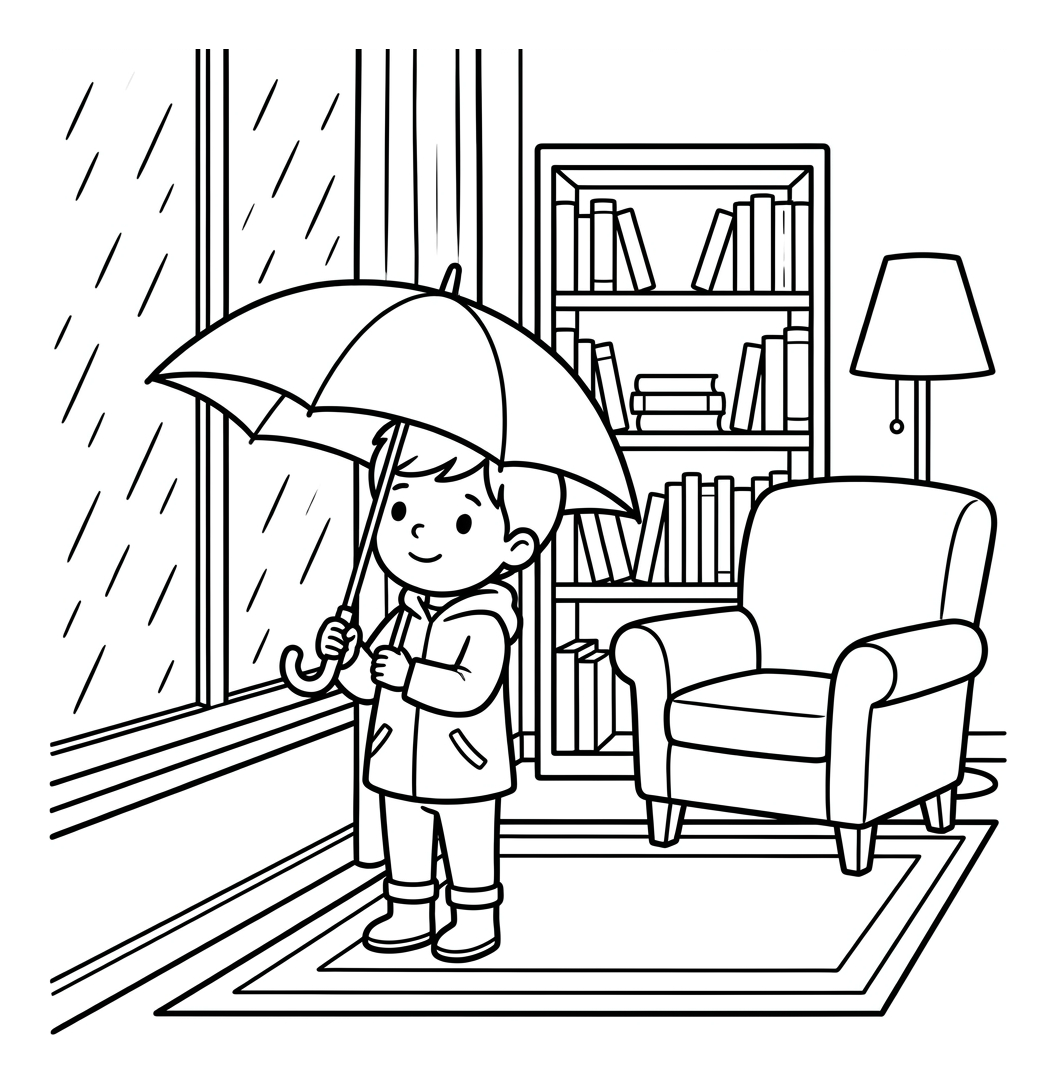
This free printable worksheet helps children in Years 3 and 4 join two short ideas into one richer sentence using everyday conjunctions such as and, but, so, because, when and if. Linking words like these are the building blocks of more confident, fluent writing, and the rainy-day scene gives plenty of opportunity to practise expressing time, cause and contrast.
It prints neatly onto a single A4 page. Children can colour the picture first to settle in, trace the key conjunctions to fix the spellings, and then complete each sentence so the two halves make sense together.
What your child is learning
‘subordination (using when, if, that, or because) and co-ordination (using or, and, or but)’
Year 2 English: Writing – vocabulary, grammar and punctuation, National Curriculum in England. Source and licence
Conjunctions: because, but and so
Free English worksheet · Ages 7 to 9
Trace the joining words
Trace each joining word. Say it aloud as you write it.
Join the two halves
Choose a joining word you traced to complete each sentence. Write it on the line. Some sentences can use more than one word.
It started to rain, __ we went inside to read.
I picked up my umbrella __ the sky looked grey.
We can play in the garden __ the rain stops.
Shall we read a book __ play a game?
The book was long, __ I read every page.
You will get wet __ you go out without a coat.
 Conjunctions: because, but and soSheet 70
Answers: Conjunctions: because, but and so
Sheet 70
- It started to rain, so (and also works) we went inside to read.
- I picked up my umbrella because (when also works) the sky looked grey.
- We can play in the garden when / if the rain stops.
- Shall we read a book or play a game?
- The book was long, but I read every page.
- You will get wet if (when also works) you go out without a coat.
For grown-ups. Free worksheets and the Owee quiz app at owee.world
Answer key
- It started to rain, so (and also works) we went inside to read.
- I picked up my umbrella because (when also works) the sky looked grey.
- We can play in the garden when / if the rain stops.
- Shall we read a book or play a game?
- The book was long, but I read every page.
- You will get wet if (when also works) you go out without a coat.
What conjunctions are and why they matter
A conjunction is a word that joins two parts of a sentence together. Co-ordinating conjunctions — and, but and or — link two ideas of equal weight (for example, 'Tom likes reading but Mia likes drawing'). Subordinating conjunctions such as because, when and if add extra information about cause, time or condition, and the part they introduce cannot stand alone as a sentence. So joins a result to its cause ('It was raining, so we stayed indoors'). Some schools group it with and, but and or, but the national curriculum glossary lists only those three as co-ordinating. Helping children move from lots of short, choppy sentences to fewer, well-joined ones is one of the most noticeable steps forward in their writing during Year 3.
How to use this worksheet at home or in class
Begin by reading the two short clauses in each sentence aloud and asking what kind of link is needed: are the ideas being added together, contrasted, or explained? Encourage the child to say the whole sentence before they write it, then choose the conjunction that makes the meaning clearest. Several sentences can take more than one answer, and the answer key shows where. If a child’s choice makes sense, accept it and ask them to explain how it changes the meaning. The tracing strip is a useful warm-up, since because in particular is a word children often misspell.
Common mistakes and how to support your child
Children frequently overuse and, stringing several ideas together in one breathless sentence. Gently nudging them towards but, so or because adds variety and shows the relationship between ideas. Another common point of confusion is the difference between so (which signals a result) and because (which signals a reason): 'I wore a coat because it was cold' and 'It was cold, so I wore a coat' carry the same meaning but face in opposite directions. Talking through this difference aloud tends to be far more effective than a rule on its own.
Building on conjunctions in everyday talk
Conjunctions are best reinforced little and often, away from the worksheet. At mealtimes or on the school run, you might offer the first half of a sentence ('We can play outside if...') and invite the child to finish it. Reading together also helps, as pointing out a well-joined sentence in a favourite book shows conjunctions doing their job in real writing. The more children hear and use these linking words in conversation, the more naturally they reach for them on the page.
Frequently asked questions
What is a conjunction for Year 3 children?
A conjunction is a joining word that links two parts of a sentence together. Children meet joining words such as and, but, or, because, when and if in Year 2, and learn the term ‘conjunction’ in Year 3. In Year 3 they also use conjunctions such as so, because, when, before and after to show time and cause, turning two short sentences into one richer one.
What is the difference between 'so' and 'because'?
Both link a reason and a result, but they point in opposite directions. 'Because' introduces the reason ('I stayed in because it rained'), while 'so' introduces the result ('It rained, so I stayed in'). The meaning is the same, but the order of the ideas is reversed.
Is this conjunctions worksheet free to print?
Yes. The worksheet is completely free to download and print. It is designed to fit onto a single A4 page so you can use it straight away at home or in the classroom, with no sign-up needed.
What age and key stage is this worksheet for?
It is aimed at children aged 7 to 9 in Key Stage 2, covering Years 3 and 4. Confident Year 2 children may also enjoy it, as coordination and subordination first appear in the Year 2 curriculum.
What is the difference between coordinating and subordinating conjunctions?
Co-ordinating conjunctions (and, but, or) join two ideas of equal weight, each of which could be its own sentence. Subordinating conjunctions (because, when, if) introduce extra information that depends on the main part of the sentence and cannot stand alone: ‘because it rained’ is not a sentence on its own.
Curriculum links
- Year 2 English: Writing – vocabulary, grammar and punctuation (statutory): 'subordination (using when, if, that, or because) and co-ordination (using or, and, or but)'
Quoted word for word from Department for Education documents: the National Curriculum in England, the EYFS framework or the RSHE guidance. Contains public sector information licensed under the Open Government Licence v3.0.
Made by The Owee education team. Updated 13/10/2026. Free to print and share.
More english worksheets
All Year 2 English worksheets →
Years 3–4 · GrammarSheet 109
Adverbs: How, When and Where
Years 1–2 · GrammarSheet 71
Describing Words (Adjectives)
Years 1–2 · GrammarSheet 72
Doing Words (Verbs)
Years 1–2 · GrammarSheet 73
Naming Words (Nouns)
Years 2–3 · GrammarSheet 110
Prepositions: Where Is the Cat?
Years 2–3 · GrammarSheet 74
Spot the Nouns, Verbs and Adjectives
Educational quiz app · Ages 5-10
More learning in the Owee app
Owee turns topics like this into quizzes for children aged 5 to 10, and a treehouse grows as they learn. No ads, no chat, no strangers.
- Family-friendly
- No ads
- Private
Educational quiz app · Ages 5-10
More learning in the Owee app
Owee turns topics like this into quizzes for children aged 5 to 10, and a treehouse grows as they learn. No ads, no chat, no strangers.
Scan with your phone camera
- Family-friendly
- No ads
- Private