Educational quiz app · Ages 5-10
This is what learning looks like


Educational quiz app · Ages 5-10
This is what learning looks like
No nagging required. Keep the learning going after the worksheet, with every question read aloud and Owee guiding each step.
Scan with your phone camera
- Family-friendly
- No ads
- Private
English · Writing and tick-the-correct-answer worksheet
Inverted Commas: Punctuating Speech (Free KS2 Worksheet)
Inverted commas (also called speech marks or quotation marks) are one of the trickiest punctuation marks to master in Key Stage 2. This free printable worksheet gives children in Years 3 and 4 focused practice at wrapping inverted commas around the exact words a character speaks, and at remembering the punctuation that belongs inside the closing mark.
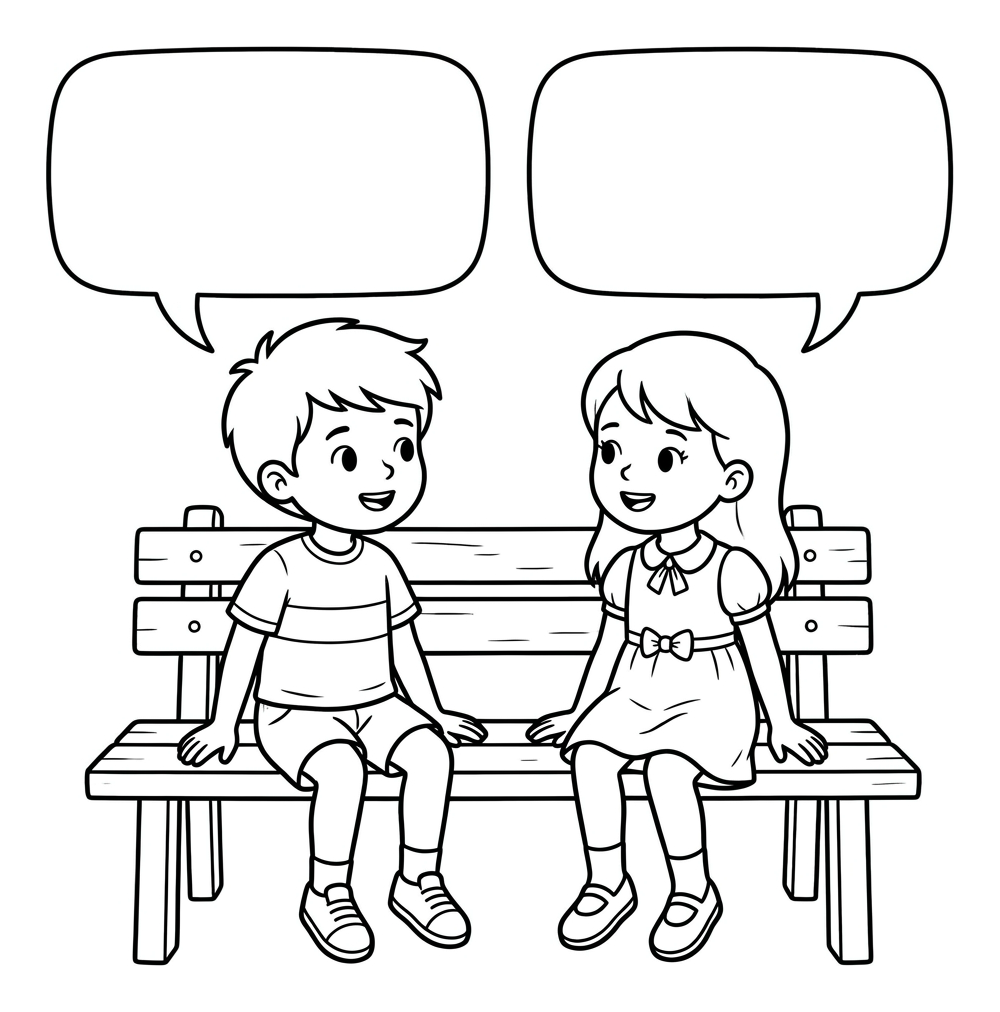
The page is designed to print neatly onto a single sheet of A4. There is a short writing task that ends with your child filling one of the empty speech bubbles in the picture and turning it into a punctuated sentence, a tick-the-correct-line activity that builds the habit of proofreading, and the picture of two children chatting to colour in once the work is done.
What your child is learning
‘Use of inverted commas and other punctuation to indicate direct speech [for example, a comma after the reporting clause; end punctuation within inverted commas: The conductor shouted, “Sit down!”]’
Year 4 English: Punctuation (Appendix 2), National Curriculum in England. Source and licence
Punctuating Speech: Inverted Commas
Free English worksheet · Ages 8 to 10
Add the inverted commas
Copy each sentence and add the missing inverted commas. Put the end punctuation INSIDE the closing inverted comma.
Dad said, It is time for tea.
Where are my shoes? asked Sam.
The teacher smiled and said, Well done, everyone!
Write what the girl says in her speech bubble. Then write it here with inverted commas: The girl said, ...
Tick the correct line
Tick the sentences where the inverted commas and punctuation are used correctly.
- “I am hungry,” said Tom.
- “Can we go now”? asked Lily.
- The boy whispered, “It is a secret.”
- “Look out! the man called.
 Punctuating Speech: Inverted CommasSheet 150
Answers: Punctuating Speech: Inverted Commas
Sheet 150
- Dad said, It is time for tea. — Dad said, “It is time for tea.”
- Where are my shoes? asked Sam. — “Where are my shoes?” asked Sam.
- The teacher smiled and said, Well done, everyone! — The teacher smiled and said, “Well done, everyone!”
- Write what the girl says in her speech bubble. Then write it here with inverted commas: The girl said, ... — Answers will vary, for example: The girl said, “Do you want to play?”
- “I am hungry,” said Tom. — tick
- “Can we go now”? asked Lily. — no tick: the question mark belongs inside (“Can we go now?” asked Lily.)
- The boy whispered, “It is a secret.” — tick
- “Look out! the man called. — no tick: the closing inverted comma is missing (“Look out!” the man called.)
For grown-ups. Free worksheets and the Owee quiz app at owee.world
Answer key
- Dad said, It is time for tea. — Dad said, “It is time for tea.”
- Where are my shoes? asked Sam. — “Where are my shoes?” asked Sam.
- The teacher smiled and said, Well done, everyone! — The teacher smiled and said, “Well done, everyone!”
- Write what the girl says in her speech bubble. Then write it here with inverted commas: The girl said, ... — Answers will vary, for example: The girl said, “Do you want to play?”
- “I am hungry,” said Tom. — tick
- “Can we go now”? asked Lily. — no tick: the question mark belongs inside (“Can we go now?” asked Lily.)
- The boy whispered, “It is a secret.” — tick
- “Look out! the man called. — no tick: the closing inverted comma is missing (“Look out!” the man called.)
What your child is learning
Inverted commas show a reader the precise words a character says out loud. The skill has two parts that children often muddle: first, placing a pair of marks around the spoken words only (not around the whole sentence); and second, making sure the punctuation that ends the speech — a full stop, question mark, exclamation mark or comma — sits inside the closing inverted comma. For example: The girl smiled and said, “I love painting!” The exclamation mark belongs to the words spoken, so it stays inside. Children meet inverted commas in Year 3. In Year 4 they add the comma after the reporting clause (Dad said, “It is time for tea.”) and use a comma inside the marks when the spoken words come first (“I am hungry,” said Tom.). Both patterns appear on this sheet.
Single or double inverted commas?
Both single (‘ ’) and double (“ ”) inverted commas are correct in British English, and the National Curriculum does not insist on one style. What matters is consistency: a child should choose one style and use it throughout a piece of writing. Double marks are easier to tell apart from an apostrophe, which makes them a sensible place to start, and the national curriculum’s own example uses them. We have used double marks on this worksheet, but if your child's school uses single marks, simply ask them to follow the school's preference when they write their own sentences. The thinking behind where the marks go is identical either way.
Common mistakes to watch for
Three errors come up again and again at this age. The first is putting the closing punctuation outside the speech marks (writing “Hello”. instead of “Hello.”). The second is forgetting to open and close the marks — children often add the first one and lose track of the second. The third is putting the reporting words, such as he shouted, inside the inverted commas; only the words actually spoken belong inside. When you check the worksheet together, ask your child to read just the words inside the marks aloud — if it sounds like something a person would say, the marks are usually in the right place.
How to use this sheet at home or in class
Print the page and work through the writing task first, encouraging your child to say the sentence aloud before they punctuate it. The tick activity then turns the focus to proofreading: spotting a correctly punctuated line is a different skill from writing one, and it strengthens both. Keep the session short — ten to fifteen minutes is plenty at this age. The last writing question uses the empty speech bubbles in the picture: what goes in the bubble is exactly what goes inside the inverted commas, which is a helpful way to explain the idea. For an extension, ask your child to fill the other bubble and write a short conversation between the two children, starting a new line each time the speaker changes.
Frequently asked questions
What are inverted commas?
Inverted commas, also called speech marks or quotation marks, are the punctuation marks placed around the exact words a character says aloud. In British English they can be written as single marks (‘ ’) or double marks (“ ”).
When are inverted commas taught in the UK curriculum?
They are introduced in Year 3 to punctuate direct speech, and developed in Year 4, where children learn to use inverted commas alongside other punctuation such as a comma after the reporting clause and end punctuation placed inside the closing mark. This worksheet suits children aged roughly 8 to 10.
Should the full stop go inside or outside the inverted commas?
Inside. When a character finishes speaking, the full stop, question mark or exclamation mark that ends their words sits inside the closing inverted comma, for example: She said, “It is raining.”
Single or double inverted commas, which is correct?
Both are correct in British English and the National Curriculum does not require one over the other. The important rule is to stay consistent within a piece of writing. Double marks are easier to tell apart from an apostrophe, so they are a sensible place to start.
Is this inverted commas worksheet really free to print?
Yes. The worksheet is completely free to download and print at home or in school. It is designed to fit onto a single A4 page, including a picture for your child to colour in.
Curriculum links
- Year 4 English: Punctuation (Appendix 2) (statutory): 'Use of inverted commas and other punctuation to indicate direct speech [for example, a comma after the reporting clause; end punctuation within inverted commas: The conductor shouted, “Sit down!”]'
- English Appendix 2, Year 3 punctuation: 'introduction to inverted commas to punctuate direct speech'
- Writing composition (Years 3 and 4): 'proof-read for spelling and punctuation errors'
Quoted word for word from Department for Education documents: the National Curriculum in England, the EYFS framework or the RSHE guidance. Contains public sector information licensed under the Open Government Licence v3.0.
Made by The Owee education team. Updated 13/10/2026. Free to print and share.
More english worksheets
All Year 4 worksheets →
Years 3–4 · PunctuationSheet 149
Apostrophes for Possession
Years 1–2 · PunctuationSheet 24
Capital Letters and Full Stops
Years 3–4 · GrammarSheet 109
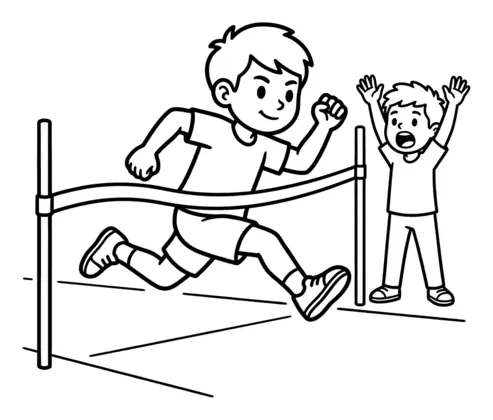
Adverbs: How, When and Where
Years 3–4 · Dictionary skillsSheet 108
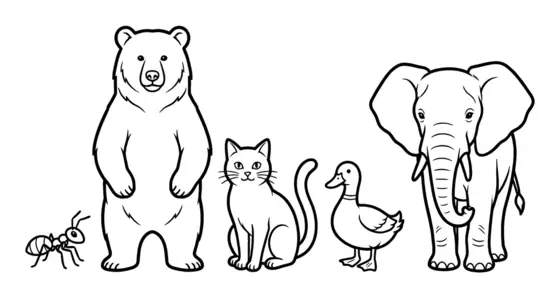
Alphabetical Order: Using a Dictionary
Years 2–3 · GrammarSheet 70
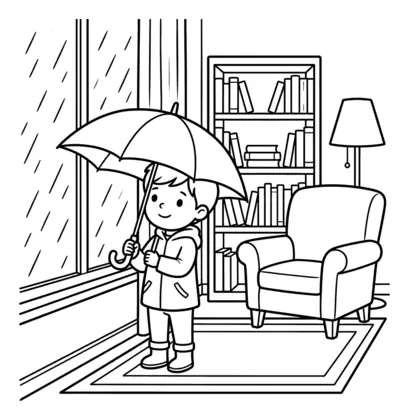
Conjunctions: because, but and so
Years 2–3 · SpellingSheet 75
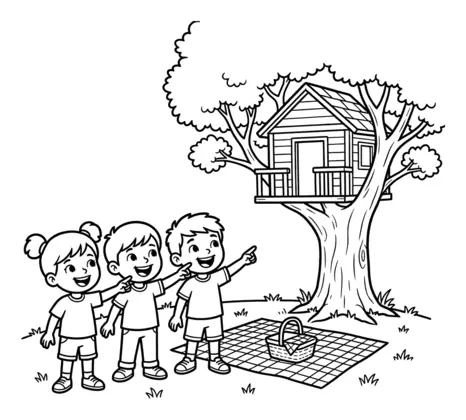
Homophones: there, their and they're
Educational quiz app · Ages 5-10
More learning in the Owee app
Owee turns topics like this into quizzes for children aged 5 to 10, and a treehouse grows as they learn. No ads, no chat, no strangers.
- Family-friendly
- No ads
- Private
Educational quiz app · Ages 5-10
More learning in the Owee app
Owee turns topics like this into quizzes for children aged 5 to 10, and a treehouse grows as they learn. No ads, no chat, no strangers.
Scan with your phone camera
- Family-friendly
- No ads
- Private