Educational quiz app · Ages 5-10
This is what learning looks like


Educational quiz app · Ages 5-10
This is what learning looks like
No nagging required. Keep the learning going after the worksheet, with every question read aloud and Owee guiding each step.
Scan with your phone camera
- Family-friendly
- No ads
- Private
English · Colouring and grammar worksheet
Word Classes Worksheet: Spot Nouns, Verbs and Adjectives (Free KS2)
This free printable helps children in Years 3 and 4 recognise the three core word classes that underpin almost every sentence they write: nouns (naming words), verbs (doing words) and adjectives (describing words). A single lively park scene gives plenty of real things to name, actions to spot and qualities to describe, so the grammar feels concrete rather than abstract.
The sheet prints to one A4 page and combines a short written task with a colour-by-word-class activity. It is designed to be easy for an adult to set, with an answer key below so you can mark it together or let a confident child check their own work.
What your child is learning
‘adjective, adverb, verb’
Year 2 English: Terminology for pupils (Appendix 2), National Curriculum in England. Source and licence
Spot the Nouns, Verbs and Adjectives
Free English worksheet · Ages 7 to 9
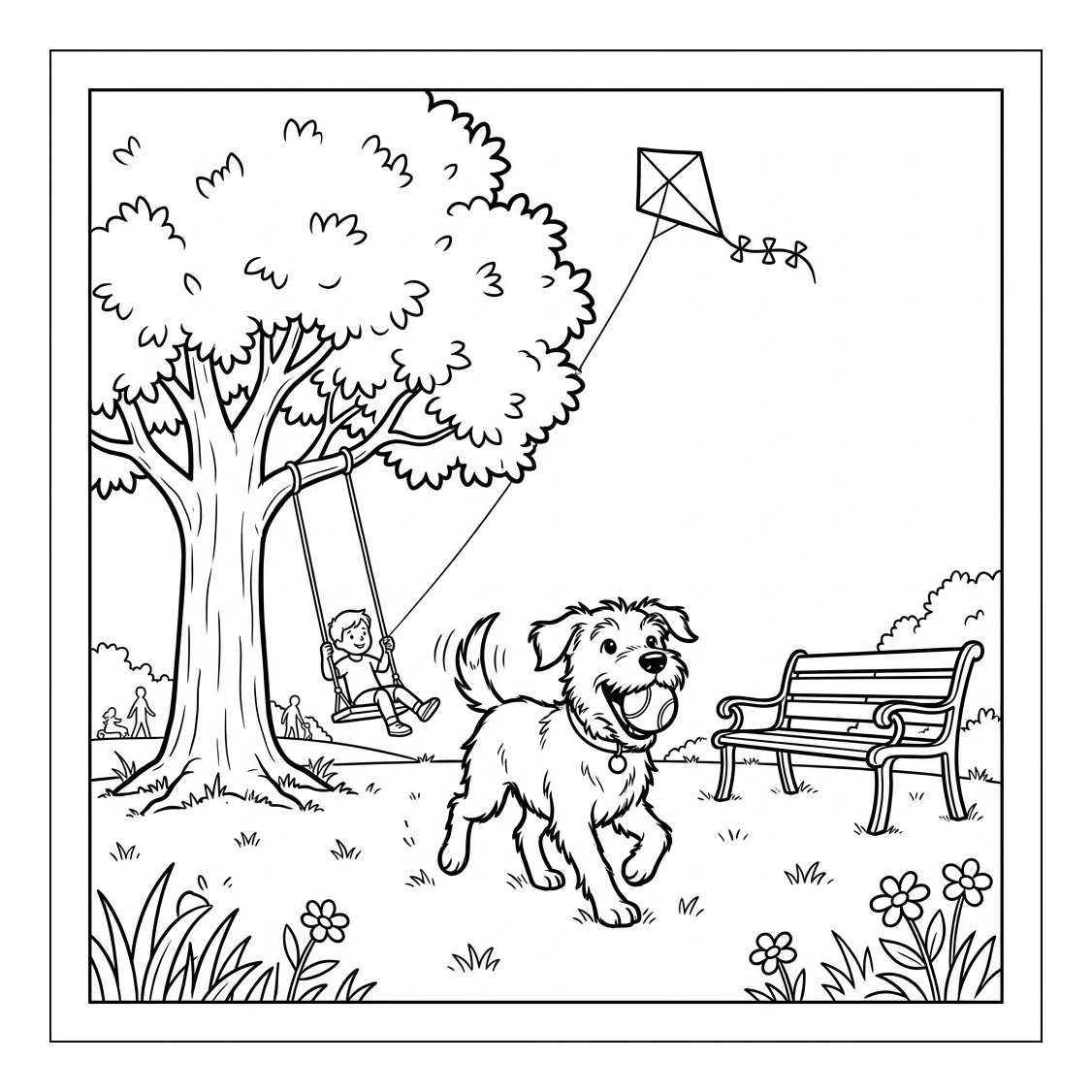
Sort the park words
These words are all about the park picture. Is each one a noun (naming word), a verb (doing word) or an adjective (describing word)? Write it on the right line.
Nouns (naming words):
Verbs (doing words):
Adjectives (describing words):
Colour by word class
Now colour the picture with this word-class key.
- NOUNS in green: colour the dog, the tree, the swing, the kite and the bench.
- VERBS in blue: draw blue lines behind the dog (it ran) and the kite (it flew).
- ADJECTIVES in red: draw a red circle round the tall tree.
 Spot the Nouns, Verbs and AdjectivesSheet 74
Answers: Spot the Nouns, Verbs and Adjectives
Sheet 74
- Nouns (naming words): — dog, ball, kite, bench, child
- Verbs (doing words): — ran, flew, sat
- Adjectives (describing words): — tall, happy, wooden
For grown-ups. Free worksheets and the Owee quiz app at owee.world
Answer key
- Nouns (naming words): — dog, ball, kite, bench, child
- Verbs (doing words): — ran, flew, sat
- Adjectives (describing words): — tall, happy, wooden
What your child is learning
Children learn the terms noun, verb and adjective in Year 2, and in Years 3 and 4 they are expected to use them accurately when talking about their own reading and writing. This worksheet focuses on the difference between the three: a noun names a person, animal, place or thing (dog, tree, swing); a verb tells us what is happening or happened (ran, flew, sat); and an adjective adds detail about a noun (tall, happy, wooden). Spotting these in a familiar scene is a gentle bridge between simply knowing the definitions and using the words accurately in their own sentences.
How to use this worksheet
Print the page in black and white and give your child some coloured pencils. Start by talking through the picture together: ask what they can see (nouns), what is moving or happening (verbs) and what each thing is like (adjectives). They then sort the words into three groups and finish by colouring parts of the picture with the colour key. The verbs on the sheet are in the past tense (ran, flew, sat) on purpose: words like runs and flies can also be nouns (‘ten runs’, ‘a few flies’), so a word’s class really depends on how it is used in a sentence. That makes a good talking point with a confident child.
Why nouns, verbs and adjectives matter
These three word classes are the building blocks of clear writing. A child who can confidently identify them finds it much easier to follow later instructions such as 'add an adjective to make your sentence more interesting' or 'use a stronger verb'. Secure understanding here also supports reading comprehension, because children begin to notice how authors choose words for effect. A quick check for each class helps: a noun can follow the (the bench), a verb can change for past and present (sit, sat), and an adjective fits between the and a noun (the tall tree).
Extending the activity
Once the sheet is finished, you can stretch a confident child by asking them to write a full sentence about the park that contains all three word classes, for example 'The happy dog chased the bouncy ball.' You might also play a quick spotting game on a real walk, taking turns to call out a noun, a verb or an adjective. For children who need more support, focus on just nouns and verbs first, leaving adjectives for a second session so the distinctions stay clear.
Frequently asked questions
What is a word classes worksheet?
It is a grammar activity that asks children to identify the type of each word, such as whether it is a noun, a verb or an adjective. This free printable focuses on those three core word classes using a single park scene.
What age or year group is this worksheet for?
It is aimed at children aged 7 to 9, which is Years 3 and 4 in the UK (Key Stage 2). It can also suit a confident Year 2 child or be used for revision in Year 5.
What is the difference between a noun, a verb and an adjective?
A noun is a naming word for a person, animal, place or thing (dog, tree). A verb is a doing or being word (run, fly, sit). An adjective describes a noun (tall, happy, wooden). Some words can belong to more than one class depending on the sentence: in ‘the kite flies’, <em>flies</em> is a verb, but in ‘the flies buzzed’ it is a noun.
Is this worksheet free to print?
Yes. The whole page is free to download and print at home or in the classroom on a single sheet of A4. There is no sign-up required.
How can I help my child if they find word classes tricky?
Start with nouns and verbs only, using things they can see and actions they can do, then add adjectives in a later session. Talking through the picture aloud before writing anything helps the terminology feel concrete.
Curriculum links
- Year 2 English: Terminology for pupils (Appendix 2) (statutory): 'adjective, adverb, verb'
Quoted word for word from Department for Education documents: the National Curriculum in England, the EYFS framework or the RSHE guidance. Contains public sector information licensed under the Open Government Licence v3.0.
Made by The Owee education team. Updated 13/10/2026. Free to print and share.
More english worksheets
All Year 2 English worksheets →
Years 3–4 · GrammarSheet 109
Adverbs: How, When and Where
Years 2–3 · GrammarSheet 70
Conjunctions: because, but and so
Years 1–2 · GrammarSheet 71
Describing Words (Adjectives)
Years 1–2 · GrammarSheet 72
Doing Words (Verbs)
Years 1–2 · GrammarSheet 73
Naming Words (Nouns)
Years 2–3 · GrammarSheet 110
Prepositions: Where Is the Cat?
Educational quiz app · Ages 5-10
More learning in the Owee app
Owee turns topics like this into quizzes for children aged 5 to 10, and a treehouse grows as they learn. No ads, no chat, no strangers.
- Family-friendly
- No ads
- Private
Educational quiz app · Ages 5-10
More learning in the Owee app
Owee turns topics like this into quizzes for children aged 5 to 10, and a treehouse grows as they learn. No ads, no chat, no strangers.
Scan with your phone camera
- Family-friendly
- No ads
- Private