Educational quiz app · Ages 5-10
This is what learning looks like


Educational quiz app · Ages 5-10
This is what learning looks like
No nagging required. Keep the learning going after the worksheet, with every question read aloud and Owee guiding each step.
Scan with your phone camera
- Family-friendly
- No ads
- Private
English · Write-in and tick homophones worksheet
There, Their and They're Homophones: Free KS2 Worksheet
There, their and they're are among the trickiest homophones for primary children. They sound exactly the same when spoken, yet each has a different meaning and spelling, so the only way to choose correctly is to think about what the word actually means in the sentence. This free worksheet gives children focused practice doing just that.
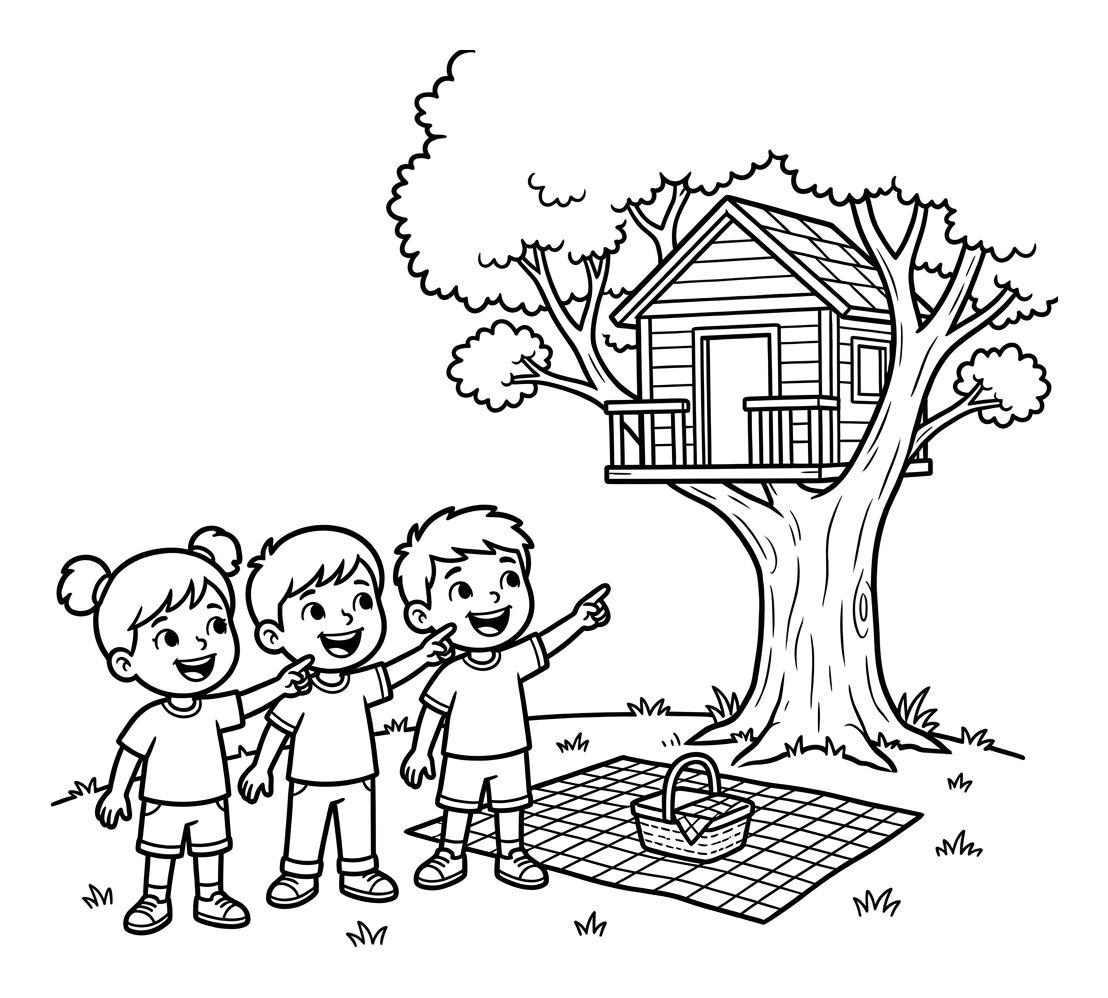
The National Curriculum introduces these three words in Year 2, and many children are still mixing them up in Years 3 and 4, so the sheet suits ages 7 to 9. It prints neatly onto a single A4 page. Children complete a set of write-in sentences and then tick the sentences that use the homophone correctly, building both confidence and accuracy. The accompanying picture can be coloured in once the work is done.
What your child is learning
‘distinguishing between homophones and near-homophones’
Year 2 English: Writing – transcription (spelling, Appendix 1), National Curriculum in England. Source and licence
Homophones: there, their and they're
Free English worksheet · Ages 7 to 9
Choose the correct word
Write there, their or they're on the line to fill each gap.
The children put __ picnic blanket on the grass.
Look, the treehouse is over __ in the tall tree.
__ going to climb up to the treehouse.
The children are pointing at __ treehouse.
Is __ enough room for everyone in the treehouse?
I think __ very happy playing outside today.
Tick the correct sentences
Tick the sentences that use there, their or they're correctly.
- They're pointing at the treehouse.
- The children left there basket on the blanket.
- There is a picnic basket on the blanket.
- Their playing happily in the garden.
- The friends will eat their sandwiches on the blanket.
 Homophones: there, their and they'reSheet 75
Answers: Homophones: there, their and they're
Sheet 75
- The children put their picnic blanket on the grass.
- Look, the treehouse is over there in the tall tree.
- They're going to climb up to the treehouse.
- The children are pointing at their treehouse.
- Is there enough room for everyone in the treehouse?
- I think they're very happy playing outside today.
- They're pointing at the treehouse. — Tick
- The children left there basket on the blanket. — No tick (should be their)
- There is a picnic basket on the blanket. — Tick
- Their playing happily in the garden. — No tick (should be They're)
- The friends will eat their sandwiches on the blanket. — Tick
For grown-ups. Free worksheets and the Owee quiz app at owee.world
Answer key
- The children put their picnic blanket on the grass.
- Look, the treehouse is over there in the tall tree.
- They're going to climb up to the treehouse.
- The children are pointing at their treehouse.
- Is there enough room for everyone in the treehouse?
- I think they're very happy playing outside today.
- They're pointing at the treehouse. — Tick
- The children left there basket on the blanket. — No tick (should be their)
- There is a picnic basket on the blanket. — Tick
- Their playing happily in the garden. — No tick (should be They're)
- The friends will eat their sandwiches on the blanket. — Tick
What are there, their and they're?
These three words are homophones: words that sound identical but are spelt differently and mean different things. There tells us about a place or position ('the book is over there') or introduces something ('there is a treehouse'). Their shows that something belongs to a group of people ('their picnic', 'their coats'). They're is a contraction of 'they are' ('they're climbing the tree'). Because the choice cannot be made by ear, children must rely on meaning rather than sound.
How to tell them apart
A few reliable checks help children choose correctly. For they're, try expanding it back to 'they are'; if the sentence still makes sense, the apostrophe version is right. For their, ask 'whose is it?' as it always answers that question by showing belonging. For there, look for a place, direction or the phrase 'there is/there are'. Spotting the apostrophe as a marker of a missing letter (the 'a' in 'are') is a particularly useful clue for distinguishing they're from the others.
Why homophones matter in KS2
There, their and they're appear in the Year 2 spelling list, and by Years 3 and 4 children meet many more homophones, such as whose and who's or affect and effect. Mix-ups with there, their and they're are very common and can last into adulthood, so early, repeated practice pays off. Working with these words also develops children's understanding of word meaning and grammar, including possession and contractions, which supports both their reading comprehension and the accuracy of their independent writing.
How to use this worksheet at home or in class
Read each sentence aloud first, then encourage the child to say which meaning is needed before they write. The expansion test ('does "they are" fit?') works well as a spoken routine. For the tick activity, two of the five sentences contain a mistake; ask the child to explain why and to say the correct word, as giving the reason helps the rule stick. A common slip is writing there for their because it was the first of the three words they learned, so point out the word here hiding inside there — both are about places. Revisit the words in their everyday writing over the following weeks. An answer guide is provided for marking.
Frequently asked questions
What is the difference between there, their and they're?
There refers to a place or position, or introduces something ('there is'). Their shows that something belongs to a group of people. They're is short for 'they are'. They sound the same but have different meanings and spellings.
What age or year group is this worksheet for?
It is aimed at KS2 children in Years 3 and 4, roughly ages 7 to 9. The National Curriculum introduces there, their and they're in Year 2, and they are revisited throughout Key Stage 2, so the sheet also suits confident Year 2 children and older children who need extra practice.
How can I help my child remember which word to use?
Use simple checks: if 'they are' fits, the answer is they're; if it shows belonging (whose is it?), the answer is their; if it points to a place or uses 'there is/are', the answer is there. Saying the sentence aloud first often makes the meaning clearer.
Is this homophones worksheet free to print?
Yes. The worksheet is completely free, prints onto a single A4 page and can be used as many times as you like at home or in the classroom.
Are answers included?
Yes, an answer guide is provided for both the write-in sentences and the tick activity so parents and teachers can mark the work quickly.
Curriculum links
- Year 2 English: Writing – transcription (spelling, Appendix 1) (statutory): 'distinguishing between homophones and near-homophones'
Quoted word for word from Department for Education documents: the National Curriculum in England, the EYFS framework or the RSHE guidance. Contains public sector information licensed under the Open Government Licence v3.0.
Made by The Owee education team. Updated 13/10/2026. Free to print and share.
More english worksheets
All Year 2 English worksheets →
Reception–Year 1 · SpellingSheet 25
Common Exception (Tricky) Words: Trace and Write
Years 2–3 · SpellingSheet 76
Plurals: -s, -es and Changing y to i
Years 3–4 · SpellingSheet 111
Prefixes: un-, dis-, mis- and re-
Years 2–3 · SpellingSheet 77
Suffixes: -ful, -less and -ly
Years 3–4 · GrammarSheet 109
Adverbs: How, When and Where
Years 3–4 · Dictionary skillsSheet 108
Alphabetical Order: Using a Dictionary
Educational quiz app · Ages 5-10
More learning in the Owee app
Owee turns topics like this into quizzes for children aged 5 to 10, and a treehouse grows as they learn. No ads, no chat, no strangers.
- Family-friendly
- No ads
- Private
Educational quiz app · Ages 5-10
More learning in the Owee app
Owee turns topics like this into quizzes for children aged 5 to 10, and a treehouse grows as they learn. No ads, no chat, no strangers.
Scan with your phone camera
- Family-friendly
- No ads
- Private