Educational quiz app · Ages 5-10
This is what learning looks like


Educational quiz app · Ages 5-10
This is what learning looks like
No nagging required. Keep the learning going after the worksheet, with every question read aloud and Owee guiding each step.
Scan with your phone camera
- Family-friendly
- No ads
- Private
English · Ordering and writing worksheet
Alphabetical Order: Free KS2 Dictionary Skills Worksheet (Years 3 to 4)
By Years 3 and 4, children are expected to use a dictionary independently to check spellings and meanings — and that depends on a quieter skill underneath it: putting words into alphabetical order. The National Curriculum asks pupils to use the first two or three letters of a word to find it in a dictionary, which means looking past the first letter when several words begin the same way.
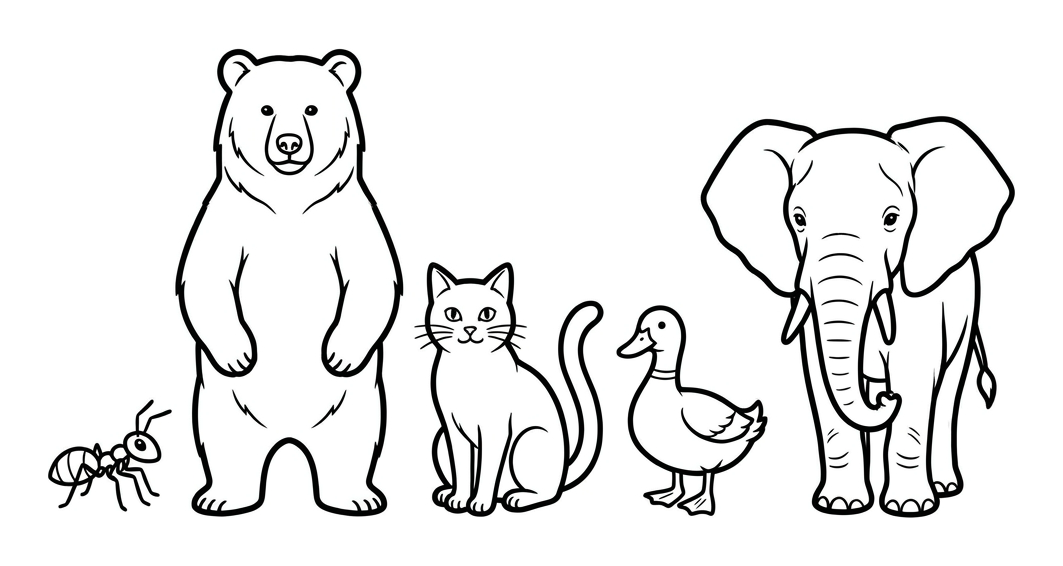
This free printable gives your child structured practice with exactly that. They begin by ordering words that start with different letters, then move on to trickier sets where words share a first letter and must be ordered by the second or third letter instead. It prints to a single A4 page, and a friendly line-up of animals — already standing in alphabetical order — sits at the top to colour in.
What your child is learning
‘use the first 2 or 3 letters of a word to check its spelling in a dictionary’
Years 3–4 English: Writing – transcription (spelling), National Curriculum in England. Source and licence

Alphabetical Order: Using a Dictionary
Free English worksheet · Ages 7 to 9
Trace the alphabet
Trace the alphabet. Use it to help you with the words below.
Put the words in alphabetical order
Write each set of words in alphabetical order. Look at the first letter. If two words start with the same letter, look at the second letter, then the third.
Set 1 (first letter): duck, ant, elephant, cat, bear
Set 2 (first letter): orange, banana, mango, apple, pear
Set 3 (second letter): crab, cat, club, cup, cherry
Set 4 (second letter): swan, slug, snake, spider, seal
Set 5 (third letter): shut, ship, shark, shop, shed
 Alphabetical Order: Using a DictionarySheet 108
Answers: Alphabetical Order: Using a Dictionary
Sheet 108
- Set 1 (first letter): duck, ant, elephant, cat, bear — ant, bear, cat, duck, elephant
- Set 2 (first letter): orange, banana, mango, apple, pear — apple, banana, mango, orange, pear
- Set 3 (second letter): crab, cat, club, cup, cherry — cat, cherry, club, crab, cup
- Set 4 (second letter): swan, slug, snake, spider, seal — seal, slug, snake, spider, swan
- Set 5 (third letter): shut, ship, shark, shop, shed — shark, shed, ship, shop, shut
For grown-ups. Free worksheets and the Owee quiz app at owee.world
Answer key
- Set 1 (first letter): duck, ant, elephant, cat, bear — ant, bear, cat, duck, elephant
- Set 2 (first letter): orange, banana, mango, apple, pear — apple, banana, mango, orange, pear
- Set 3 (second letter): crab, cat, club, cup, cherry — cat, cherry, club, crab, cup
- Set 4 (second letter): swan, slug, snake, spider, seal — seal, slug, snake, spider, swan
- Set 5 (third letter): shut, ship, shark, shop, shed — shark, shed, ship, shop, shut
What is on the worksheet
The worksheet builds up in difficulty across two tasks. First, your child traces a simple alphabet reference strip to refresh the order of the letters and to support neat handwriting. Then comes the main ordering task: several short sets of words to rewrite in alphabetical order. The early sets begin with different first letters, so a quick look at the alphabet is enough. Later sets are deliberately harder — every word starts with the same letter, so your child must compare the second letter, and in one set the third letter, to decide which word comes first. A cheerful row of animals (ant, bear, cat, duck, elephant) already stands in alphabetical order at the top of the page, ready to be coloured in and used as a memory hook.
How to use it at home or in the classroom
Start by saying or singing the alphabet together so the order is fresh, and point to the animal line-up as a reminder that a comes before b, b before c, and so on. For each set of words, encourage your child to underline the first letter of every word, sort by that, and only then look at the second letter when two words match. A useful phrase is: 'same first letter — so move along to the next one.' Working through one set aloud together before letting them try the rest independently usually works well. There is no time pressure; getting the method right matters far more than speed.
What your child will learn
Alphabetical ordering is a genuine study skill that pays off well beyond the dictionary. It underpins using a glossary, an index, a contents list, a thesaurus and, later, filing and searching information of all kinds. By practising ordering on the second and third letter, your child learns not to stop at the first letter — the most common slip at this stage — and to compare words systematically, letter by letter. The tracing strip also reinforces secure recall of the alphabet sequence and gives a little extra handwriting practice.
A note for teachers
This sheet targets the Lower Key Stage 2 expectation that pupils use the first two or three letters of a word to check its spelling in a dictionary. It works well as a starter before a guided dictionary session, as an independent or early-finisher task, or as a take-home consolidation sheet. The sets are sequenced from 'different first letters' to 'same first letter, order by second' to 'same first two letters, order by third', so you can stop at whichever level suits the group or stretch confident pupils to the end. Pairing it with real dictionary races afterwards helps children transfer the ordering skill to the physical book.
Frequently asked questions
How do you put words in alphabetical order by the second letter?
When two or more words begin with the same first letter, you look at the second letter to decide their order. For example, 'cat', 'clap' and 'crab' all start with c, so you compare the next letter: a comes before l, which comes before r, giving the order cat, clap, crab. If the second letters also match, you move on to the third letter, and so on. This is exactly the skill children practise in the harder sets on this worksheet.
Why do Year 3 and 4 children learn alphabetical order?
The National Curriculum expects children in Years 3 and 4 to use the first two or three letters of a word to check its spelling in a dictionary. To find a word quickly, they need to know not just the first letter but how to order words that share a first letter. Alphabetical order is also used in glossaries, indexes, contents pages and thesauruses, so it is a study skill that helps across many subjects.
What is the difference between ordering by the first and second letter?
Ordering by the first letter is enough when words begin with different letters, such as apple, dog and sun. When words share a first letter — like duck and drum, which both start with d — you must compare the second letter (r comes before u, so drum comes before duck). Children at this stage are expected to compare the first two or three letters, not just the first.
Is this worksheet free to print?
Yes. This worksheet is completely free to download and print. It is designed to fit neatly onto one A4 page, so you can print as many copies as you need for home or the classroom.
What age and key stage is this worksheet for?
It is aimed at children aged 7 to 9 in Years 3 and 4 (Lower Key Stage 2), where using the first two or three letters of a word to find it in a dictionary is taught. It can also be used for revision in Year 5 or as an extension activity for confident younger children who already know the alphabet securely.
Curriculum links
- Years 3–4 English: Writing – transcription (spelling) (statutory): 'use the first 2 or 3 letters of a word to check its spelling in a dictionary'
Quoted word for word from Department for Education documents: the National Curriculum in England, the EYFS framework or the RSHE guidance. Contains public sector information licensed under the Open Government Licence v3.0.
Made by The Owee education team. Updated 13/10/2026. Free to print and share.
More english worksheets
All Year 3 English worksheets →
Years 3–4 · GrammarSheet 109
Adverbs: How, When and Where
Years 3–4 · PunctuationSheet 149
Apostrophes for Possession
Years 2–3 · GrammarSheet 70
Conjunctions: because, but and so
Years 2–3 · SpellingSheet 75
Homophones: there, their and they're
Years 2–3 · Story writingSheet 78
Parts of a Story: Beginning, Middle and End
Years 2–3 · SpellingSheet 76
Plurals: -s, -es and Changing y to i
Educational quiz app · Ages 5-10
More learning in the Owee app
Owee turns topics like this into quizzes for children aged 5 to 10, and a treehouse grows as they learn. No ads, no chat, no strangers.
- Family-friendly
- No ads
- Private
Educational quiz app · Ages 5-10
More learning in the Owee app
Owee turns topics like this into quizzes for children aged 5 to 10, and a treehouse grows as they learn. No ads, no chat, no strangers.
Scan with your phone camera
- Family-friendly
- No ads
- Private