
Educational quiz app · Ages 5-10
This is what learning looks like


Educational quiz app · Ages 5-10
This is what learning looks like
No nagging required. Keep the learning going after the worksheet, with every question read aloud and Owee guiding each step.
Scan with your phone camera
- Family-friendly
- No ads
- Private
Free Earth and space worksheets
Earth and space is a Year 5 science topic in the national curriculum. Children describe how the Earth and other planets move around the Sun and how the Moon moves around the Earth, and learn that the Sun, Earth and Moon are roughly spherical. They use the Earth's rotation to explain day and night and why the Sun seems to move across the sky.
Five sheets here suit Year 5, for ages 9 to 10: the order of the planets, the Earth, Sun and Moon, day and night, the phases of the Moon and star patterns such as the Plough and Orion. Two simpler sheets, a space rocket to label and a meet an astronaut page, suit younger children aged 5 to 7 who are curious about space.
Children learn about the Sun, Earth and Moon, the planets of the solar system, and why we have day and night. Younger children often enjoy space as a class topic.
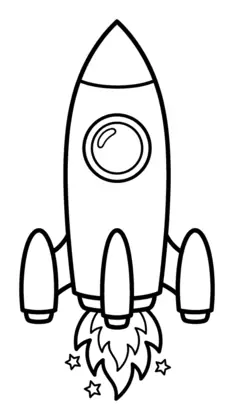
Years 1–2Sheet 32
Label a Space Rocket
Print free →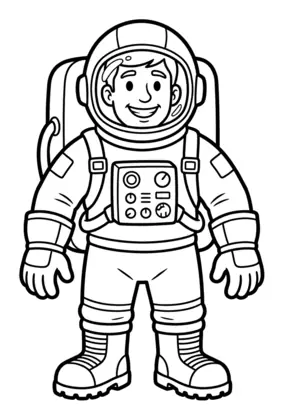
Years 1–2Sheet 33
Meet an Astronaut
Print free →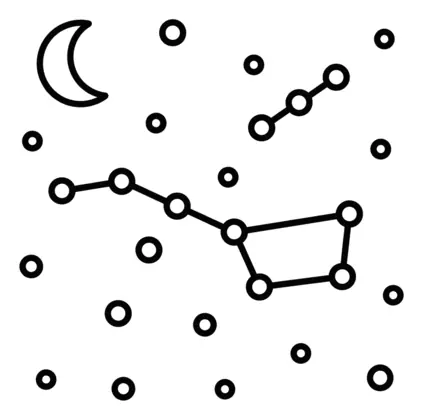
Years 5–6Sheet 173
Star Patterns in the Night Sky
Print free →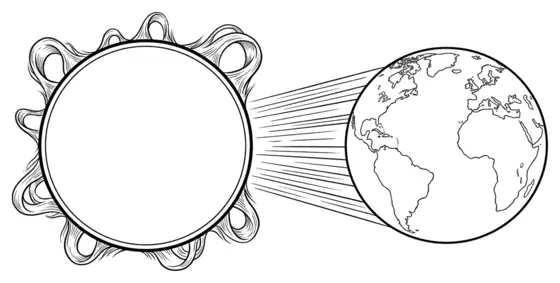
Years 5–6Sheet 170
Day and Night on Earth
Print free →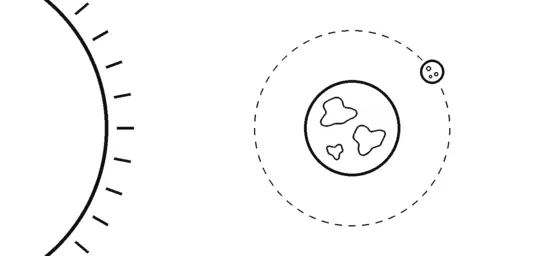
Years 5–6Sheet 174
The Earth, Sun and Moon
Print free →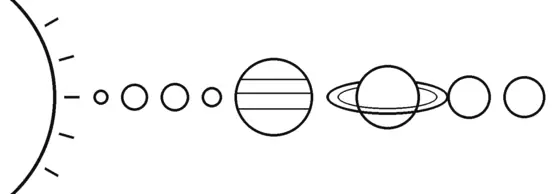
Years 5–6Sheet 171
Order of the Planets
Print free →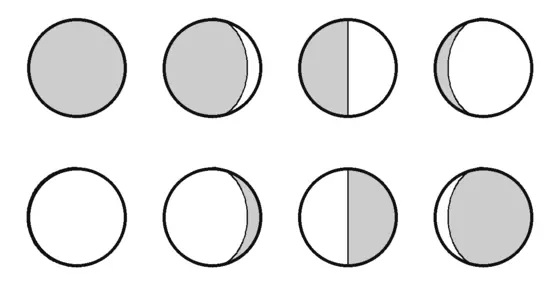
Years 5–6Sheet 172
Phases of the Moon
Print free →Space before and after Year 5
Space is not a separate topic in KS1 science, but younger children often meet it in history, because Neil Armstrong and the first Moon landing are among the curriculum's examples of significant people. Year 1 science also asks children to notice how day length changes with the seasons. In Year 5, the Earth's rotation explains day and night, while the reason for the seasons, the tilt of the Earth, waits until secondary school.
Questions parents ask
Why does the Moon change shape?
It does not really change. Half of the Moon is always lit by the Sun. As the Moon travels around the Earth, roughly once a month, we see different amounts of that lit half, from a thin crescent to a full Moon.
What causes day and night?
The Earth spins on its axis about once every 24 hours. The side facing the Sun has day, and the side facing away has night. That spin is also why the Sun seems to rise in the east and set in the west.
Are these space worksheets free?
Yes, all seven. Print them or save them as PDFs without signing up, and try the star patterns sheet on the next clear night, away from bright street lights.
Educational quiz app · Ages 5-10
More learning in the Owee app
Owee turns topics like this into quizzes for children aged 5 to 10, and a treehouse grows as they learn. No ads, no chat, no strangers.
- Family-friendly
- No ads
- Private
Educational quiz app · Ages 5-10
More learning in the Owee app
Owee turns topics like this into quizzes for children aged 5 to 10, and a treehouse grows as they learn. No ads, no chat, no strangers.
Scan with your phone camera
- Family-friendly
- No ads
- Private