Educational quiz app · Ages 5-10
This is what learning looks like


Educational quiz app · Ages 5-10
This is what learning looks like
No nagging required. Keep the learning going after the worksheet, with every question read aloud and Owee guiding each step.
Scan with your phone camera
- Family-friendly
- No ads
- Private
Science · Colouring and labelling worksheet
Phases of the Moon Worksheet (Free KS2 Science Printable)
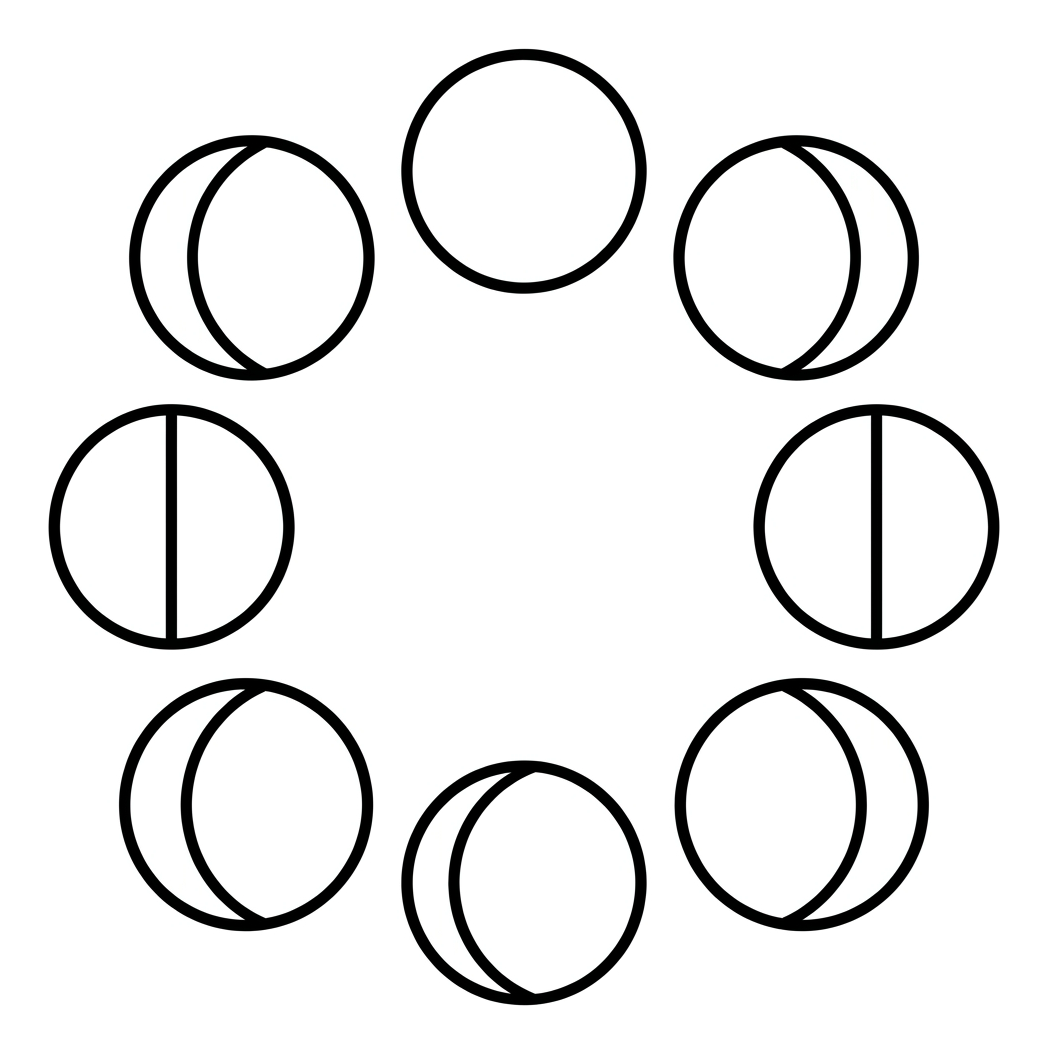
This free printable worksheet supports the Year 5 Science topic Earth and space, helping children name and order the main phases of the Moon and link the Moon's changing appearance to its orbit around the Earth. The picture shows eight numbered Moons in a ring for children to colour and name, starting from the new Moon.
It prints cleanly onto one A4 page and works well as a lesson starter, a homework task or a quiet revision activity. A word bank (in jumbled order) is included so children can label the phases with confidence, and the answers are listed below the worksheet for the adult who is supporting them.
What your child is learning
‘describe the movement of the moon relative to the Earth’
Year 5 Science: Earth and space, National Curriculum in England. Source and licence
Phases of the Moon
Free Science worksheet · Ages 9 to 11
Colour the lit part
The Moons are numbered in order, starting with the new Moon. The grey part of each Moon is in shadow. Colour the lit part yellow.
- Moon 1 is a new Moon: it is all in shadow, so there is nothing to colour.
- Moon 5 is a full Moon: colour it all yellow.
- Moons 2, 3 and 4 are growing (waxing): the light is on the right.
- Moons 6, 7 and 8 are shrinking (waning): the light is on the left.
- A crescent is a thin slice of light. A gibbous Moon is more than half lit.
Name the phases
Write the name of each numbered Moon on its line. Use the word bank to help you.
- 1
- 2
- 3
- 4
- 5
- 6
- 7
- 8
 Phases of the MoonSheet 172
Answers: Phases of the Moon
Sheet 172
- 1. New Moon
- 2. Waxing crescent (thin slice lit on the right)
- 3. First quarter (right half lit)
- 4. Waxing gibbous (large part lit on the right)
- 5. Full Moon
- 6. Waning gibbous (large part lit on the left)
- 7. Last quarter (left half lit)
- 8. Waning crescent (thin slice lit on the left)
For grown-ups. Free worksheets and the Owee quiz app at owee.world
Answer key
- 1. New Moon
- 2. Waxing crescent (thin slice lit on the right)
- 3. First quarter (right half lit)
- 4. Waxing gibbous (large part lit on the right)
- 5. Full Moon
- 6. Waning gibbous (large part lit on the left)
- 7. Last quarter (left half lit)
- 8. Waning crescent (thin slice lit on the left)
What this worksheet covers
The worksheet builds on four ideas linked to the Year 5 'Earth and space' unit: that the Moon orbits the Earth roughly once a month, that we always see the same side of the Moon, that the Moon does not make its own light but reflects light from the Sun, and that the part we see lit up changes as the Moon moves around us. The Moons are numbered 1 to 8 in the order of the cycle. Children use two simple rules to colour the lit part of each one (growing Moons are lit on the right, shrinking Moons on the left, as seen from the UK), then use the word bank to name each phase. Colouring first makes the shapes visible, so naming them becomes a matter of looking closely.
The eight phases, in order
The lunar cycle is usually described in eight stages: new Moon (we see no lit side), waxing crescent, first quarter (half lit, growing), waxing gibbous, full Moon (fully lit), waning gibbous, last quarter (half lit, shrinking) and waning crescent. 'Waxing' means the lit part is growing each night; 'waning' means it is shrinking. 'Gibbous' describes a Moon that is more than half lit but not yet full. The complete cycle from one new Moon to the next takes about 29.5 days, which is why we often round it to 'about a month'.
Why the Moon appears to change shape
It helps children to know that the Moon itself is not changing shape, and that the phases have nothing to do with the Earth's shadow. This is the most common misconception: the Earth's shadow only falls on the Moon during a lunar eclipse, which happens just a few times a year at most. One half of the Moon is always lit by the Sun. As the Moon orbits the Earth, we view that lit half from different angles, so we see different amounts of it. When the Moon is between the Earth and the Sun we see its unlit side (new Moon); when the Earth sits between the Moon and the Sun we see the whole lit side (full Moon). A simple home demonstration with a torch and a ball can make this very clear before children attempt the worksheet.
How to get the most from it
Encourage children to colour only the part of each Moon that is lit, leaving the shadow grey, which reinforces the idea that we are looking at light, not a changing shape. The numbers on the picture jump around the ring a little, so it helps to point to Moon 1 and follow the numbers together before starting. The lit-side rule on the sheet is for the UK and the rest of the northern hemisphere; in Australia the pattern is flipped. As an extension, ask confident pupils to explain in a sentence why a full Moon looks fully lit, linking their answer to the positions of the Earth, Moon and Sun. Pairing the worksheet with a few nights of real Moon-watching helps the learning stick.
Frequently asked questions
What are the eight phases of the Moon in order?
The eight phases are new Moon, waxing crescent, first quarter, waxing gibbous, full Moon, waning gibbous, last quarter and waning crescent. The cycle then repeats, taking about 29.5 days from one new Moon to the next.
Is this worksheet suitable for the KS2 Earth and space topic?
Yes. It is written for Year 5 Science and directly supports the National Curriculum objective to describe the movement of the Moon relative to the Earth. It also suits Year 6 revision of the same topic.
Why does the Moon change shape during the month?
The Moon does not actually change shape. One half is always lit by the Sun, and as the Moon orbits the Earth we see that lit half from different angles, so the amount we can see appears to grow and shrink across the month.
What do waxing and waning mean?
Waxing means the lit part of the Moon we can see is growing larger each night, between new Moon and full Moon. Waning means it is shrinking, between full Moon and the next new Moon.
Is this Moon phases worksheet free to print?
Yes. It is completely free to download and print. It is designed to fit on a single A4 page so it is easy to use at home or in the classroom.
Curriculum links
- Year 5 Science: Earth and space (statutory): 'describe the movement of the moon relative to the Earth'
- Year 5 Science, Earth and space: 'describe the Sun, Earth and Moon as approximately spherical bodies'
- Year 5 Science, Earth and space: 'use the idea of the Earth's rotation to explain day and night and the apparent movement of the Sun across the sky'
Quoted word for word from Department for Education documents: the National Curriculum in England, the EYFS framework or the RSHE guidance. Contains public sector information licensed under the Open Government Licence v3.0.
Made by The Owee education team. Updated 13/10/2026. Free to print and share.
More science worksheets
All Year 5 Science worksheets →
Years 5–6 · Earth and spaceSheet 170
Day and Night on Earth
Years 1–2 · Earth and spaceSheet 32
Label a Space Rocket
Years 1–2 · Earth and spaceSheet 33
Meet an Astronaut
Years 5–6 · Earth and spaceSheet 171
Order of the Planets
Years 5–6 · Earth and spaceSheet 173
Star Patterns in the Night Sky
Years 5–6 · Earth and spaceSheet 174
The Earth, Sun and Moon
Educational quiz app · Ages 5-10
More learning in the Owee app
Owee turns topics like this into quizzes for children aged 5 to 10, and a treehouse grows as they learn. No ads, no chat, no strangers.
- Family-friendly
- No ads
- Private
Educational quiz app · Ages 5-10
More learning in the Owee app
Owee turns topics like this into quizzes for children aged 5 to 10, and a treehouse grows as they learn. No ads, no chat, no strangers.
Scan with your phone camera
- Family-friendly
- No ads
- Private