Educational quiz app · Ages 5-10
This is what learning looks like


Educational quiz app · Ages 5-10
This is what learning looks like
No nagging required. Keep the learning going after the worksheet, with every question read aloud and Owee guiding each step.
Scan with your phone camera
- Family-friendly
- No ads
- Private
Science · Short-answer and true-or-false worksheet
The Earth, Sun and Moon: Free KS2 Science Worksheet
This free printable worksheet supports the Year 5 Science topic Earth and Space. Children describe the Sun, Earth and Moon as approximately spherical bodies and explain that the Moon orbits the Earth while the Earth, in turn, orbits the Sun.
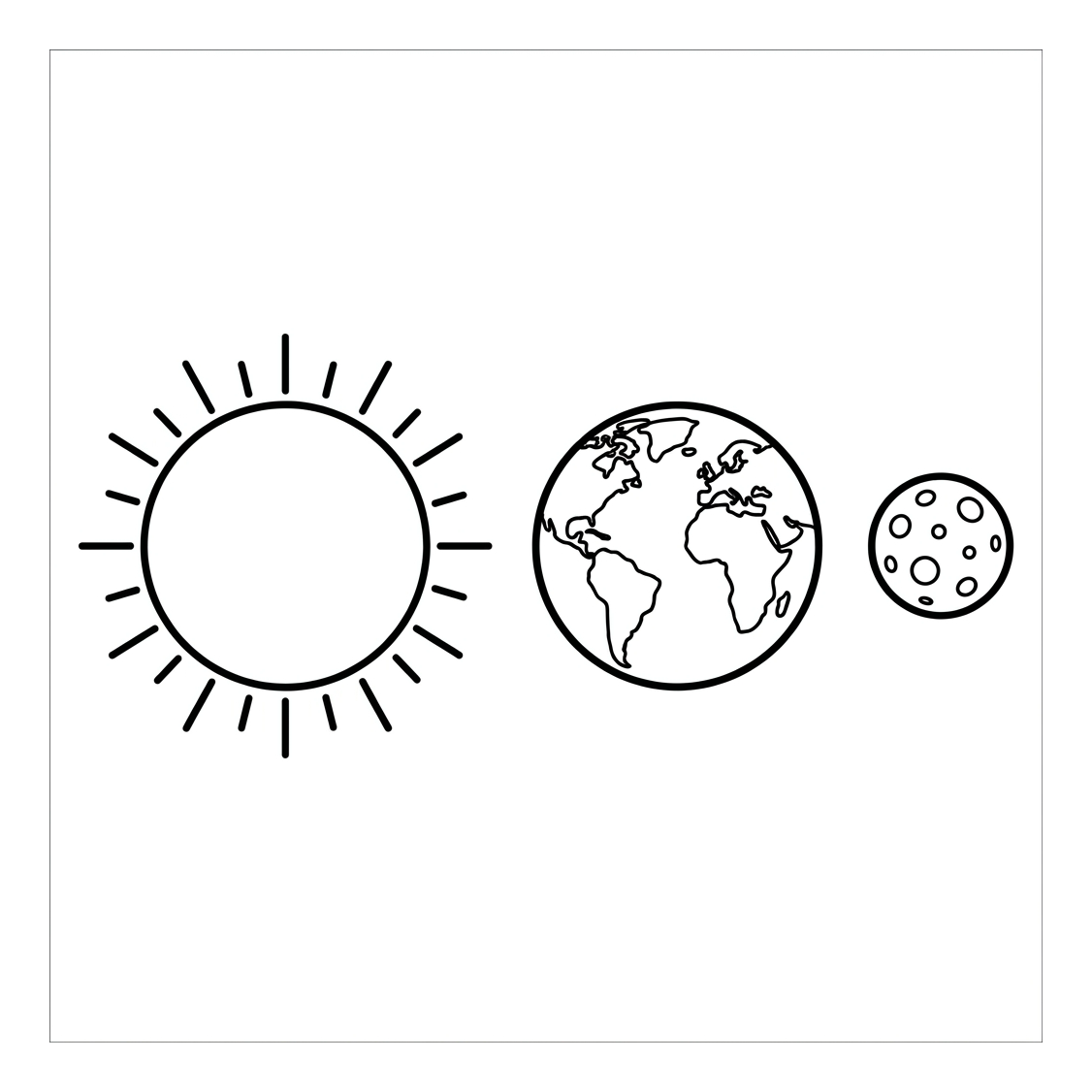
The line drawing is there to colour in and talk about, while the short questions and true-or-false task check the key facts. It prints cleanly onto one A4 page, making it ready to use at home or in the classroom with no preparation.
What your child is learning
‘describe the sun, Earth and moon as approximately spherical bodies’
Year 5 Science: Earth and space, National Curriculum in England. Source and licence
The Earth, Sun and Moon
Free Science worksheet · Ages 9 to 11
Activity 1
Answer the questions on the lines. Use the word bank to help you. The picture is not to scale: the real Sun is more than 100 times wider than the Earth.
Which of the three is a star?
What shape are the Sun, the Earth and the Moon?
What does the Moon orbit (travel around)?
What does the Earth orbit (travel around)?
Activity 2
Read each sentence. Tick the box if it is true. Leave it empty if it is false.
- The Sun is the largest of the three.
- The Sun orbits the Earth.
- The Moon is bigger than the Earth.
- The Moon takes about a month to travel once around the Earth.
- The Earth takes about a year to travel once around the Sun.
 The Earth, Sun and MoonSheet 174
Answers: The Earth, Sun and Moon
Sheet 174
- Which of the three is a star? — The Sun
- What shape are the Sun, the Earth and the Moon? — Roughly a sphere (ball-shaped); accept "approximately spherical"
- What does the Moon orbit (travel around)? — The Earth
- What does the Earth orbit (travel around)? — The Sun
- The Sun is the largest of the three. — True: tick it
- The Sun orbits the Earth. — False: no tick. The Earth orbits the Sun.
- The Moon is bigger than the Earth. — False: no tick. The Moon is about a quarter as wide as the Earth.
- The Moon takes about a month to travel once around the Earth. — True: tick it
- The Earth takes about a year to travel once around the Sun. — True: tick it
For grown-ups. Free worksheets and the Owee quiz app at owee.world
Answer key
- Which of the three is a star? — The Sun
- What shape are the Sun, the Earth and the Moon? — Roughly a sphere (ball-shaped); accept "approximately spherical"
- What does the Moon orbit (travel around)? — The Earth
- What does the Earth orbit (travel around)? — The Sun
- The Sun is the largest of the three. — True: tick it
- The Sun orbits the Earth. — False: no tick. The Earth orbits the Sun.
- The Moon is bigger than the Earth. — False: no tick. The Moon is about a quarter as wide as the Earth.
- The Moon takes about a month to travel once around the Earth. — True: tick it
- The Earth takes about a year to travel once around the Sun. — True: tick it
What this worksheet covers
This worksheet focuses on two specific objectives from the Year 5 Earth and Space unit: describing the Sun, Earth and Moon as approximately spherical bodies, and describing the movement of the Moon relative to the Earth. Children practise naming each body, comparing their real sizes, and explaining the nested pattern of movement in which the Moon orbits the Earth while the Earth orbits the Sun. A small word bank supports children who are still building confidence with words such as sphere and orbit.
The science behind the topic
The Sun is a star: an enormous ball of hot gas at the centre of our Solar System. The Earth is a planet that travels around the Sun once roughly every 365 days, which we measure as one year. The Moon is a natural satellite that travels around the Earth roughly once every 27 to 28 days. All three are approximately spherical, although none is a perfect sphere. The Sun is by far the largest of the three, the Earth is much smaller, and the Moon is smaller still, with a diameter around a quarter of the Earth's. Establishing these relative sizes helps children make sense of later work on day, night and the phases of the Moon.
Common misconceptions to watch for
Children often muddle what orbits what. A frequent error is believing that the Sun moves around the Earth, or that the Moon orbits the Sun directly rather than orbiting the Earth. Another is assuming the three bodies are similar in size because they can appear similar in the sky. It is worth emphasising that the Sun only looks small because it is so far away (the picture on the sheet is not to scale; the real Sun is more than 100 times wider than the Earth), and that the curriculum asks pupils to call these bodies approximately spherical, not perfect spheres. Gentle questioning during the tasks below can surface and correct these ideas.
How to use this sheet at home or in class
Children can begin by colouring the picture, then answer the four short questions using the word bank if needed, before tackling the true-or-false sentences. The sheet works well as an introduction to the topic, as a quick recap, or as a low-stress homework activity. For extension, ask children to explain in their own words why we have a year (the Earth's orbit of the Sun) and roughly how long the Moon takes to orbit the Earth. Modelling the movement with three differently sized balls can make the nested orbits clearer.
Frequently asked questions
Does the Moon orbit the Earth or the Sun?
The Moon orbits the Earth. At the same time, the Earth (carrying the Moon with it) orbits the Sun, so the Moon's overall path through space is shaped by both movements. For the Year 5 curriculum, the key point children need is that the Moon orbits the Earth and the Earth orbits the Sun.
Why does the curriculum say the Sun, Earth and Moon are approximately spherical?
None of these bodies is a perfect sphere. The Earth, for example, bulges slightly at the equator. The National Curriculum deliberately uses the word approximately so that children describe them as ball-shaped without claiming they are mathematically perfect spheres.
How long does the Moon take to orbit the Earth?
The Moon takes roughly 27 to 28 days to complete one orbit of the Earth. Children sometimes round this to about a month, which is where the word month originally comes from.
Is the Sun a planet or a star?
The Sun is a star, not a planet. It is a huge ball of hot, glowing gas at the centre of our Solar System, and the Earth and the other planets orbit around it.
Is this worksheet free to print and use in class?
Yes. This Earth, Sun and Moon worksheet is completely free to download and print for home or classroom use, and it is designed to fit onto a single A4 page.
Curriculum links
- Year 5 Science: Earth and space (statutory): 'describe the sun, Earth and moon as approximately spherical bodies'
- Year 5 Science, Earth and Space: 'describe the movement of the Earth and other planets relative to the Sun in the Solar System'
- Year 5 Science, Earth and Space: 'describe the movement of the Moon relative to the Earth'
Quoted word for word from Department for Education documents: the National Curriculum in England, the EYFS framework or the RSHE guidance. Contains public sector information licensed under the Open Government Licence v3.0.
Made by The Owee education team. Updated 13/10/2026. Free to print and share.
More science worksheets
All Year 5 Science worksheets →
Years 5–6 · Earth and spaceSheet 170
Day and Night on Earth
Years 1–2 · Earth and spaceSheet 32
Label a Space Rocket
Years 1–2 · Earth and spaceSheet 33
Meet an Astronaut
Years 5–6 · Earth and spaceSheet 171
Order of the Planets
Years 5–6 · Earth and spaceSheet 172
Phases of the Moon
Years 5–6 · Earth and spaceSheet 173
Star Patterns in the Night Sky
Educational quiz app · Ages 5-10
More learning in the Owee app
Owee turns topics like this into quizzes for children aged 5 to 10, and a treehouse grows as they learn. No ads, no chat, no strangers.
- Family-friendly
- No ads
- Private
Educational quiz app · Ages 5-10
More learning in the Owee app
Owee turns topics like this into quizzes for children aged 5 to 10, and a treehouse grows as they learn. No ads, no chat, no strangers.
Scan with your phone camera
- Family-friendly
- No ads
- Private