Educational quiz app · Ages 5-10
This is what learning looks like


Educational quiz app · Ages 5-10
This is what learning looks like
No nagging required. Keep the learning going after the worksheet, with every question read aloud and Owee guiding each step.
Scan with your phone camera
- Family-friendly
- No ads
- Private
English · Writing and colouring worksheet
Verbs Worksheet: Doing Words for KS1 (Free Printable)
A verb is a "doing word" — it tells us the action that someone or something is doing. This free printable introduces the idea gently: your child looks at the rabbit and the birds, decides what each one is doing and writes the matching verb, then finds the verb hidden in three short sentences. Naming actions out loud first, then writing them down, helps young learners connect spoken language with the grammatical word "verb".
What your child is learning
‘adjective, adverb, verb’
Year 2 English: Terminology for pupils (Appendix 2), National Curriculum in England. Source and licence
Doing Words (Verbs)
Free English worksheet · Ages 5 to 7
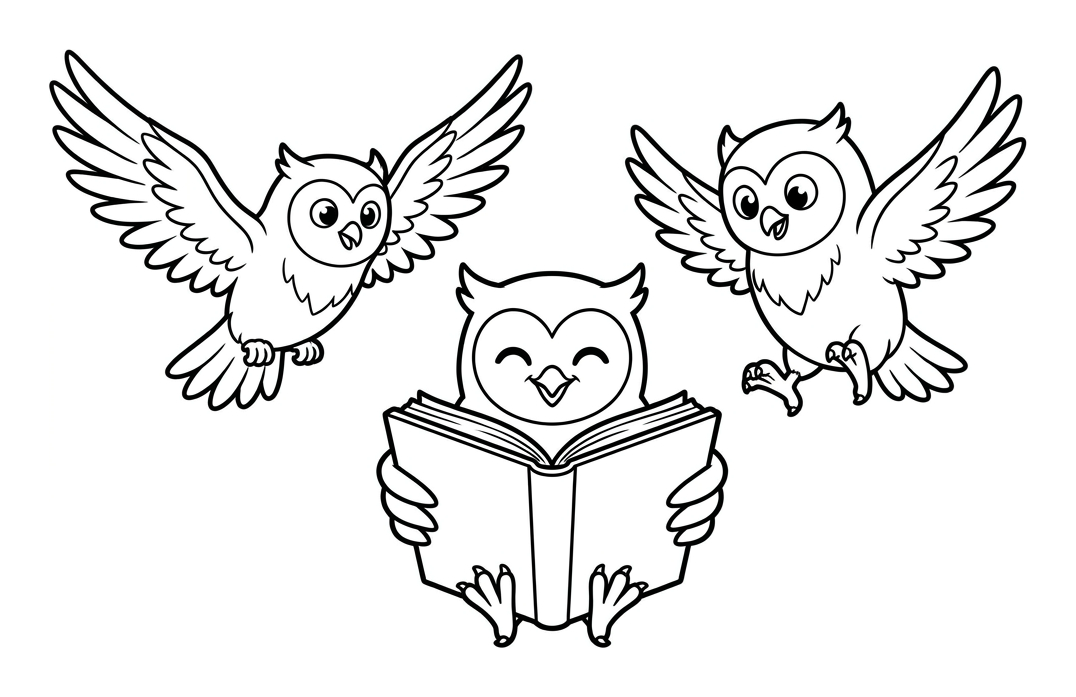
What are the animals doing?
Look at the picture. Write the doing word (verb).
What is the rabbit in the middle doing?
What are the two birds at the sides doing?
Find the verb
Write the doing word (verb) from each sentence.
The rabbit reads a book.
Two birds fly over the trees.
The happy rabbit smiles.
Colour the picture
Now colour the rabbit and the birds. Say each doing word out loud as you colour.
 Doing Words (Verbs)Sheet 72
Answers: Doing Words (Verbs)
Sheet 72
- What is the rabbit in the middle doing? — reading
- What are the two birds at the sides doing? — flying (also accept flapping)
- The rabbit reads a book. — reads
- Two birds fly over the trees. — fly
- The happy rabbit smiles. — smiles
For grown-ups. Free worksheets and the Owee quiz app at owee.world
Answer key
- What is the rabbit in the middle doing? — reading
- What are the two birds at the sides doing? — flying (also accept flapping)
- The rabbit reads a book. — reads
- Two birds fly over the trees. — fly
- The happy rabbit smiles. — smiles
What is a verb?
A verb is a word that names an action or a state of being. At Key Stage 1, the focus is firmly on action verbs — the everyday doing words children already use, such as run, jump, read, fly and sleep. The national curriculum introduces the word 'verb' in Year 2, so the goal is not a technical definition but confident recognition: spotting the doing word in a picture or a simple sentence and being able to name it correctly.
How to use this worksheet at home
Start by talking about each picture before any writing happens. Ask your child, 'What is the bird doing here?' and let them answer in a full sentence — 'The bird is flying.' Then point out that flying is the doing word. Encourage them to write just the verb on the line. In the sentence task, watch for children who pick the noun: in ‘Two birds fly over the trees’ the verb is fly, not birds. Asking ‘What do the birds do?’ points them to it. If spelling is still developing, accept a confident phonetic attempt and gently model the correct spelling afterwards. Finish with the colouring.
Verbs and tense in Year 2
In Year 1, children add endings such as -ing and -ed to verbs (helping, helped) without yet using the word 'verb'. In Year 2 they learn the term, and they also learn about tense: choosing between present and past forms (for example jump and jumped, fly and flew) and using the same tense consistently in their writing. They also meet forms such as is flying and was reading for actions in progress. Spotting verbs reliably is the groundwork for all of this tense work.
Extending the learning
Turn verb-spotting into a game away from the page. During a walk or while tidying up, take turns to call out the doing word for whatever you are doing — 'I am walking', 'You are carrying'. You can also play 'verb charades', acting out an action for your child to name. These short, playful repetitions help the term 'verb' settle into everyday vocabulary so it feels familiar when it appears again in school.
Frequently asked questions
What is a verb for KS1 children?
For Key Stage 1, a verb is best explained as a 'doing word' — a word that tells us the action someone or something is doing, such as run, jump, read or fly. Children learn the term 'verb' in Year 2, and start by recognising doing words in pictures and simple sentences.
At what age do children learn about verbs?
In England, children are formally introduced to the word 'verb' in Year 2, around ages 6 to 7, as part of the grammar terminology in English Appendix 2. In the same year they learn about present and past tense. Younger children already use verbs all the time when they talk, so a confident Year 1 child can enjoy this sheet too.
Is this verbs worksheet free to print?
Yes. This worksheet is completely free to download and print. It is designed to fit on a single A4 page so you can print it at home or in the classroom without any sign-up.
How do I explain verbs to a 5 or 6 year old?
Keep it concrete and active. Show or act out an action, then say 'That is the doing word — the verb.' Linking the term to movement they can see, like jumping or clapping, makes the idea stick far better than a formal definition.
What is the difference between a verb and a noun?
A noun names a person, place or thing (bird, book, garden), while a verb names an action or doing word (fly, read, jump). A useful test is to try changing the word to the past: <em>fly</em> becomes <em>flew</em> and <em>read</em> stays <em>read</em> but sounds different, while <em>bird</em> and <em>book</em> do not change. Some words can be either, depending on the sentence: <em>a fly</em> is a noun, but <em>birds fly</em> uses it as a verb.
Curriculum links
- Year 2 English: Terminology for pupils (Appendix 2) (statutory): 'adjective, adverb, verb'
Quoted word for word from Department for Education documents: the National Curriculum in England, the EYFS framework or the RSHE guidance. Contains public sector information licensed under the Open Government Licence v3.0.
Made by The Owee education team. Updated 13/10/2026. Free to print and share.
More english worksheets
All Year 2 English worksheets →
Years 3–4 · GrammarSheet 109
Adverbs: How, When and Where
Years 2–3 · GrammarSheet 70
Conjunctions: because, but and so
Years 1–2 · GrammarSheet 71
Describing Words (Adjectives)
Years 1–2 · GrammarSheet 73
Naming Words (Nouns)
Years 2–3 · GrammarSheet 110
Prepositions: Where Is the Cat?
Years 2–3 · GrammarSheet 74
Spot the Nouns, Verbs and Adjectives
Educational quiz app · Ages 5-10
More learning in the Owee app
Owee turns topics like this into quizzes for children aged 5 to 10, and a treehouse grows as they learn. No ads, no chat, no strangers.
- Family-friendly
- No ads
- Private
Educational quiz app · Ages 5-10
More learning in the Owee app
Owee turns topics like this into quizzes for children aged 5 to 10, and a treehouse grows as they learn. No ads, no chat, no strangers.
Scan with your phone camera
- Family-friendly
- No ads
- Private