Educational quiz app · Ages 5-10
This is what learning looks like


Educational quiz app · Ages 5-10
This is what learning looks like
No nagging required. Keep the learning going after the worksheet, with every question read aloud and Owee guiding each step.
Scan with your phone camera
- Family-friendly
- No ads
- Private
Animals & Nature · Colouring and counting worksheet
Under the Sea: Count the Ocean Animals - Free KS1 Worksheet
This free printable invites children aged 5 to 7 to explore an ocean habitat by counting and colouring the sea creatures that live there. The single line-art scene prints cleanly to one A4 page, so it is ready to use at home or in the classroom with nothing more than pencils or crayons.
It links directly to the KS1 Science topic of living things and their habitats. Children count the six fish, the octopus's eight arms, the starfish's five arms and then all ten animals in the scene. Along the way you can talk about why these animals live in the sea and how they are suited to a watery home.
What your child is learning
‘Have a deep understanding of numbers to 10, including the composition of each number.’
Reception (EYFS): Number early learning goal, Department for Education. Source and licence
Under the Sea: Count the Ocean Animals
Free Animals & Nature worksheet · Ages 5 to 7
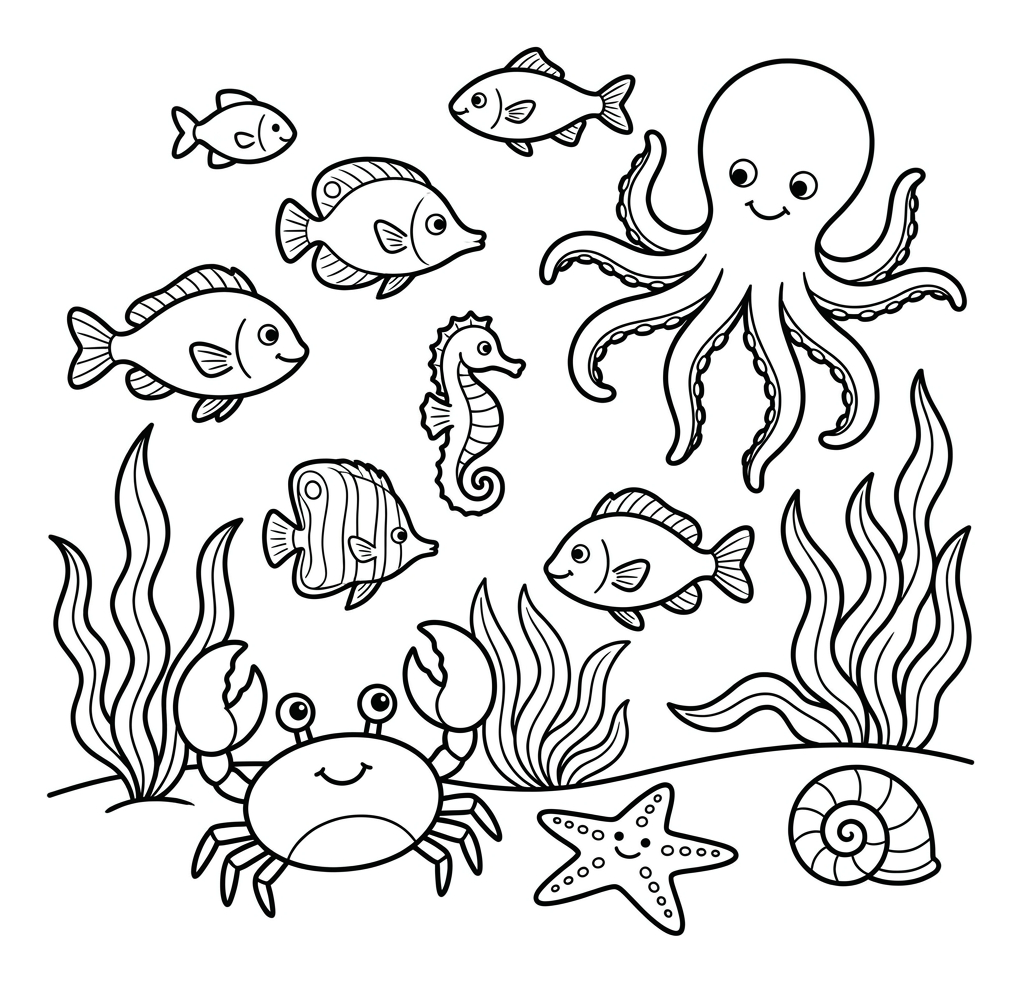
Count the sea creatures
Look carefully at the sea. Count, then write the number in the box.
- How many fish can you see?
- How many arms does the octopus have?
- How many arms does the starfish have?
- How many animals are there altogether? Do not count the shell.
Colour the ocean
Now colour the sea with your pencils or crayons.
- Colour the seaweed green and the fish in bright colours.
- Colour the crab and the starfish red or orange.
 Under the Sea: Count the Ocean AnimalsSheet 2
Answers: Under the Sea: Count the Ocean Animals
Sheet 2
- How many fish can you see? — 6
- How many arms does the octopus have? — 8
- How many arms does the starfish have? — 5
- How many animals are there altogether? Do not count the shell. — 10 (6 fish, 1 octopus, 1 seahorse, 1 crab and 1 starfish)
For grown-ups. Free worksheets and the Owee quiz app at owee.world
Answer key
- How many fish can you see? — 6
- How many arms does the octopus have? — 8
- How many arms does the starfish have? — 5
- How many animals are there altogether? Do not count the shell. — 10 (6 fish, 1 octopus, 1 seahorse, 1 crab and 1 starfish)
What children practise on this worksheet
This sheet brings together two skills that work well side by side at Key Stage 1. First, children count carefully, touching or marking each creature once so they do not count it twice or miss one out, which builds reliable one-to-one correspondence. Second, they colour the scene, which encourages close looking and the fine motor control that supports early handwriting. Because the picture shows a clearly defined ocean habitat, it also opens up simple science talk about which animals belong in the sea and why.
How to use it at home or in class
Print one copy per child and provide pencils or crayons. Begin by naming the animals together, then ask the child to count each type in turn and write the total in the box. The fish are spread across the scene, so suggest ticking each one as it is counted. The octopus and starfish questions ask children to count the parts of one animal, which is a useful change from counting separate objects. In the last question, many children count the shell too; it is a good moment to explain that a shell is the home a sea snail has left behind, so the answer is 10, not 11. The sheet suits a quiet independent task, a paired activity or a whole-class warm-up before a wider topic on the seaside or oceans.
Talking about habitats
A habitat is simply the place where an animal lives and finds everything it needs, such as food, shelter and a safe place to grow. The ocean is a watery habitat, and the animals on this sheet are all suited to it in different ways: fish have gills to breathe underwater and fins to swim, a crab has a hard shell and claws for life on the seabed, and an octopus has soft arms for moving and gripping. Asking 'Could a crab live in a tree? Why not?' helps children grasp the central idea that most living things live in habitats to which they are suited.
Extending the learning
Once the sheet is finished, you can stretch the activity in several directions. Ask children to compare quantities ('Are there more fish or more crabs?'), introducing simple comparison language. You might add the totals together for early addition practice, or sort the creatures into those with shells and those without. For a creative follow-up, children could invent a name for one of the animals or draw an extra sea creature in any spare space, then explain how their new creature is suited to living underwater.
Frequently asked questions
Is this under-the-sea worksheet free to print?
Yes. It is completely free to download and print, with no sign-up required. It is designed to fit on one A4 page so you only need a single sheet of paper per child.
What age and key stage is it for?
It is aimed at children aged 5 to 7, which covers Years 1 and 2 (Key Stage 1). The counting and colouring tasks also work well as a gentle introduction for Reception children with a little adult support.
Which part of the curriculum does it cover?
It supports the KS1 Year 2 Science topic 'Living things and their habitats', where children identify and name animals in their habitats and learn that most living things live in habitats to which they are suited. It also reinforces early counting in Maths.
Do I need any special equipment?
No. You only need a printer, a sheet of A4 paper and some colouring pencils or crayons. A regular pencil is enough for writing the counting totals in the boxes.
How can I make the activity easier or harder?
For younger children, count the fish together, touching each one, and let them try the octopus arms on their own. To extend older children, ask them to compare amounts (‘Are there more fish or more octopus arms?’), add two totals together, or sort the creatures into groups such as those with shells and those without.
Curriculum links
- Reception (EYFS): Number early learning goal (statutory): 'Have a deep understanding of numbers to 10, including the composition of each number.'
- KS1 Year 2 Science, Living things and their habitats: 'identify that most living things live in habitats to which they are suited'
- KS1 Year 2 Science, Living things and their habitats: 'identify and name a variety of plants and animals in their habitats'
Quoted word for word from Department for Education documents: the National Curriculum in England, the EYFS framework or the RSHE guidance. Contains public sector information licensed under the Open Government Licence v3.0.
Made by The Owee education team. Updated 13/10/2026. Free to print and share.
More maths worksheets
All Reception Maths worksheets →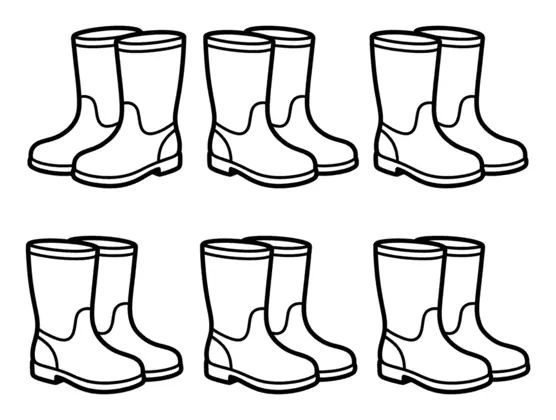
Years 1–2 · CountingSheet 14
Count in 2s: Pairs of Wellies
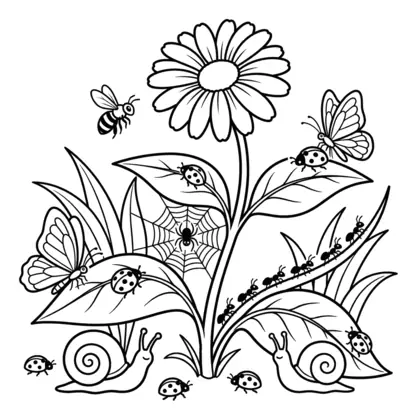
Reception–Year 1 · CountingSheet 1
Count the Minibeasts
Reception–Year 1 · CountingSheet 15
Count to 20: Ladybird Spots
Years 2–3 · CountingSheet 59
Counting in 3s
Year 3 · CountingSheet 98
Counting in 4s, 8s, 50s and 100s
Years 1–2 · CountingSheet 16
Counting in 5s and 10s
Educational quiz app · Ages 5-10
More learning in the Owee app
Owee turns topics like this into quizzes for children aged 5 to 10, and a treehouse grows as they learn. No ads, no chat, no strangers.
- Family-friendly
- No ads
- Private
Educational quiz app · Ages 5-10
More learning in the Owee app
Owee turns topics like this into quizzes for children aged 5 to 10, and a treehouse grows as they learn. No ads, no chat, no strangers.
Scan with your phone camera
- Family-friendly
- No ads
- Private