Educational quiz app · Ages 5-10
This is what learning looks like


Educational quiz app · Ages 5-10
This is what learning looks like
No nagging required. Keep the learning going after the worksheet, with every question read aloud and Owee guiding each step.
Scan with your phone camera
- Family-friendly
- No ads
- Private
Geography · Colouring and labelling worksheet
Types of Settlement Worksheet (Free KS2 Geography Printable)
This free printable worksheet helps children in Years 3 and 4 understand the four main types of settlement studied in KS2 geography: the hamlet, the village, the town and the city. Children match each settlement to a short description of its size and services, then write all four in order from smallest to largest.
The picture shows the four settlements growing in size across the page, from a farm to a city skyline, so children can colour them in and compare what each one has. The whole sheet is designed for one A4 page, ready for the classroom or the kitchen table.
What your child is learning
‘human geography, including: types of settlement and land use, economic activity including trade links, and the distribution of natural resources including energy, food, minerals and water’
Key stage 2 Geography: Human and physical geography, National Curriculum in England. Source and licence

Types of Settlement
Free Geography worksheet · Ages 7 to 9
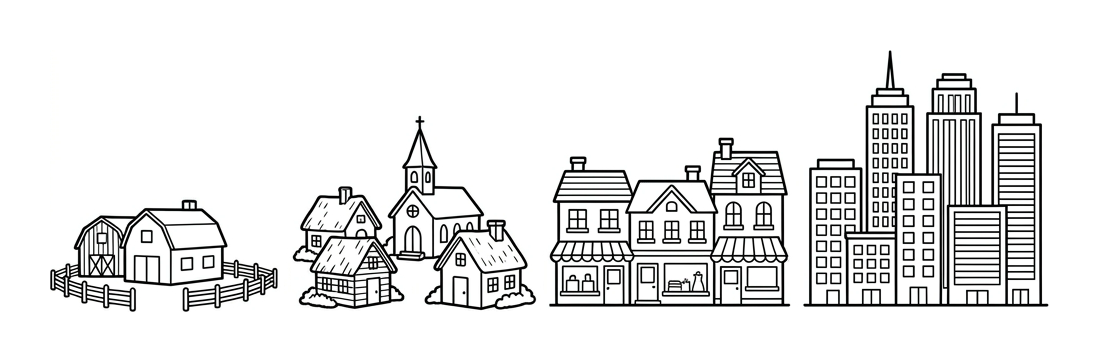
Colour the settlements
Colour the four settlements. The smallest is on the left and the biggest is on the right.
Match and order
Write the right word from the word bank for each description. Use each word once.
A larger place with many houses, several shops and services that people travel to use.
Just a few houses, often around a farm, with no shops or church.
A very large place with tall buildings and many thousands of people. It often has a cathedral.
A group of homes with a church and maybe a small shop or primary school.
Now write the four settlements in order, from smallest to largest.
 Types of SettlementSheet 126
Answers: Types of Settlement
Sheet 126
- A larger place with many houses, several shops and services that people travel to use. — town
- Just a few houses, often around a farm, with no shops or church. — hamlet
- A very large place with tall buildings and many thousands of people. It often has a cathedral. — city
- A group of homes with a church and maybe a small shop or primary school. — village
- Now write the four settlements in order, from smallest to largest. — hamlet, village, town, city
For grown-ups. Free worksheets and the Owee quiz app at owee.world
Answer key
- A larger place with many houses, several shops and services that people travel to use. — town
- Just a few houses, often around a farm, with no shops or church. — hamlet
- A very large place with tall buildings and many thousands of people. It often has a cathedral. — city
- A group of homes with a church and maybe a small shop or primary school. — village
- Now write the four settlements in order, from smallest to largest. — hamlet, village, town, city
What are the four main types of settlement?
A settlement is simply a place where people live, and in KS2 geography children learn to sort settlements by how many people live there and what services they have. A hamlet is the smallest, usually just a handful of houses, often a farm or two, with no shops or church. A village is bigger, with a cluster of homes and a few key buildings such as a church, a small shop or a primary school. A town is larger again, with rows of houses, several shops, schools and services that people from nearby settlements travel to use. A city is the largest, a big built-up place with tall buildings, many thousands of people, and (in the UK, traditionally) often a cathedral. Ordering them from smallest to largest, hamlet, village, town, city, gives children a clear and memorable framework.
How this worksheet supports the KS2 curriculum
The National Curriculum asks Key Stage 2 children to describe and understand key aspects of human geography, including types of settlement and land use. This worksheet focuses on the first half of that objective: recognising and naming the main types of settlement and understanding how they differ in size and in the services they offer. The descriptions on the sheet are mixed up, so children have to read each one for clues, such as "no shops or church" or "services that people travel to use", rather than simply follow the order of the picture. The final question then asks them to put the four in order. This builds the vocabulary they will need when they go on to study land use, urban and rural areas, and how settlements change over time.
Ideas for using the sheet at home or in class
Before children begin, it can help to talk about the place where you live. Is it a hamlet, a village, a town or a city, and how do you know? Encourage children to think about clues such as the number of shops, whether there is a church or cathedral, and how busy the roads are. After completing the worksheet, you could extend the learning by looking at a local map together, finding examples of each settlement type, or sorting familiar place names into the four groups. Colouring the picture first is a calm way in for younger or less confident children: ask them to spot what each settlement has that the one before it does not, such as the church in the village or the shops in the town.
Common misconceptions to watch for
Children sometimes assume that a city must simply be "a really big town", or that any large group of houses is a town. It is worth explaining that the difference is about size, population and the range of services, rather than a single feature. In the UK, city status is granted by the monarch and is not only about population. Reading and Northampton are large towns, while St Davids in Wales, with fewer than 2,000 people, is a city. For this age group, focusing on the broad pattern, more people and more services as you move from hamlet to city, is the most useful idea, and the formal rules can be introduced later. Also remind children that a village can still have a church even though it is smaller than a town.
Frequently asked questions
What are the four types of settlement for KS2?
The four types of settlement usually taught in KS2 are the hamlet, the village, the town and the city. They are ordered from smallest to largest, with a hamlet being just a few houses and a city being a large built-up place with many thousands of people and a wide range of services.
What is the difference between a hamlet, a village, a town and a city?
A hamlet is the smallest, often just a handful of homes with no shops or church. A village is bigger and usually has a church and perhaps a shop or school. A town is larger again with many houses and several shops and services. A city is the largest, with tall buildings, many thousands of residents and, traditionally in the UK, a cathedral.
What age group is this settlement worksheet for?
This worksheet is designed for children aged 7 to 9, which covers Years 3 and 4 in Key Stage 2. The vocabulary and matching task suit this age range, though confident Year 2 children or those needing extra practice in Year 5 may also find it useful.
Is this types of settlement worksheet free to print?
Yes. The worksheet is free to download and print. It is designed for one A4 page, so it is easy to use at home or photocopy for a whole class.
How can I help my child understand settlement types?
Start by discussing where you live and what makes it a hamlet, village, town or city. Look for clues such as the number of shops, the presence of a church or cathedral, and how busy it is. Looking at a local map together and sorting familiar place names into the four groups is a helpful follow-up activity.
Curriculum links
- Key stage 2 Geography: Human and physical geography (statutory): 'human geography, including: types of settlement and land use, economic activity including trade links, and the distribution of natural resources including energy, food, minerals and water'
Quoted word for word from Department for Education documents: the National Curriculum in England, the EYFS framework or the RSHE guidance. Contains public sector information licensed under the Open Government Licence v3.0.
Made by The Owee education team. Updated 13/10/2026. Free to print and share.
More geography worksheets
All Year 3 Geography worksheets →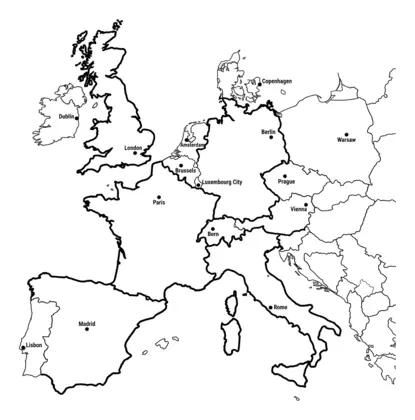
Years 4–5 · EuropeSheet 161
Countries and Capitals of Europe
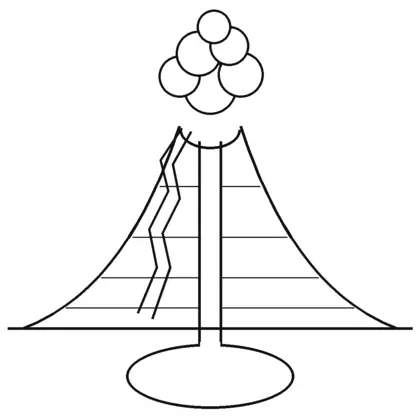
Years 3–4 · Volcanoes and earthquakesSheet 164
Inside a Volcano
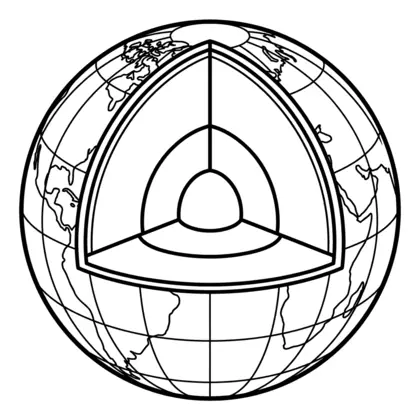
Years 3–4 · Volcanoes and earthquakesSheet 165
Layers of the Earth
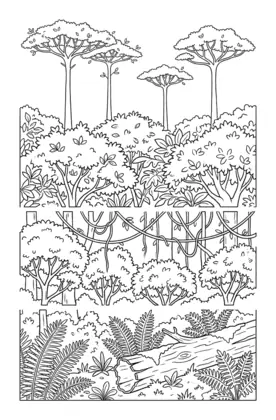
Years 3–4 · RainforestsSheet 163
Layers of the Rainforest
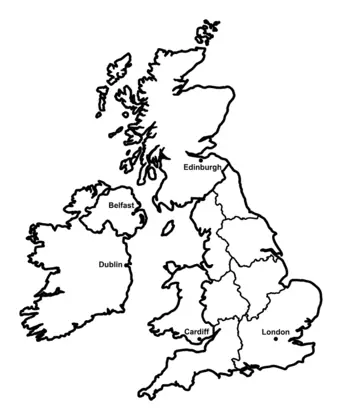
Years 2–3 · The UKSheet 93
Map of the United Kingdom
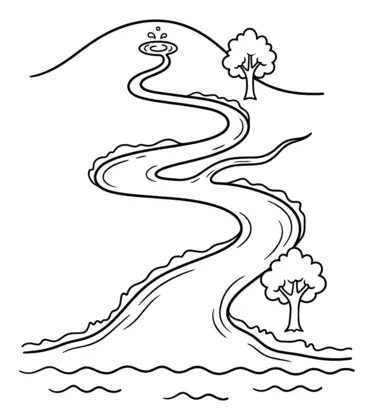
Years 3–4 · RiversSheet 125
Parts of a River
Educational quiz app · Ages 5-10
More learning in the Owee app
Owee turns topics like this into quizzes for children aged 5 to 10, and a treehouse grows as they learn. No ads, no chat, no strangers.
- Family-friendly
- No ads
- Private
Educational quiz app · Ages 5-10
More learning in the Owee app
Owee turns topics like this into quizzes for children aged 5 to 10, and a treehouse grows as they learn. No ads, no chat, no strangers.
Scan with your phone camera
- Family-friendly
- No ads
- Private