Educational quiz app · Ages 5-10
This is what learning looks like


Educational quiz app · Ages 5-10
This is what learning looks like
No nagging required. Keep the learning going after the worksheet, with every question read aloud and Owee guiding each step.
Scan with your phone camera
- Family-friendly
- No ads
- Private
History · Colouring and ordering worksheet
Transport Through Time: Free KS1 History Worksheet (Ages 5 to 7)
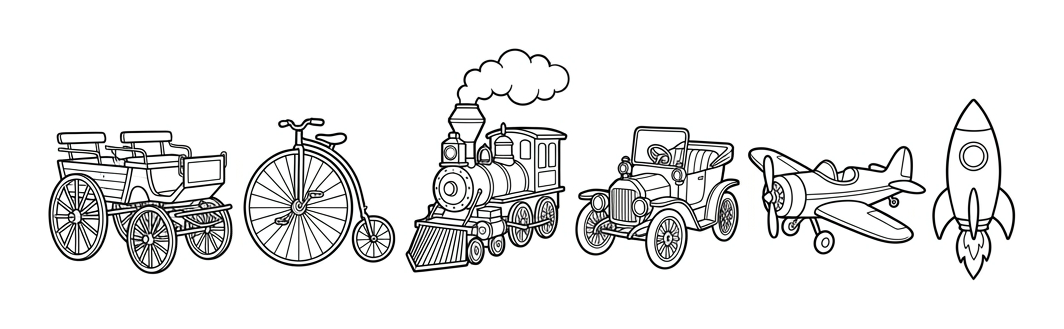
This free printable worksheet introduces children aged 5 to 7 to one of the most accessible ideas in early history: that the way people travel has changed over time. Six kinds of transport, from a horse-drawn carriage to a space rocket, are drawn in a row to colour, then children number them from oldest to newest.
It supports the KS1 history aim of knowing where things fit in time, and gives children practice with common words and phrases relating to the passing of time such as "old", "new", "before" and "after". It prints on one A4 page and needs only colouring pencils, a pencil and a little conversation.
What your child is learning
‘events beyond living memory that are significant nationally or globally’
Key stage 1 History: events beyond living memory, National Curriculum in England. Source and licence
Transport Through Time
Free History worksheet · Ages 5 to 7
Activity 1
Colour each vehicle. Try to make each one look different.
Put them in order
Write a number in each box. Write 1 for the oldest and 6 for the newest.
- Aeroplane
- Horse and cart
- Motor car
- Rocket
- Steam train
- Penny-farthing bicycle
Time words
Answer the questions. Use the word bank to help you.
Which came first, the steam train or the aeroplane?
Did the rocket come before or after the motor car?
Write one vehicle your grandparents might have seen when they were young.
 Transport Through TimeSheet 49
Answers: Transport Through Time
Sheet 49
- Aeroplane — 5
- Horse and cart — 1
- Motor car — 4
- Rocket — 6
- Steam train — 2
- Penny-farthing bicycle — 3
- Which came first, the steam train or the aeroplane? — The steam train
- Did the rocket come before or after the motor car? — After
- Write one vehicle your grandparents might have seen when they were young. — Accept any sensible answer, for example the motor car, the aeroplane or the steam train
For grown-ups. Free worksheets and the Owee quiz app at owee.world
Answer key
- Aeroplane — 5
- Horse and cart — 1
- Motor car — 4
- Rocket — 6
- Steam train — 2
- Penny-farthing bicycle — 3
- Which came first, the steam train or the aeroplane? — The steam train
- Did the rocket come before or after the motor car? — After
- Write one vehicle your grandparents might have seen when they were young. — Accept any sensible answer, for example the motor car, the aeroplane or the steam train
Why ordering transport supports KS1 history
Chronology is the backbone of the KS1 history curriculum, yet dates mean very little to a five-year-old. Transport works well as a starting point because the changes are visible: a horse-drawn carriage looks older than a rocket, even to a child who cannot yet read a timeline. By numbering the six vehicles from oldest to newest, children practise putting things in sequence, which the National Curriculum asks of pupils in Years 1 and 2. The questions then build the vocabulary of time, encouraging children to explain their thinking with words such as 'first', 'next', 'before', 'after' and 'a long time ago'.
The order, and why it matters
The answer key uses this order: horse-drawn carriage, steam train, penny-farthing, motor car, aeroplane, rocket. Horses pulled carts and carriages for thousands of years; the first steam railways opened in the 1820s; the penny-farthing appeared in the 1870s; the first petrol cars were built in the 1880s; the Wright brothers made the first powered aeroplane flight in 1903; and the first person went into space in 1961. The steam train and the penny-farthing are only about forty years apart, and a bicycle looks simpler, so if your child swaps them, praise the reasoning and share the dates. Note that the carriage is drawn without its horse, so tell your child that a horse would pull it. The main idea is that transport became faster and more powerful over time.
Talking about the past with young children
This sheet works best as a talking point rather than a silent task. Ask which vehicle is the oldest and how your child can tell, then encourage comparison: 'How is the steam train different from the rocket?' or 'What makes each one move?' The answers (a horse, legs, steam, petrol, propellers, rocket fuel) show children how much change there has been. Grandparents are a good source here: many will remember steam trains, early family cars or watching the Moon landing on television, which links to the KS1 theme of 'changes within living memory'. You can also compare a journey your family makes today with how people made the same trip long ago.
How to use this worksheet at home or in class
Children first colour each vehicle, which slows them down and helps them look carefully at the details. Then read the six names in the ordering task together; your child writes a number in each box, 1 for the oldest and 6 for the newest. The names are deliberately jumbled, so they need to think rather than copy the order of the picture. Finally, they answer three short questions using the word bank. For a richer session, ask your child to say their order aloud in full sentences, for example 'The horse and carriage came first, a long time ago.' In a classroom, the finished sheets make a simple display timeline.
Frequently asked questions
What age is this transport through time worksheet for?
It is designed for children aged 5 to 7, which covers Years 1 and 2 (Key Stage 1) in England. The colouring keeps younger children involved, while the ordering task and questions stretch confident readers and writers.
Is this worksheet really free to print?
Yes. The worksheet is free to download and print at home or in school. It fits on a single A4 page and needs only colouring pencils and a pencil.
What is the correct order of the transport from oldest to newest?
The order is horse-drawn carriage, steam train, penny-farthing, motor car, aeroplane, then rocket. The steam train and penny-farthing are close in time, so a child who swaps them has still understood the main idea that transport became faster and more powerful over time.
How does this link to the National Curriculum?
It supports the KS1 history aims of knowing where things fit in a chronological framework and using common words and phrases relating to the passing of time. It also touches on changes within living memory through vehicles a child's grandparents may remember.
How can I extend the activity after the worksheet?
Talk about journeys the family makes today and how people once made them, ask which vehicles grandparents remember, or pin the finished sheets along a wall to make a simple class timeline. Encouraging full spoken sentences with time words deepens the learning.
Curriculum links
- Key stage 1 History: events beyond living memory (statutory): 'events beyond living memory that are significant nationally or globally'
- KS1 History: 'develop an awareness of the past, using common words and phrases relating to the passing of time'
- KS1 History: 'identify similarities and differences between ways of life in different periods'
- KS1 History: 'ask and answer questions, choosing and using parts of stories and other sources to show that they know and understand key features of events'
Quoted word for word from Department for Education documents: the National Curriculum in England, the EYFS framework or the RSHE guidance. Contains public sector information licensed under the Open Government Licence v3.0.
Made by The Owee education team. Updated 13/10/2026. Free to print and share.
More history worksheets
All Year 1 worksheets →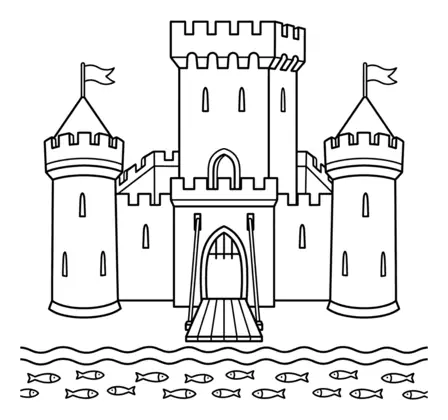
Years 1–2 · CastlesSheet 47
Parts of a Castle
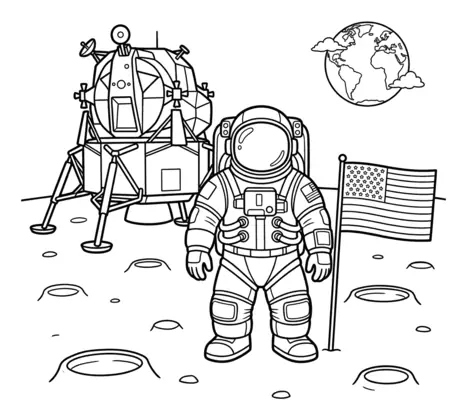
Years 1–2 · Famous peopleSheet 94
The First Moon Landing
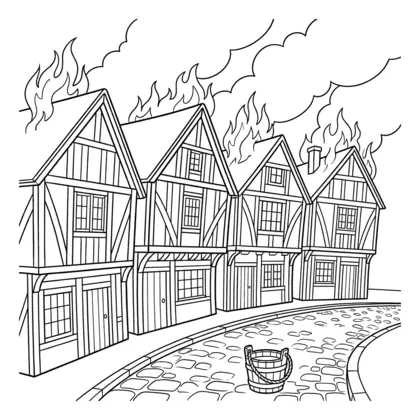
Years 1–2 · Great Fire of LondonSheet 95
The Great Fire of London
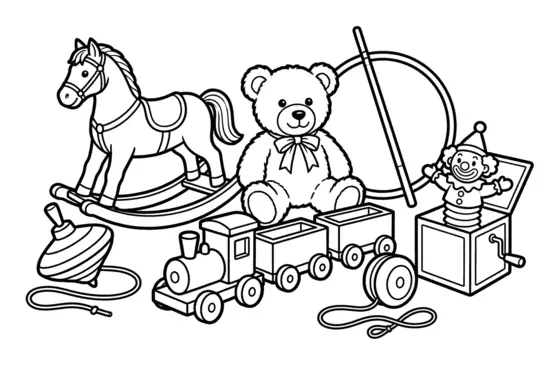
Years 1–2 · Toys then and nowSheet 48
Toys Then and Now
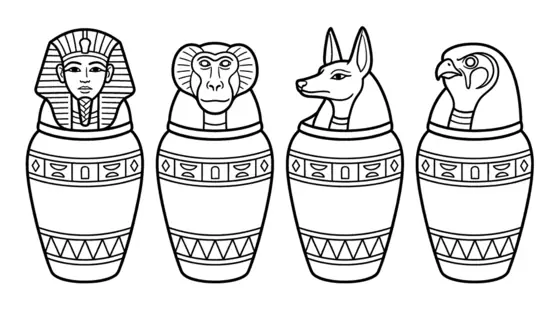
Years 3–4 · Ancient EgyptSheet 127
Egyptian Mummies and Canopic Jars
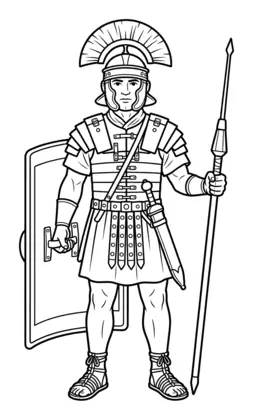
Years 3–4 · RomansSheet 167
Label a Roman Soldier
Educational quiz app · Ages 5-10
More learning in the Owee app
Owee turns topics like this into quizzes for children aged 5 to 10, and a treehouse grows as they learn. No ads, no chat, no strangers.
- Family-friendly
- No ads
- Private
Educational quiz app · Ages 5-10
More learning in the Owee app
Owee turns topics like this into quizzes for children aged 5 to 10, and a treehouse grows as they learn. No ads, no chat, no strangers.
Scan with your phone camera
- Family-friendly
- No ads
- Private