Educational quiz app · Ages 5-10
This is what learning looks like


Educational quiz app · Ages 5-10
This is what learning looks like
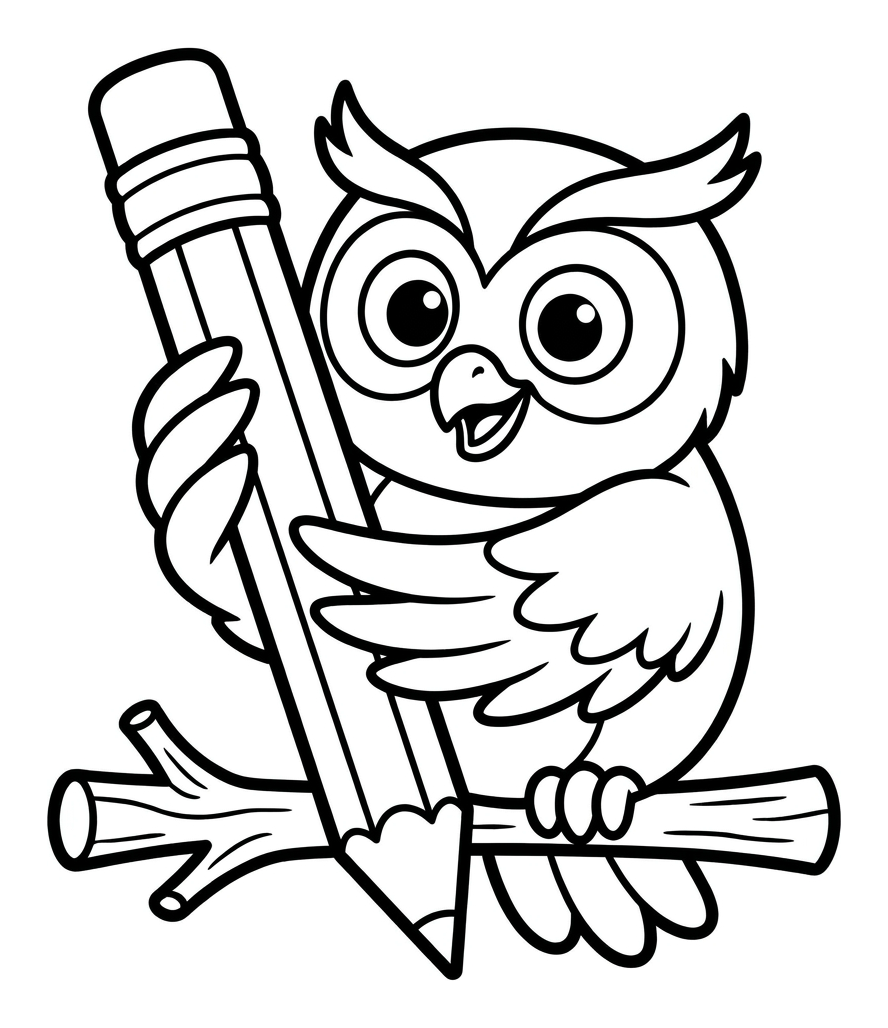
No nagging required. Keep the learning going after the worksheet, with every question read aloud and Owee guiding each step.
Scan with your phone camera
- Family-friendly
- No ads
- Private
English · Tracing and colouring worksheet
Trace the Alphabet: Free KS1 Letter Formation Worksheet
This free printable worksheet gives Year 1 children gentle, repeated practice at tracing all 26 lower-case letters of the alphabet. Tracing is a useful early step in handwriting: it lets a child feel the shape and direction of each letter before forming it unaided.
The sheet prints onto a single A4 page and pairs the tracing task with a friendly squirrel to colour in, so it suits a short, low-pressure handwriting session at home or in the classroom. It is designed to support, not replace, the careful modelling and feedback a child receives from an adult.
What your child is learning
‘Write recognisable letters, most of which are correctly formed.’
Reception (EYFS): Writing early learning goal, Department for Education. Source and licence

Trace the Alphabet
Free English worksheet · Ages 5 to 6
Trace every letter of the alphabet
Trace each letter slowly. Start in the right place. Say the letter sound as you go.
Colour the squirrel
When you have traced all the letters, colour the squirrel.
- Colour the squirrel's fur any colours you like.
- Colour the big pencil a bright colour.
 Trace the AlphabetSheet 3
Why letter tracing matters in Year 1
In the early stages of handwriting, the goal is not speed or neatness but correct formation — starting each letter in the right place, moving in the right direction, and finishing in the right place. Tracing builds this motor memory while the letter shape is still being learned, reducing the chance that a child develops awkward habits (such as forming an 'a' or 'o' clockwise) that are hard to unpick later.
The National Curriculum for Year 1 expects children to begin to form lower-case letters correctly, so this worksheet deliberately focuses on lower-case rather than capitals. Letting a child trace slowly and talk through the movement ("down, around, and back up") is far more valuable than completing the sheet quickly.
How to use this worksheet at home
Before starting, check the basics: the child should be sitting comfortably at a table, feet flat, paper steady, and holding the pencil in a relaxed tripod grip rather than gripping it tightly. A short session of five to ten minutes is plenty for this age — little and often beats one long, tiring sitting.
The letters on the sheet have no start dots or arrows, so show your child where each one begins before they trace it: most start at the top, but a, c, d, g, o, q and s start just below the top and curl anticlockwise, and e starts in the middle. Ask them to follow the letter with a finger first, then with the pencil. Saying the letter sound aloud while tracing links the shape to phonics learning. Praise the effort and the movement, not just the result, and stop before frustration sets in. The squirrel can be coloured in as a calm reward at the end.
Grouping letters by how they are formed
Teachers often introduce letters in formation families rather than alphabetical order, because letters that share a movement are easier to learn together. Common groups include the curly/'caterpillar' letters (c, a, d, g, o, q, e, s, f), the 'one-armed robot' letters (r, b, n, h, m, k, p), the 'long-ladder' letters (l, i, u, t, j, y), and the zig-zag letters (v, w, x, z).
This sheet presents the letters in alphabetical order for familiarity, but if a child finds a particular letter tricky you can return to its formation family and practise those few together. Reversals such as b/d are very common at this age and usually resolve with patient, repeated modelling.
What comes after tracing
Once a child can trace a letter confidently and in the correct direction, the next steps are copying (writing the letter beside a model) and then independent writing from memory. Many children move at different speeds across the alphabet, so it is normal to be secure with some letters while still tracing others.
Tracing also prepares the ground for later Year 1 and Year 2 expectations, such as understanding which letters belong to which handwriting families and beginning to use the diagonal and horizontal strokes needed to join letters. Keeping early practice positive helps build the confidence those later skills depend on.
Frequently asked questions
What age is alphabet tracing for?
Alphabet tracing is most useful for children aged 4 to 6, covering Reception and Year 1 (KS1). It supports the Year 1 expectation that children begin to form lower-case letters correctly. Some younger or older children may also benefit, as handwriting develops at different rates.
Should children trace capital or lower-case letters first?
Lower-case letters are usually taught first, because most everyday writing uses them and the National Curriculum focuses on lower-case formation in Year 1. Capital letters and digits are introduced alongside or shortly afterwards. This worksheet practises lower-case letters.
How do I help my child hold the pencil correctly?
Encourage a relaxed tripod grip, holding the pencil between the thumb and first finger with it resting on the middle finger. The child should sit comfortably at a table with the paper steady. Avoid a tight, white-knuckle grip, and keep sessions short so the hand does not tire.
Why does my child write some letters backwards?
Letter reversals, such as confusing b and d, are very common and developmentally normal up to around age seven. They usually fade with patient, repeated modelling of correct formation. Tracing in the correct direction, and saying the movement aloud, helps reduce reversals over time.
Is this alphabet tracing worksheet free to print?
Yes. This worksheet is completely free to download and print at home or in the classroom. It is designed to fit on a single A4 page, with the 26 lower-case letters to trace and a friendly squirrel to colour in.
Curriculum links
- Reception (EYFS): Writing early learning goal (statutory): 'Write recognisable letters, most of which are correctly formed.'
- English, Year 1, Handwriting: 'begin to form lower-case letters in the correct direction, starting and finishing in the right place'
- English, Year 1, Handwriting: 'sit correctly at a table, holding a pencil comfortably and correctly'
Quoted word for word from Department for Education documents: the National Curriculum in England, the EYFS framework or the RSHE guidance. Contains public sector information licensed under the Open Government Licence v3.0.
Made by The Owee education team. Updated 13/10/2026. Free to print and share.
More english worksheets
All Reception English worksheets →
Years 1–2 · PunctuationSheet 24
Capital Letters and Full Stops

Reception–Year 1 · SpellingSheet 25
Common Exception (Tricky) Words: Trace and Write
Reception–Year 1 · PhonicsSheet 4
CVC Words: Read, Trace and Colour
Years 1–2 · GrammarSheet 71
Describing Words (Adjectives)
Years 1–2 · GrammarSheet 72
Doing Words (Verbs)
Years 1–2 · GrammarSheet 73
Naming Words (Nouns)
Educational quiz app · Ages 5-10
More learning in the Owee app
Owee turns topics like this into quizzes for children aged 5 to 10, and a treehouse grows as they learn. No ads, no chat, no strangers.
- Family-friendly
- No ads
- Private
Educational quiz app · Ages 5-10
More learning in the Owee app
Owee turns topics like this into quizzes for children aged 5 to 10, and a treehouse grows as they learn. No ads, no chat, no strangers.
Scan with your phone camera
- Family-friendly
- No ads
- Private