Educational quiz app · Ages 5-10
This is what learning looks like


Educational quiz app · Ages 5-10
This is what learning looks like
No nagging required. Keep the learning going after the worksheet, with every question read aloud and Owee guiding each step.
Scan with your phone camera
- Family-friendly
- No ads
- Private
Maths · Colouring and writing worksheet
Telling the Time: Free KS1 O'clock and Half Past Worksheet
This free, printable telling-the-time worksheet helps children aged 5 to 7 learn to read a clock face to the hour ("o'clock") and to the half hour ("half past"). Children colour the mouse clock and its two hands, read the time on three clocks, then draw the hands on three blank clocks.
It is completely free to print, use and share, at home or in the classroom. Just hit print, or save it as a PDF.
What your child is learning
‘tell the time to the hour and half past the hour and draw the hands on a clock face to show these times’
Year 1 Maths: Measurement, National Curriculum in England. Source and licence
Telling the Time: O'clock and Half Past
Free Maths worksheet · Ages 5 to 7
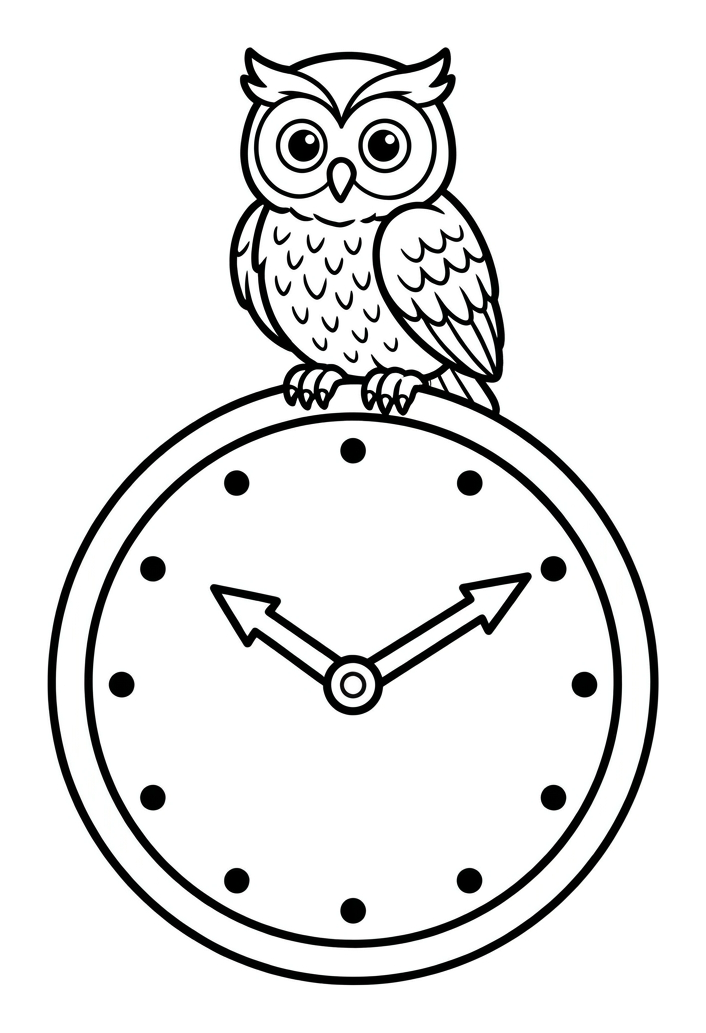
Colour the clock
Colour the mouse and the clock any way you like. Colour the hands like this.
- Colour the short hand red. It shows the hour.
- Colour the long hand blue. It shows the minutes.
What time is it?
Write the time under each clock. Long hand at the top: o'clock. Long hand at the bottom: half past.
Draw the hands
Draw the hands to show each time. Make the hour hand short and the minute hand long.
- 5 o'clock
- half past 1
- half past 9
 Telling the Time: O'clock and Half PastSheet 22
Answers: Telling the Time: O'clock and Half Past
Sheet 22
- Clock 1: 3 o'clock
- Clock 2: half past 7
- Clock 3: 12 o'clock
For grown-ups. Free worksheets and the Owee quiz app at owee.world
Answer key
- Clock 1: 3 o'clock
- Clock 2: half past 7
- Clock 3: 12 o'clock
What is on the worksheet
The page starts with a line drawing of an analogue clock with a little mouse sitting on top, just like in Hickory Dickory Dock. Your child colours the short hand red and the long hand blue, which fixes which hand is which before any reading begins.
Next come three clocks to read (two show o'clock and one shows half past) and three blank clocks where your child draws the hands for a time written underneath. The clocks have numbers and minute marks, like most classroom clocks. The answers for the reading clocks are in the answer key, which prints on a separate page.
How to use it at home or in the classroom
Print the worksheet, or open it on a tablet and print from there. First, let your child colour the clock and the mouse however they like, which is a lovely, low-pressure way in.
Then talk about the two hands together: the short hand points to the hour, and the long hand points to the minutes. Show that when the long hand points straight up it is something o'clock, and when it points straight down it is half past. At half past, the short hand sits halfway between two numbers; children often read the wrong one, so ask ‘Which number has it just gone past?’ When drawing, check that the hour hand is clearly shorter. If your child asks about the big clock in the picture, it shows ten past ten, which is a good chance to explain why it is not o'clock or half past. A play clock alongside the sheet makes the learning stick.
What your child will learn
By the end of the activity, your child should begin to read the time to the hour and half past the hour, and to name the two hands on a clock. In child-friendly terms: the short hand tells us the hour, the long hand tells us the minutes, when the long hand is at the top it is o'clock, and when the long hand is at the bottom it is half past.
Reading o'clock and half past is one of the first measurement skills in primary school, and a firm foundation for later learning about quarter past, quarter to and minutes.
A note for teachers
This worksheet supports the Key Stage 1 maths programme of study for measurement, specifically telling the time to the hour and half past the hour. It works as a gentle introduction or a quick check of whether pupils can identify the hour and minute hands, read o'clock and half past times, and draw the hands to show them, as the Year 1 objective asks.
There is no log-in, no watermark and no catch. You are welcome to print copies for your class and to link to this page from your school website or newsletter.
Frequently asked questions
How do you teach telling the time to KS1 children?
Start with the two hands: the short hand shows the hour and the long hand shows the minutes. Teach o'clock first (the long hand points straight up), then half past (the long hand points straight down). Using a real or play clock alongside a worksheet, and reading times throughout the day, helps it stick.
What does half past mean on a clock?
Half past means thirty minutes after the hour, so the long minute hand points straight down to the bottom of the clock and the short hour hand sits halfway between two numbers. For example, half past three is thirty minutes after three o'clock.
What age or year group is this worksheet for?
It is designed for children aged 5 to 7, which is Years 1 and 2 (Key Stage 1) in England. Telling the time to the hour and half past the hour is a Year 1 objective, so it suits children who are just starting to read a clock face.
Is this telling-the-time worksheet free to print and share?
Yes. It is completely free to print, use at home or in class, and share. There is no sign-up and no watermark. You are welcome to link to this page from a school website or newsletter.
How do I print or save the worksheet?
Press the Print button on this page, or use your browser's print option. To keep a copy, choose 'Save as PDF' as the destination in the print dialog.
Curriculum links
- Year 1 Maths: Measurement (statutory): 'tell the time to the hour and half past the hour and draw the hands on a clock face to show these times'
- KS1 Year 1 Measurement (statutory): 'recognise and use language relating to dates, including days of the week, weeks, months and years'
- KS1 Year 2 Measurement (statutory): 'tell and write the time to five minutes, including quarter past/to the hour and draw the hands on a clock face to show these times'
Quoted word for word from Department for Education documents: the National Curriculum in England, the EYFS framework or the RSHE guidance. Contains public sector information licensed under the Open Government Licence v3.0.
Made by The Owee education team. Updated 13/10/2026. Free to print and share.
More maths worksheets
All Year 1 Maths worksheets →
Years 2–3 · Telling the timeSheet 65
Quarter Past and Quarter To
Years 2–3 · Telling the timeSheet 66
Telling the Time to 5 Minutes
Years 3–4 · Telling the timeSheet 104
Telling the Time to the Minute
Years 1–2 · 3D shapesSheet 11
3D Shapes Around Us
Reception–Year 1 · Addition and subtractionSheet 12
Adding to 10: Ducks on the Pond

Years 2–4 · SymmetrySheet 63
Butterfly Lines of Symmetry
Educational quiz app · Ages 5-10
More learning in the Owee app
Owee turns topics like this into quizzes for children aged 5 to 10, and a treehouse grows as they learn. No ads, no chat, no strangers.
- Family-friendly
- No ads
- Private
Educational quiz app · Ages 5-10
More learning in the Owee app
Owee turns topics like this into quizzes for children aged 5 to 10, and a treehouse grows as they learn. No ads, no chat, no strangers.
Scan with your phone camera
- Family-friendly
- No ads
- Private