Educational quiz app · Ages 5-10
This is what learning looks like


Educational quiz app · Ages 5-10
This is what learning looks like
No nagging required. Keep the learning going after the worksheet, with every question read aloud and Owee guiding each step.
Scan with your phone camera
- Family-friendly
- No ads
- Private
Science · Colouring and tick-the-box worksheet
Sorting Rocks Worksheet: Free KS2 Science Printable
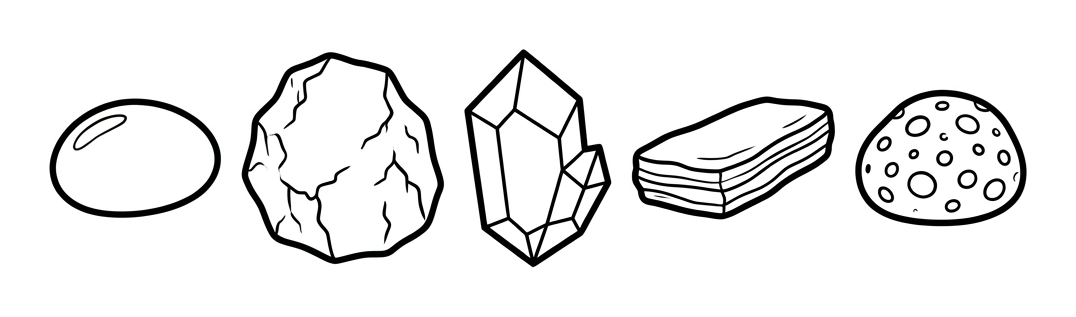
This free printable worksheet supports the Year 3 science topic Rocks, where children learn to compare and group rocks by their appearance and simple physical properties. The page shows five different rocks to colour, followed by six true-or-false sentences in which children decide which properties match each rock. Two of the sentences are false, so children have to look closely rather than tick every box.
What your child is learning
‘compare and group together different kinds of rocks on the basis of their appearance and simple physical properties’
Year 3 Science: Rocks, National Curriculum in England. Source and licence

Sorting Rocks
Free Science worksheet · Ages 7 to 8
Activity 1
Look closely at the five rocks. Colour each one so it looks like a real rock.
- Use an even colour for the pebble and a patchy colour for the lumpy rock.
- Make the crystal's flat sides look bright.
- Give each layer of the flat slab a slightly different shade.
- Leave the holes in the last stone white.
Activity 2
Read each sentence. Tick the box if it is true. Be ready to say why.
- The pebble looks smooth.
- The lumpy rock with cracks looks smooth.
- The crystal has flat sides that could look shiny.
- You can see layers in the flat slab.
- The stone full of little holes could soak up water.
- A hard rock is easy to scratch with your fingernail.
 Sorting RocksSheet 121
Answers: Sorting Rocks
Sheet 121
- The pebble looks smooth. — tick (true)
- The lumpy rock with cracks looks smooth. — no tick (false): it looks rough
- The crystal has flat sides that could look shiny. — tick (true)
- You can see layers in the flat slab. — tick (true)
- The stone full of little holes could soak up water. — tick (true)
- A hard rock is easy to scratch with your fingernail. — no tick (false): a soft rock is easy to scratch
For grown-ups. Free worksheets and the Owee quiz app at owee.world
Answer key
- The pebble looks smooth. — tick (true)
- The lumpy rock with cracks looks smooth. — no tick (false): it looks rough
- The crystal has flat sides that could look shiny. — tick (true)
- You can see layers in the flat slab. — tick (true)
- The stone full of little holes could soak up water. — tick (true)
- A hard rock is easy to scratch with your fingernail. — no tick (false): a soft rock is easy to scratch
What this worksheet teaches
In Year 3, children begin to look at rocks as scientists do: not just naming them, but observing and comparing their properties. This worksheet focuses on simple properties children can observe for themselves: whether a rock is hard or soft, shiny or dull, rough or smooth, and whether water soaks into it. By colouring five contrasting rocks and then deciding which sentences about them are true, children practise the key scientific skill of grouping objects on the basis of shared and differing features. The colouring step is deliberate: deciding which textures to shade encourages children to look closely before they sort.
How to use it at home or in class
Print the sheet onto a single sheet of A4 and, if you can, gather a few real rocks and pebbles to handle alongside it. Children colour the five rocks first, then read each sentence and tick the ones that are true. Where possible, let them test their ideas: rubbing two rocks together shows which is harder; a drop of water shows whether a rock is porous (soaks up water) or not. There are no single right answers for every rock here, because real rocks vary; the value is in children justifying their choices. Ask them why they ticked a box, and you will quickly hear scientific reasoning developing.
Understanding the properties
Hard or soft describes how easily a rock can be scratched or worn away; chalk is soft, granite is hard. Shiny or dull refers to how light reflects off the surface, which is why crystals can sparkle while a weathered boulder looks matt. Rough or smooth is about texture, often a clue to how a rock has been shaped: pebbles in a river become smooth as they are tumbled over time. Porous or not describes whether water soaks in; porous rocks such as chalk and many sandstones have tiny gaps that absorb water, while dense rocks such as granite and slate let it run off. A common mix-up is to think shiny means hard, or that all crystals are precious; ordinary granite is full of small crystals. These four pairs give children a reliable framework for sorting almost any rock they meet.
Extending the learning
Once children are confident with this sheet, take the investigation outdoors. A rock hunt in a garden, park or along a beach gives a free supply of specimens to sort using the same properties. Encourage children to make a simple table or set of hoops on the floor and physically group the rocks: shiny in one, dull in another, then re-sort by a different property to show that the same rock can belong to more than one group. This reinforces that scientific classification depends on the question you are asking, an important idea that carries through the rest of primary science.
Frequently asked questions
What properties do children use to sort rocks in Year 3?
The National Curriculum asks children to compare and group rocks by their appearance and simple physical properties. In practice this means observing whether a rock is hard or soft, shiny or dull, rough or smooth, and whether it soaks up water (porous) or not. This worksheet uses these property pairs. The curriculum guidance also suggests looking for grains or crystals with a magnifying glass, and rubbing rocks together to see which wear away.
Is this rocks worksheet free to print?
Yes. The worksheet is completely free and prints onto a single sheet of A4. There is no sign-up required to download and print it for home or classroom use.
What age group is this worksheet for?
It is designed for children aged 7 to 8 (Year 3, Lower KS2), the year in which rocks are taught in the English National Curriculum. It also suits keen Year 4 children or younger children revising the topic with adult support.
How can I test whether a rock soaks up water at home?
Place a few drops of water onto a dry rock and watch closely. If the water beads on top or runs off, the rock is not very porous. If the water disappears into the surface and the rock darkens, it is porous and is soaking the water up, like some sandstones do.
Can one rock have more than one property?
Yes. A single rock might be both rough and dull, or smooth and shiny. Each sentence on the sheet checks one property, so once it is done, pick one rock and ask your child to describe it with three property words. This shows that the same rock can belong to more than one group, depending on the feature you choose to look at.
Curriculum links
- Year 3 Science: Rocks (statutory): 'compare and group together different kinds of rocks on the basis of their appearance and simple physical properties'
- Working Scientifically (Lower KS2): 'making systematic and careful observations and, where appropriate, taking accurate measurements'
- Working Scientifically (Lower KS2): 'gathering, recording, classifying and presenting data in a variety of ways to help in answering questions'
- Working Scientifically (Lower KS2): 'using straightforward scientific evidence to answer questions or to support their findings'
Quoted word for word from Department for Education documents: the National Curriculum in England, the EYFS framework or the RSHE guidance. Contains public sector information licensed under the Open Government Licence v3.0.
Made by The Owee education team. Updated 13/10/2026. Free to print and share.
More science worksheets
All Year 3 Science worksheets →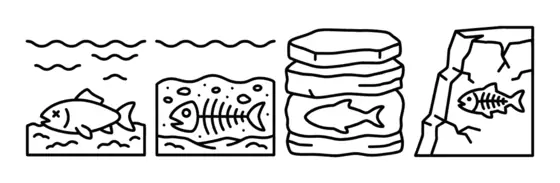
Years 3–4 · Rocks and fossilsSheet 120
How a Fossil Is Made
Years 3–4 · Rocks and fossilsSheet 122
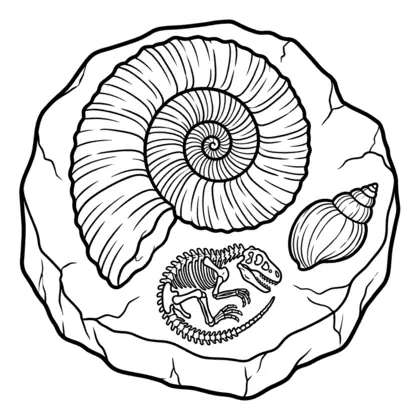
What Is a Fossil? Mary Anning
Years 3–4 · Teeth and digestionSheet 157
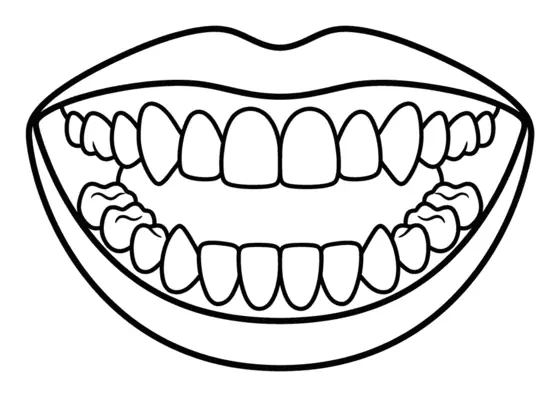
Animal Teeth and What They Eat
Years 3–4 · Food chainsSheet 152
Build a Food Chain: Label and Colour
Years 3–4 · Food chainsSheet 153
Build a Food Chain: Label and True or False
Years 3–5 · Forces and magnetsSheet 175
Forces and Friction
Educational quiz app · Ages 5-10
More learning in the Owee app
Owee turns topics like this into quizzes for children aged 5 to 10, and a treehouse grows as they learn. No ads, no chat, no strangers.
- Family-friendly
- No ads
- Private
Educational quiz app · Ages 5-10
More learning in the Owee app
Owee turns topics like this into quizzes for children aged 5 to 10, and a treehouse grows as they learn. No ads, no chat, no strangers.
Scan with your phone camera
- Family-friendly
- No ads
- Private