Educational quiz app · Ages 5-10
This is what learning looks like


Educational quiz app · Ages 5-10
This is what learning looks like
No nagging required. Keep the learning going after the worksheet, with every question read aloud and Owee guiding each step.
Scan with your phone camera
- Family-friendly
- No ads
- Private
History · Colouring and labelling worksheet
Label a Roman Soldier: Free KS2 History Worksheet
This free printable worksheet supports the KS2 history topic on the Roman Empire and its impact on Britain. Children colour a Roman legionary and then label six pieces of his kit, learning how a well-equipped, well-trained army helped Rome conquer and hold so much land, including most of Britain.
The sheet prints on one A4 page and works as a starter, a homework task or a quiet follow-up to a lesson on the Roman conquest. A word bank is included so the labelling stays manageable across Years 3 and 4.
What your child is learning
‘the Roman Empire and its impact on Britain’
Key stage 2 History: the Roman Empire and its impact on Britain, National Curriculum in England. Source and licence
Label a Roman Soldier
Free History worksheet · Ages 7 to 9
Activity 1
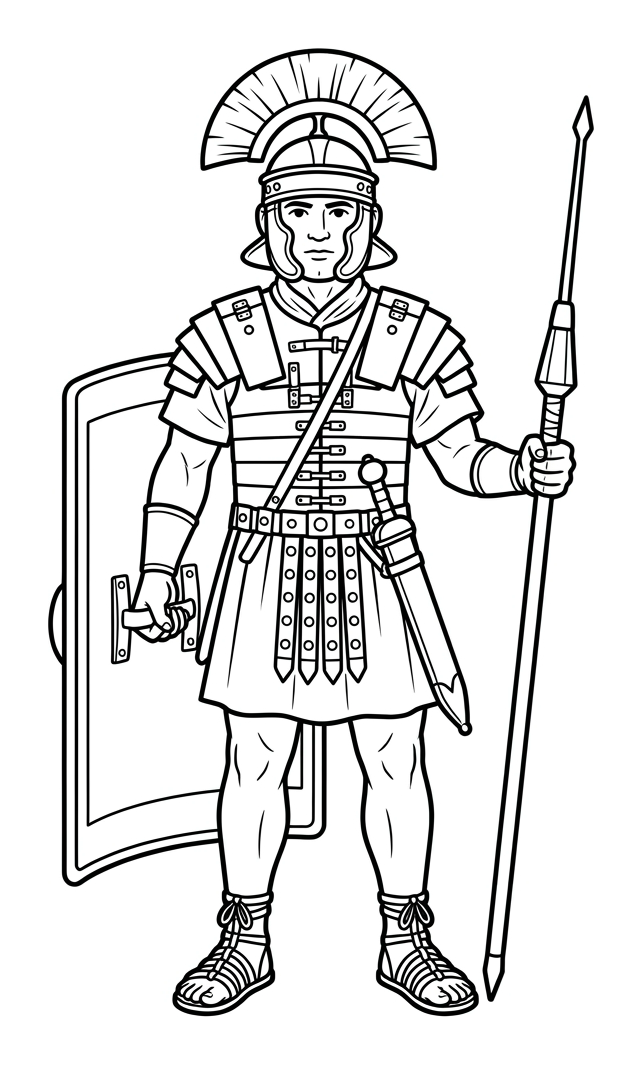
Colour the Roman soldier. Use bold colours for his shield and helmet crest.
- Colour the helmet crest red.
- Colour the shield red and yellow.
- Colour the body armour silver or grey.
- Colour the tunic red and the leather sandals brown.
Activity 2
Write the name of each numbered part on its line. Use the word bank. Can you say what each one was for?
- 1
- 2
- 3
- 4
- 5
- 6
 Label a Roman SoldierSheet 167
Answers: Label a Roman Soldier
Sheet 167
- 1. helmet
- 2. body armour
- 3. shield
- 4. javelin
- 5. sword
- 6. sandals
For grown-ups. Free worksheets and the Owee quiz app at owee.world
Answer key
- 1. helmet
- 2. body armour
- 3. shield
- 4. javelin
- 5. sword
- 6. sandals
What children learn from this worksheet
The worksheet focuses on the equipment of a Roman legionary, a full-time professional soldier in the Roman army. Children find and name six items on the picture: the crested helmet, the body armour made of metal strips, the large curved shield, the javelin, the short sword and the leather sandals. Confident children can learn the Latin names too: galea (helmet), lorica segmentata (armour), scutum (shield), pilum (javelin), gladius (sword) and caligae (sandals). Linking each object to its purpose builds history vocabulary and the habit of asking why things were made the way they were.
Why the Roman army was so effective
The kit on this sheet was not just for show. The heavy javelin (the pilum) was thrown to break up an enemy charge before close fighting began; its thin iron neck often bent on impact, so it could not be thrown back. The short stabbing sword (the gladius) worked well in the tight press of battle, and it hung on the right hip so it could be drawn without catching on the shield. The large curved shield (the scutum) protected the soldier and could be locked together with others to form a wall or a roof. Together with strict discipline, regular pay and constant training, this helped Rome win battles far from home, including in the conquest of Britain that began under Emperor Claudius in AD 43.
How this links to the Roman conquest of Britain
A legionary's kit is a concrete way into the bigger story of Rome in Britain. Julius Caesar landed twice, in 55 and 54 BC, but did not stay; the real conquest began in AD 43. Not everyone accepted Roman rule: in AD 60 or 61 Boudica, queen of the Iceni, led a rebellion that burned Colchester, London and St Albans before it was defeated. The same soldiers who carried this kit also built roads, forts and frontier walls such as Hadrian's Wall, begun in AD 122. Asking children what it might have felt like to be a Briton facing this army, as well as a soldier in it, helps them see more than one side of the story.
How to use the sheet at home or in class
Read the six equipment names together before your child begins, then let them colour the soldier. Reconstructions often show Roman shields painted red with yellow decoration, but there is room for creativity. For the labelling task, point to each number, ask your child to find the matching word in the word bank, and ask them to say out loud what the item was for. A common mix-up is calling the javelin a spear for stabbing: the pilum was mainly thrown. As an extension, ask a confident child to explain in one sentence why an army with this kit had an advantage over its enemies.
Frequently asked questions
What equipment did a Roman soldier carry?
A Roman legionary typically wore a crested helmet and body armour made of metal strips over a short tunic, and carried a large curved shield, a heavy throwing javelin (the pilum) and a short stabbing sword (the gladius). He wore laced leather sandals called caligae. This worksheet asks children to colour and label six of these items.
What age and key stage is this worksheet for?
It is designed for children aged 7 to 9, which covers Years 3 and 4 in KS2. The labelling task includes a word bank so it can also be used with slightly younger or older children studying the Romans.
How does this link to the National Curriculum?
It supports the KS2 history topic 'the Roman Empire and its impact on Britain', which suggests looking at the power of the Roman army and the conquest of Britain. It also helps children practise using historical terms and describing key features of the past.
Is the worksheet free to download and print?
Yes. The worksheet is free, needs no sign-up to print, and fits on a single A4 page so it is easy to use at home or in the classroom.
What was the most important weapon of a Roman soldier?
There was no single most important item, as they worked together. The pilum (javelin) was thrown to break up the enemy's charge, the gladius (short sword) was used for close fighting, and the scutum (large shield) gave protection and could be locked with others to form a wall. Discipline and training mattered just as much as any one weapon.
Curriculum links
- Key stage 2 History: the Roman Empire and its impact on Britain (statutory): 'the Roman Empire and its impact on Britain'
Quoted word for word from Department for Education documents: the National Curriculum in England, the EYFS framework or the RSHE guidance. Contains public sector information licensed under the Open Government Licence v3.0.
Made by The Owee education team. Updated 13/10/2026. Free to print and share.
More history worksheets
All Year 4 worksheets →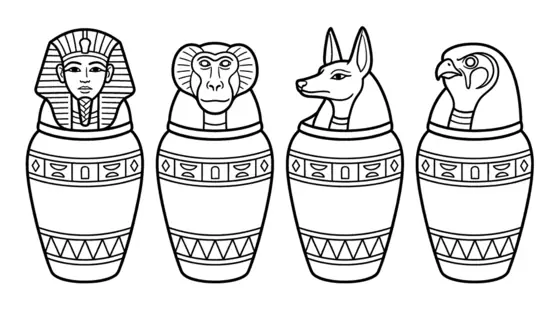
Years 3–4 · Ancient EgyptSheet 127
Egyptian Mummies and Canopic Jars
Years 3–4 · Stone Age to Iron AgeSheet 129
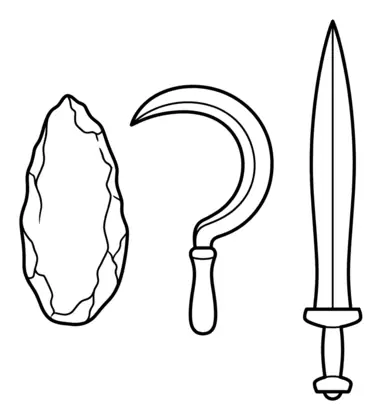
Stone Age to Iron Age Timeline
Years 3–4 · Ancient EgyptSheet 128
The Egyptian Pyramids
Years 1–2 · CastlesSheet 47
Parts of a Castle
Years 1–2 · Famous peopleSheet 94
The First Moon Landing
Years 1–2 · Great Fire of LondonSheet 95
The Great Fire of London
Educational quiz app · Ages 5-10
More learning in the Owee app
Owee turns topics like this into quizzes for children aged 5 to 10, and a treehouse grows as they learn. No ads, no chat, no strangers.
- Family-friendly
- No ads
- Private
Educational quiz app · Ages 5-10
More learning in the Owee app
Owee turns topics like this into quizzes for children aged 5 to 10, and a treehouse grows as they learn. No ads, no chat, no strangers.
Scan with your phone camera
- Family-friendly
- No ads
- Private