Educational quiz app · Ages 5-10
This is what learning looks like


Educational quiz app · Ages 5-10
This is what learning looks like
No nagging required. Keep the learning going after the worksheet, with every question read aloud and Owee guiding each step.
Scan with your phone camera
- Family-friendly
- No ads
- Private
Science · Colouring and writing worksheet
Polar Animals Worksheet: Free KS1 Colouring and Writing Sheet
This free printable introduces young children to a cold polar habitat and the animals that make their home on the ice and snow. The picture is designed to colour in, while the writing task asks children to name four familiar polar animals, giving a gentle first taste of the Year 2 science topic on living things and their habitats.
It prints to a single A4 page and works equally well at home or in the classroom. There are no logins or downloads to wrestle with: print it, hand over the colouring pencils and let the conversation about why these animals can live somewhere so cold do the teaching.
What your child is learning
‘identify and name a variety of common animals including fish, amphibians, reptiles, birds and mammals’
Year 1 Science: Animals, including humans, National Curriculum in England. Source and licence
Animals of the Frozen Poles
Free Science worksheet · Ages 5 to 7
Activity 1
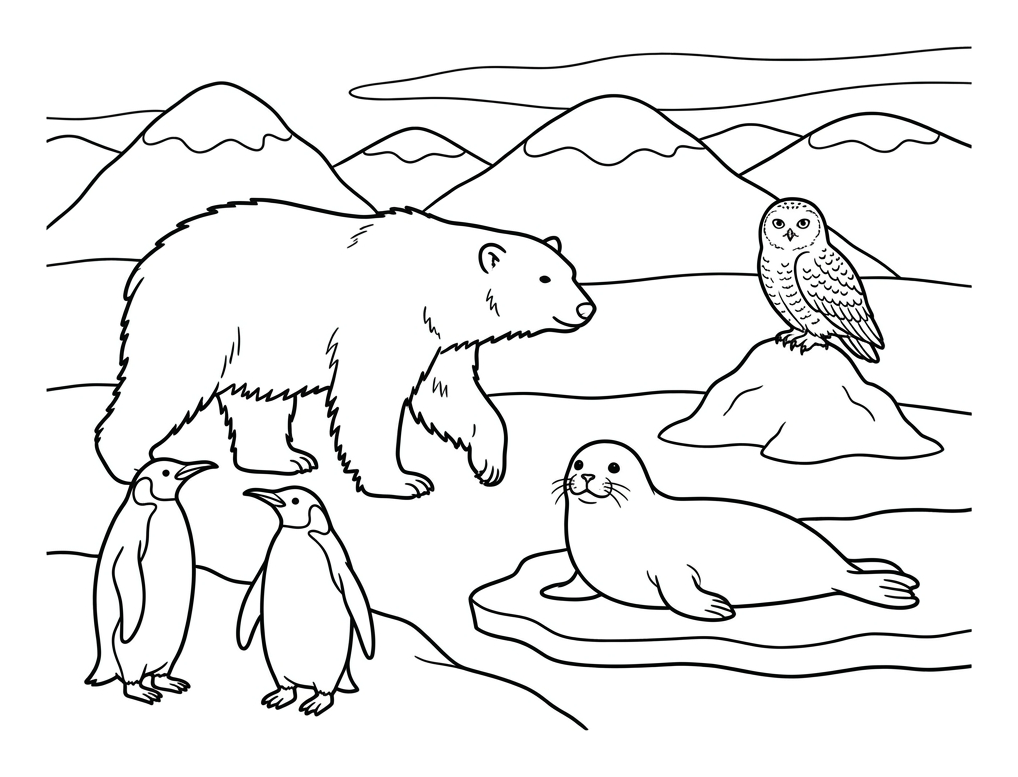
Colour the polar scene. The poles are cold and snowy, so think about white snow, blue-grey ice and the colours of each animal.
- Colour the snowy hills and ice white and pale blue.
- Colour the polar bear white or cream.
- Colour the penguins black and white, with a yellow or orange patch by each ear.
- Colour the seal grey and the snowy owl white with dark speckles.
Activity 2
Look carefully at the picture. Finish each sentence with an animal's name. Use the word bank to help you spell it.
The big white animal walking on the snow is a ...
The two black-and-white birds that cannot fly are ...
The animal lying on a piece of floating ice is a ...
The bird sitting on the snowy rock is a ...
 Animals of the Frozen PolesSheet 27
Answers: Animals of the Frozen Poles
Sheet 27
- The big white animal walking on the snow is a ... — polar bear
- The two black-and-white birds that cannot fly are ... — penguins
- The animal lying on a piece of floating ice is a ... — seal
- The bird sitting on the snowy rock is a ... — snowy owl
For grown-ups. Free worksheets and the Owee quiz app at owee.world
Answer key
- The big white animal walking on the snow is a ... — polar bear
- The two black-and-white birds that cannot fly are ... — penguins
- The animal lying on a piece of floating ice is a ... — seal
- The bird sitting on the snowy rock is a ... — snowy owl
What children practise on this worksheet
The sheet brings together two complementary skills. Colouring the scene supports fine motor control, pencil grip and careful observation, while the writing activity asks children to recall and spell the names of four animals they can see in the picture. Because the polar bear, penguins, seal and snowy owl are all clearly separated, even children who are not yet confident readers can match a name to the right creature with a little adult support. The optional word bank means the task can be made easier or harder depending on the child in front of you.
A first look at habitats
In the National Curriculum, Year 2 children learn that most living things live in habitats to which they are suited. The frozen poles are a clear example because the link between each animal and its surroundings is easy to see. While colouring, you might talk about the polar bear's thick white fur, the seal's thick layer of fat (called blubber) that keeps it warm in icy water, or the snowy owl's feathers, which cover even its feet. There is no need for technical vocabulary at this stage; the aim is simply to notice that these animals have features that help them cope with ice, snow and cold.
A note on the North and South Poles
It is worth knowing one fact yourself before the conversation begins, because children often ask. Polar bears live in the Arctic, near the North Pole, while most penguins live around Antarctica, near the South Pole, so the two would not actually meet in the wild. On a colouring sheet for five to seven year olds we happily place them together as 'cold-climate animals', but if an older or curious child notices, you can explain that they live at opposite ends of the Earth. Both are still excellent examples of animals suited to a freezing habitat.
Ways to extend the activity
Once the sheet is finished, you can stretch the learning in several directions. Ask the child to sort the animals by whether they spend more time in water or on land, or to think of another cold place an animal might live. You could compare the polar scene with a warm habitat, such as a hot desert or a rainforest, and discuss why a polar bear would struggle there. For early writers, encourage a simple caption such as 'The bear is white' to practise forming a full sentence with a capital letter and full stop.
Frequently asked questions
What animals live at the poles?
Animals suited to cold polar habitats include polar bears, seals and snowy owls in the Arctic, and penguins around Antarctica. This worksheet shows all four together as examples of cold-climate animals for young children to name and colour.
Is this polar animals worksheet free to print?
Yes. The worksheet is completely free and prints to a single A4 page. There is no login, account or download required: just open the page and print it for home or classroom use.
What age and key stage is it for?
It is designed for children aged 5 to 7, which is Key Stage 1 (Years 1 and 2). It links most closely to the Year 2 science topic on living things and the habitats they are suited to.
Do polar bears and penguins really live together?
No. Polar bears live in the Arctic near the North Pole, while most penguins live around Antarctica near the South Pole, so they do not meet in the wild. We show them together as 'cold-climate animals' for a simple colouring activity, and you can explain the difference to older children.
How can I make the writing task easier?
Use the word bank printed on the sheet so children can copy the correct spelling, or read the animal names aloud and ask the child to point to each one first. Confident writers can cover the word bank and write the names from memory.
Curriculum links
- Year 1 Science: Animals, including humans (statutory): 'identify and name a variety of common animals including fish, amphibians, reptiles, birds and mammals'
- KS1 Year 2 Science, Living things and their habitats: 'identify that most living things live in habitats to which they are suited and describe how different habitats provide for the basic needs of different kinds of animals and plants, and how they depend on each other'
- KS1 Year 2 Science, Living things and their habitats: 'identify and name a variety of plants and animals in their habitats'
Quoted word for word from Department for Education documents: the National Curriculum in England, the EYFS framework or the RSHE guidance. Contains public sector information licensed under the Open Government Licence v3.0.
Made by The Owee education team. Updated 13/10/2026. Free to print and share.
More science worksheets
All Year 1 Science worksheets →
Years 1–2 · AnimalsSheet 79
Animals and Their Survival Needs
Years 1–2 · AnimalsSheet 28
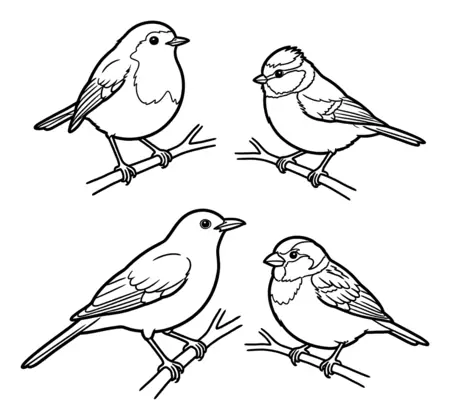
British Garden Birds Spotting Sheet
Years 1–2 · AnimalsSheet 29
Carnivore, Herbivore or Omnivore?
Years 1–2 · AnimalsSheet 30
Label the Parts of a Bee
Years 1–2 · AnimalsSheet 31
Sorting Animal Groups
Years 1–2 · PlantsSheet 39
Deciduous and Evergreen Trees
Educational quiz app · Ages 5-10
More learning in the Owee app
Owee turns topics like this into quizzes for children aged 5 to 10, and a treehouse grows as they learn. No ads, no chat, no strangers.
- Family-friendly
- No ads
- Private
Educational quiz app · Ages 5-10
More learning in the Owee app
Owee turns topics like this into quizzes for children aged 5 to 10, and a treehouse grows as they learn. No ads, no chat, no strangers.
Scan with your phone camera
- Family-friendly
- No ads
- Private