Educational quiz app · Ages 5-10
This is what learning looks like


Educational quiz app · Ages 5-10
This is what learning looks like
No nagging required. Keep the learning going after the worksheet, with every question read aloud and Owee guiding each step.
Scan with your phone camera
- Family-friendly
- No ads
- Private
Science · Labelling and colouring worksheet
Parts of the Body: Free KS1 Label and Colour Worksheet
This free printable worksheet supports the Year 1 Science topic Animals, including humans, helping children to identify, name and label the basic external parts of the human body. The page prints to a single sheet of A4 and pairs a clear labelling task with a friendly figure to colour in.
It is designed for children aged 5 to 7 working at home or in the classroom. The colouring activity keeps younger learners engaged while they revisit the new vocabulary, and the word bank means children who are still building their confidence with writing can match words to the right body part.
What your child is learning
‘identify, name, draw and label the basic parts of the human body and say which part of the body is associated with each sense’
Year 1 Science: Animals, including humans, National Curriculum in England. Source and licence
Label the Parts of the Body
Free Science worksheet · Ages 5 to 7
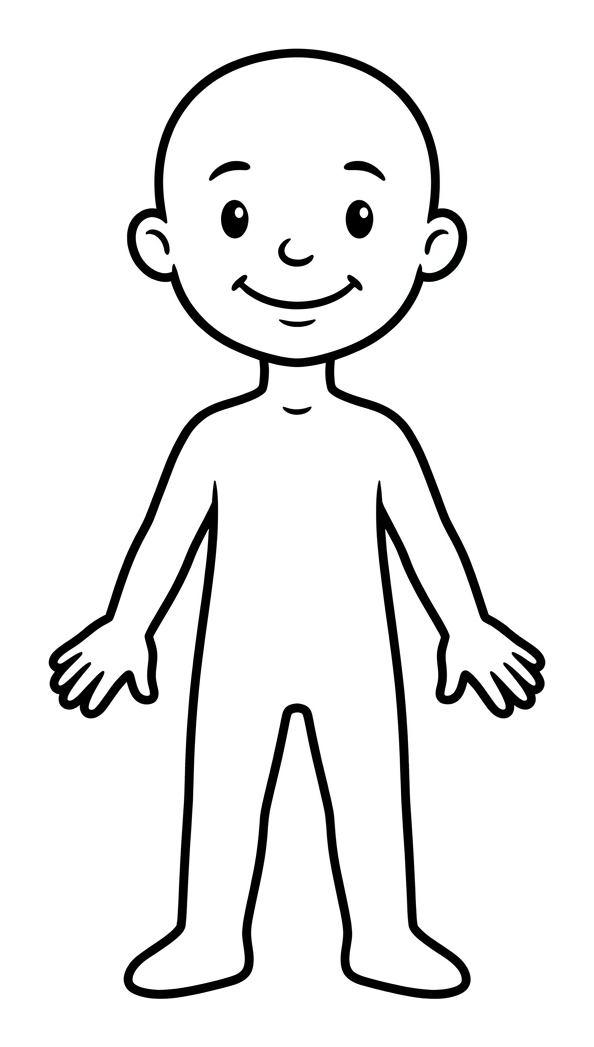
Label the parts of the body
Point to each part on your own body first. Then write the name of each numbered part on its line. Use the word bank to help you.
- 1
- 2
- 3
- 4
- 5
- 6
- 7
- 8
Colour the friendly child
Now finish the child and colour them in.
- Draw some hair on the head.
- Draw some clothes on the child.
- Colour the child with as many colours as you like.
 Label the Parts of the BodySheet 34
Answers: Label the Parts of the Body
Sheet 34
- 1. head
- 2. neck
- 3. arm
- 4. elbow
- 5. hand
- 6. leg
- 7. knee
- 8. foot
For grown-ups. Free worksheets and the Owee quiz app at owee.world
Answer key
- 1. head
- 2. neck
- 3. arm
- 4. elbow
- 5. hand
- 6. leg
- 7. knee
- 8. foot
What this worksheet teaches
This worksheet focuses on the basic external parts of the human body that children meet in Year 1: the head, neck, arms, elbows, legs, knees, hands and feet. Naming these parts is one of the first steps in the National Curriculum's Animals, including humans strand, and it gives children a shared vocabulary they will build on when they later learn about the senses, growth and keeping healthy. Eight numbered markers on the figure show where each part is, and children write the matching word from the word bank on each numbered line. The figure is drawn without hair or clothes, so the final task asks children to draw those on before colouring, which gives a natural moment to talk about what makes each person look different.
How to use it at home or in class
Print the sheet and read the body-part words in the word bank together before children begin. Encourage them to point to the part on their own body first, which links the abstract word to something concrete and memorable. Children can then copy each word from the word bank onto the numbered line that matches the marker on the figure. Saying the words aloud as a group, or playing a quick game of 'point to your knees, point to your elbows', helps embed the language before the writing begins. Elbows and knees are not drawn as separate shapes, so children have to think about where the arm and leg bend; bending their own arm and leg first helps.
Extending the learning
Once children are confident with the basic parts, you can extend the activity by introducing the five senses and which body part is linked to each one, as the curriculum suggests. Ask which part we use to see (eyes), hear (ears), smell (nose), taste (tongue) and touch (skin or hands). You might also compare the human body with the animals children have been studying, noticing that many animals have heads, legs and feet too, but that features such as fur, wings, tails or fins are different. These comparisons help children begin to sort and group living things, a key scientific skill.
Why labelling matters in early science
Labelling diagrams is a core scientific skill that begins in KS1 and continues throughout a child's education. By matching words to the right parts of a clear picture, children practise careful observation, develop subject-specific vocabulary and learn that diagrams carry information. Doing this with the human body works well because the subject matter is familiar and personal: every child already has a head, hands and feet to point to. This makes the body a good starting point for building confidence with reading, writing and recording scientific knowledge.
Frequently asked questions
What body parts do children learn to name in Year 1?
In Year 1 children learn to identify, name, draw and label the basic external parts of the human body. This worksheet covers the head, neck, arms, elbows, legs, knees, hands and feet. Later in the topic children also link parts of the body to the five senses.
Is this parts of the body worksheet free to print?
Yes. The worksheet is completely free to download and print. It is designed to fit on a single sheet of A4 in black and white, so it is ready to use straight away at home or in the classroom.
What age is this worksheet for?
It is aimed at children aged 5 to 7, which covers Years 1 and 2 (KS1). The word bank and colouring task make it accessible for children who are still developing their writing, while the labelling supports those ready for more independent recording.
How can I help my child label the body diagram?
Read the words in the word bank together first and ask your child to point to each part on their own body. Then help them find each numbered marker and write the matching word on its line. Saying the words aloud as they go reinforces both the vocabulary and the spelling.
How does labelling the body link to the senses?
The National Curriculum asks children to say which part of the body is associated with each sense. Once your child can name the basic parts, you can extend the activity by talking about the eyes for seeing, ears for hearing, nose for smelling, tongue for tasting and skin for touch.
Curriculum links
- Year 1 Science: Animals, including humans (statutory): 'identify, name, draw and label the basic parts of the human body and say which part of the body is associated with each sense'
- Year 1 Science, working scientifically: 'identifying and classifying'
- Year 1 Science, working scientifically: 'observing closely, using simple equipment'
Quoted word for word from Department for Education documents: the National Curriculum in England, the EYFS framework or the RSHE guidance. Contains public sector information licensed under the Open Government Licence v3.0.
Made by The Owee education team. Updated 13/10/2026. Free to print and share.
More science worksheets
All Year 1 Science worksheets →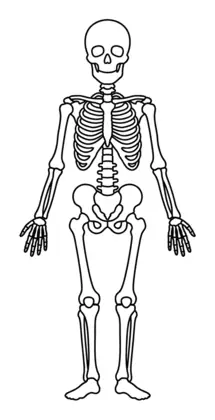
Years 3–4 · Human bodySheet 114
Label the Human Skeleton
Years 3–4 · Human bodySheet 115
Muscles That Move Us
Reception–Year 1 · Human bodySheet 35
The Five Senses
Years 5–6 · Human bodySheet 180
The Heart and Healthy Exercise
Year 6 · Human bodySheet 181
The Human Heart
Years 3–4 · Human bodySheet 116
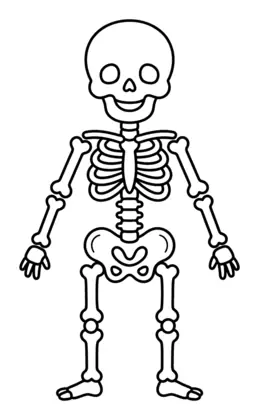
The Human Skeleton: Major Bones
Educational quiz app · Ages 5-10
More learning in the Owee app
Owee turns topics like this into quizzes for children aged 5 to 10, and a treehouse grows as they learn. No ads, no chat, no strangers.
- Family-friendly
- No ads
- Private
Educational quiz app · Ages 5-10
More learning in the Owee app
Owee turns topics like this into quizzes for children aged 5 to 10, and a treehouse grows as they learn. No ads, no chat, no strangers.
Scan with your phone camera
- Family-friendly
- No ads
- Private