Educational quiz app · Ages 5-10
This is what learning looks like


Educational quiz app · Ages 5-10
This is what learning looks like
No nagging required. Keep the learning going after the worksheet, with every question read aloud and Owee guiding each step.
Scan with your phone camera
- Family-friendly
- No ads
- Private
Music · Labelling and colouring worksheet
Parts of a Guitar Worksheet: Free KS2 Music Printable
This free printable introduces children aged 7 to 9 to the main parts of an acoustic guitar and the simple science of how it makes sound. Using the word bank, children label seven numbered parts — the body, neck, strings, sound hole, headstock, bridge and a tuning peg — then colour the picture to make their own guitar poster.
The worksheet prints to a single A4 page, so it is ready to use straight away at home or in the classroom. It pairs well with any first lesson on stringed instruments and gives children the vocabulary they need before they pick up a real guitar.
What your child is learning
‘play and perform in solo and ensemble contexts, using their voices and playing musical instruments with increasing accuracy, fluency, control and expression’
Music KS2, National Curriculum in England. Source and licence

Parts of a Guitar
Free Music worksheet · Ages 7 to 9
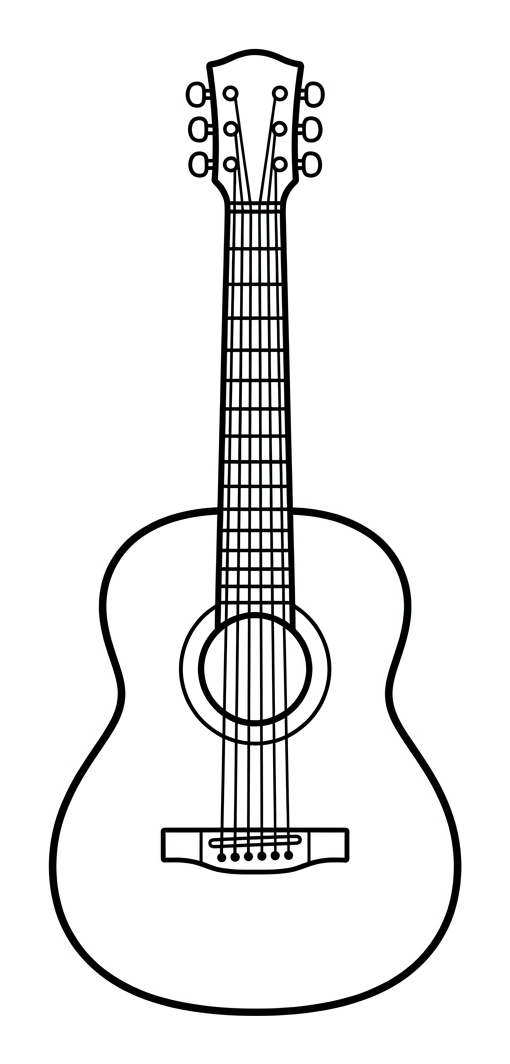
Label the parts of the guitar
Write the name of each numbered part. Use the word bank.
- 1
- 2
- 3
- 4
- 5
- 6
- 7
Colour your guitar
Now colour in your guitar.
- Colour the wooden body and neck a warm brown.
- Colour the headstock and bridge a darker brown.
- Leave the six strings white or colour them silver and grey.
 Parts of a GuitarSheet 133
Answers: Parts of a Guitar
Sheet 133
- 1. body
- 2. sound hole
- 3. neck
- 4. strings
- 5. headstock
- 6. bridge
- 7. tuning peg
For grown-ups. Free worksheets and the Owee quiz app at owee.world
Answer key
- 1. body
- 2. sound hole
- 3. neck
- 4. strings
- 5. headstock
- 6. bridge
- 7. tuning peg
What children learn from this worksheet
Naming the parts of an instrument is a small but important step in music education. When children can talk about the body, neck, strings, sound hole, headstock, bridge and tuning pegs, they have the shared vocabulary that teachers and tutors use in lessons. Children write the name of each numbered part, choosing from a word bank, which supports recognition before recall. Ask them what each part does as they go: the strings make the sound, the hollow body and sound hole make it louder, and the tuning pegs tighten or loosen each string. Colouring then fixes the shapes and positions in their memory.
How a guitar makes sound
A guitar makes sound when a string is plucked and vibrates. Those fast vibrations move the air, and the hollow body and sound hole make the sound louder so we can hear it clearly. The really useful idea for children to grasp is that the length of the vibrating string changes the note. A longer, looser, thicker string vibrates more slowly and makes a lower sound, while a shorter, tighter, thinner string vibrates faster and makes a higher sound. When a player presses a string against the neck, they shorten the part that can vibrate, which raises the pitch. Turning a tuning peg tightens or loosens a string, which is how a guitar is tuned. The same ideas explain harps, violins and pianos. A common mix-up: children may think the thickest string makes the highest note because it looks strongest, when in fact it makes the lowest.
Using this printable at home or in class
Print the sheet on plain A4 paper and have colouring pencils or felt tips ready. As a warm-up, talk through the word bank together and see how many parts your child can point to before they write. If you have a real guitar, ukulele or even a picture of one, compare it with the drawing and ask your child to find each part. After labelling, encourage them to pluck a real string (or watch a short video of someone playing) and listen to how the sound changes as the player moves their fingers along the neck. A stretched elastic band over an open tin or box works as a home-made guitar: stretch it tighter and the note goes higher. The colouring gives faster finishers something calm to do.
Where this fits in the KS2 music curriculum
In Key Stage 2, the national curriculum expects children to play and perform on musical instruments with increasing accuracy, fluency, control and expression, and many schools offer whole-class lessons on the guitar or ukulele. Knowing the parts of the instrument is a sensible foundation for that practical work. The link between string length, tightness and pitch also connects to the Year 4 science unit on sound. This worksheet does not replace hands-on playing, which is the heart of the curriculum, but it builds the language and concepts that make those practical lessons more meaningful. It works well alongside whole-class instrumental teaching in Years 3 and 4.
Frequently asked questions
What are the main parts of an acoustic guitar?
The main parts your child will label on this worksheet are the body (the large rounded part), the neck (the long thin part you hold), the strings, the sound hole (the round opening in the body), the headstock (the top part), the tuning pegs (which tighten or loosen the strings) and the bridge (where the strings are fixed to the body). These are the parts most often named in a first guitar lesson.
Is this guitar worksheet free to print?
Yes. This is a completely free printable. It is designed to fit on a single A4 page, so you can print it at home or in school straight away with no sign-up needed.
What age is this parts of a guitar worksheet for?
It is aimed at children aged 7 to 9, which is Key Stage 2 (Years 3 and 4). Younger or older children can also use it, as the word bank makes the labelling task accessible.
Why does a guitar make different sounds?
A guitar makes a sound when a string vibrates. Longer, thicker, looser strings vibrate slowly and make lower notes, while shorter, thinner, tighter strings vibrate quickly and make higher notes. Pressing a string against the neck shortens it, which raises the pitch. The body and sound hole make the sound louder.
Do I need a real guitar to use this worksheet?
No, the worksheet works on its own. However, having a real guitar or ukulele nearby is a lovely bonus, as children can point to each labelled part and hear how plucking different strings changes the sound.
Curriculum links
- Music KS2: 'play and perform in solo and ensemble contexts, using their voices and playing musical instruments with increasing accuracy, fluency, control and expression'
- Music KS2: 'appreciate and understand a wide range of high-quality live and recorded music drawn from different traditions and from great composers and musicians'
Quoted word for word from Department for Education documents: the National Curriculum in England, the EYFS framework or the RSHE guidance. Contains public sector information licensed under the Open Government Licence v3.0.
Made by The Owee education team. Updated 13/10/2026. Free to print and share.
Educational quiz app · Ages 5-10
More learning in the Owee app
Owee turns topics like this into quizzes for children aged 5 to 10, and a treehouse grows as they learn. No ads, no chat, no strangers.
- Family-friendly
- No ads
- Private
Educational quiz app · Ages 5-10
More learning in the Owee app
Owee turns topics like this into quizzes for children aged 5 to 10, and a treehouse grows as they learn. No ads, no chat, no strangers.
Scan with your phone camera
- Family-friendly
- No ads
- Private