Educational quiz app · Ages 5-10
This is what learning looks like


Educational quiz app · Ages 5-10
This is what learning looks like
No nagging required. Keep the learning going after the worksheet, with every question read aloud and Owee guiding each step.
Scan with your phone camera
- Family-friendly
- No ads
- Private
Music · Colouring and counting worksheet
Parts of a Drum Kit: Free KS1 Music Worksheet
A drum kit is one of the easiest instruments for young children to understand, because it works in a way they already know: you hit it and it makes a sound. This free printable worksheet gives children at Key Stage 1 a single, clear picture of a drum kit. They name four parts using a word bank, colour the drums and cymbals, then count the different drums and cymbals they can see.
It links naturally to the KS1 music curriculum, where children learn to play untuned percussion instruments and to experiment with, create, select and combine sounds. Print it onto one sheet of A4 and pair it with a real shaker, tambourine or pot-and-spoon at home or in the classroom so children can hear what they are looking at.
What your child is learning
‘play tuned and untuned instruments musically’
Music KS1, National Curriculum in England. Source and licence
Parts of a Drum Kit
Free Music worksheet · Ages 5 to 7
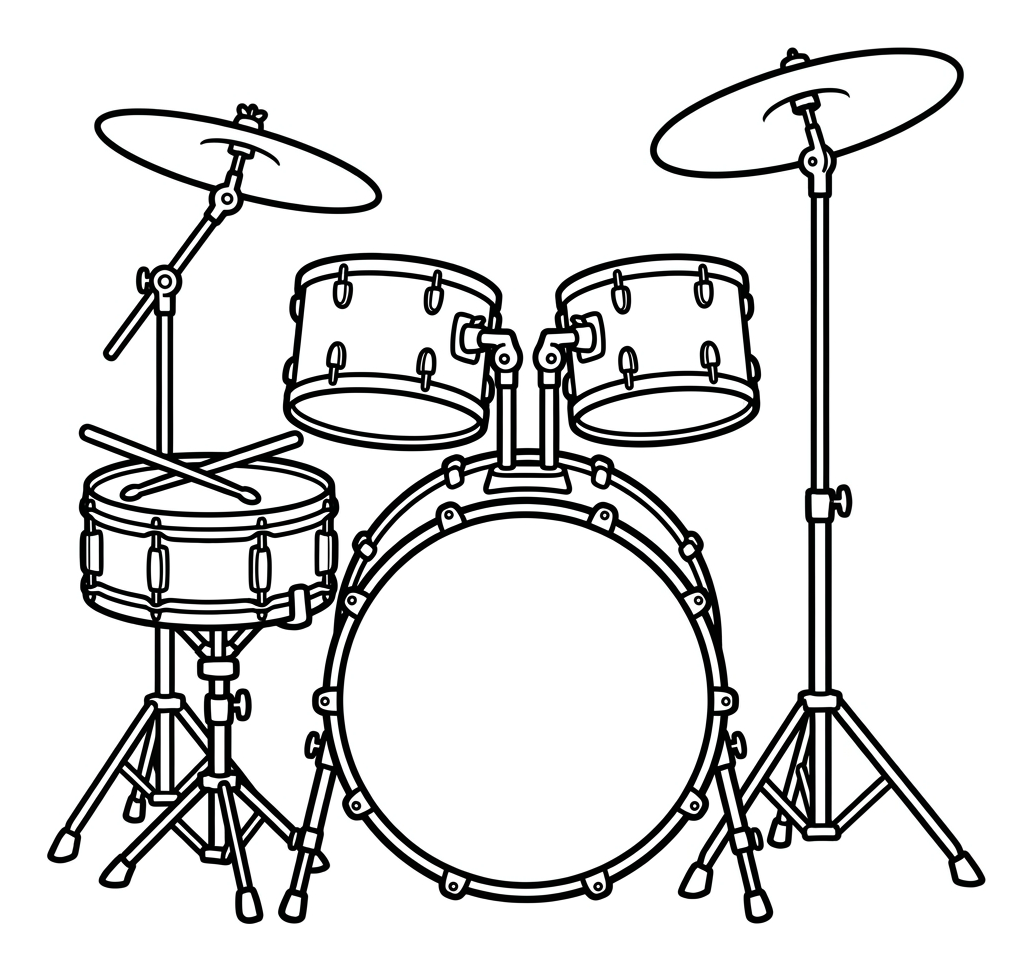
Name and colour the parts
Write the name of each part. Use the word bank. Then colour the drums one colour and the cymbals a different colour.
- 1
- 2
- 3
- 4
Count
Count them in the picture. Write the number in the box.
- How many drums can you count altogether?
- How many cymbals are there?
 Parts of a Drum KitSheet 52
Answers: Parts of a Drum Kit
Sheet 52
- 1. Cymbal
- 2. Tom drum
- 3. Snare drum
- 4. Bass drum
- How many drums can you count altogether? — 4
- How many cymbals are there? — 2
For grown-ups. Free worksheets and the Owee quiz app at owee.world
Answer key
- 1. Cymbal
- 2. Tom drum
- 3. Snare drum
- 4. Bass drum
- How many drums can you count altogether? — 4
- How many cymbals are there? — 2
What children learn from this worksheet
This worksheet introduces the idea that a drum kit is not one instrument but a small family of percussion instruments played together. By naming and colouring the bass drum, tom drums, snare drum and cymbals, children begin to notice that each part has a different size and shape, and that bigger drums tend to make lower, deeper sounds while cymbals make a bright, ringing crash. The counting task practises early number skills while children use the new words. The picture shows a simple kit; a real one usually also has a hi-hat (two cymbals that clap together when the drummer presses a foot pedal) and a foot pedal that beats the bass drum, which are worth mentioning if your child has seen a drummer play.
How percussion instruments make sound
Percussion instruments are instruments you make sound with by hitting, shaking or scraping them. When a drumstick strikes a drum skin, the skin wobbles very fast (it vibrates), and that vibration moves the air to make the sound we hear. Cymbals work the same way: the metal vibrates when it is struck. You do not need a real drum kit to explore this idea. Tapping an upturned saucepan, a biscuit tin or a cardboard box lets children feel and hear the same vibrations, which makes the worksheet a useful starting point for hands-on play.
Using this sheet at home or in class
For the youngest children, talk through the picture first and point to each part as you say its name, before your child writes the labels. The colouring task asks for one colour for the drums and another for the cymbals, so children practise sorting the parts into two groups. Once the colouring is finished, the counting questions can be answered out loud before they are written down. To extend the activity, ask children to tap a steady beat on a table and then add a louder hit for the bass drum, helping them connect the picture to real sounds and to the idea of a steady pulse.
Building musical vocabulary
Naming the parts of the drum kit gives children words they can reuse across the whole of Key Stage 1 music. Words such as beat, loud and quiet, fast and slow, and percussion all come up naturally when talking about drums. Encouraging children to describe the sound a drum might make, rather than only naming it, supports the curriculum aim of listening with concentration and understanding. There is no need to teach technical drumming terms at this age; recognising that there are several drums and several cymbals is plenty.
Frequently asked questions
What are the main parts of a drum kit for KS1?
At Key Stage 1, the parts worth naming are the bass drum (the big drum), the tom drums and snare drum, the cymbals, and the drumsticks used to hit them. This worksheet shows all of these in one clear picture so children can find, name and count each one.
Is a drum a percussion instrument?
Yes. Drums are percussion instruments because you hit them to make a sound. The drums in a drum kit are usually called untuned percussion, because they do not play a tune of different notes the way a xylophone does. Cymbals are percussion too.
What age is this drum kit worksheet for?
It is designed for children aged 5 to 7, which covers Years 1 and 2 at Key Stage 1. The colouring suits the youngest children, while the counting questions add a little challenge for those who are ready.
How do I print this worksheet?
The worksheet is built to fit one sheet of A4. Use your browser's print option and choose A4, portrait orientation. It prints in black and white as line art, so children can colour it in themselves with crayons or felt tips.
Is this drum kit worksheet really free?
Yes, it is completely free to print and use at home or in the classroom. It was written by the Owee education team to support the KS1 music curriculum and pairs well with any simple percussion instrument, even a saucepan and a wooden spoon.
Curriculum links
- Music KS1: 'play tuned and untuned instruments musically'
- Music KS1: 'experiment with, create, select and combine sounds using the inter-related dimensions of music'
- Music KS1: 'listen with concentration and understanding to a range of high-quality live and recorded music'
Quoted word for word from Department for Education documents: the National Curriculum in England, the EYFS framework or the RSHE guidance. Contains public sector information licensed under the Open Government Licence v3.0.
Made by The Owee education team. Updated 13/10/2026. Free to print and share.
Educational quiz app · Ages 5-10
More learning in the Owee app
Owee turns topics like this into quizzes for children aged 5 to 10, and a treehouse grows as they learn. No ads, no chat, no strangers.
- Family-friendly
- No ads
- Private
Educational quiz app · Ages 5-10
More learning in the Owee app
Owee turns topics like this into quizzes for children aged 5 to 10, and a treehouse grows as they learn. No ads, no chat, no strangers.
Scan with your phone camera
- Family-friendly
- No ads
- Private