Educational quiz app · Ages 5-10
This is what learning looks like


Educational quiz app · Ages 5-10
This is what learning looks like
No nagging required. Keep the learning going after the worksheet, with every question read aloud and Owee guiding each step.
Scan with your phone camera
- Family-friendly
- No ads
- Private
Science · Labelling and colouring worksheet
Parts of a Bee: Free KS1 Labelling and Colouring Worksheet
This free printable worksheet introduces young children to the main parts of a bee, one of the most familiar minibeasts they will meet in the garden and on a nature walk. It supports the Key Stage 1 science theme of animals including humans, where pupils begin to describe and compare the structure of common animals.
Children use a word bank to label six numbered parts, the head, thorax, abdomen, wings, legs and antennae, then colour the bee in. The single page is designed to print cleanly onto one sheet of A4, making it easy to use at home or in the classroom with no preparation.
What your child is learning
‘describe and compare the structure of a variety of common animals (fish, amphibians, reptiles, birds and mammals including pets)’
Year 1 Science: Animals, including humans, National Curriculum in England. Source and licence
Label the Parts of a Bee
Free Science worksheet · Ages 6 to 8
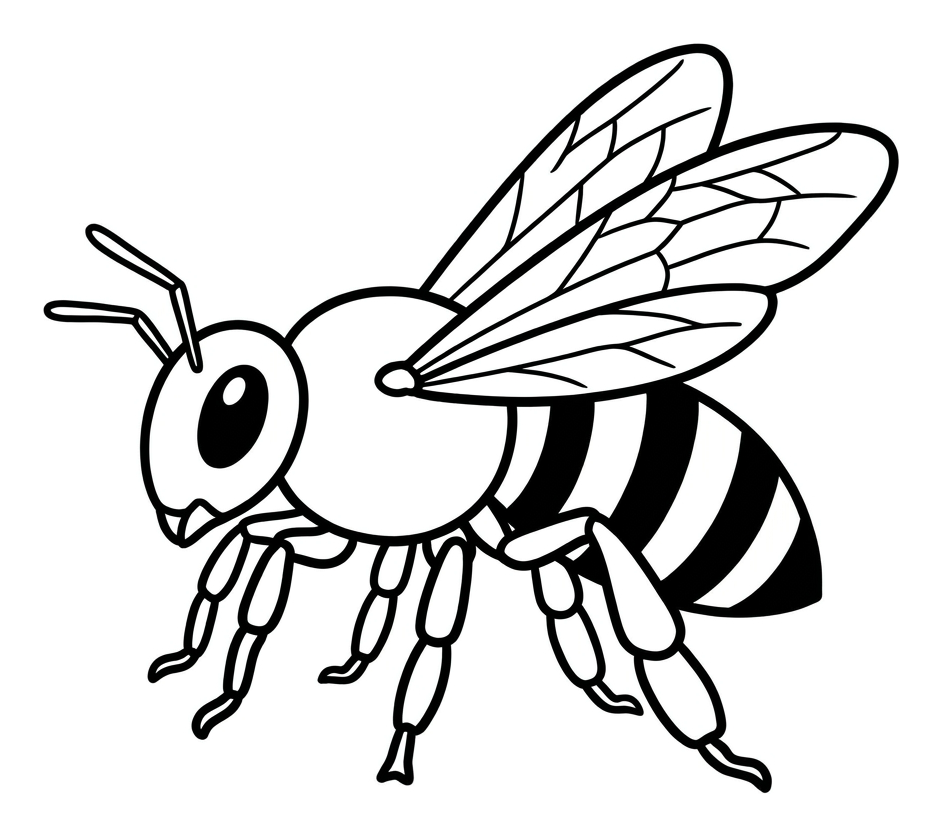
Label the bee
Look at the numbers on the bee. Write the name of each part on the line with the same number. Use the word bank to help you.
- 1
- 2
- 3
- 4
- 5
- 6
Colour the bee
Now colour the bee. Follow the list below.
- Colour the white stripes on the abdomen yellow.
- Colour the head and thorax brown.
- Colour the wings light grey, or leave them white.
 Label the Parts of a BeeSheet 30
Answers: Label the Parts of a Bee
Sheet 30
- 1. antennae
- 2. head
- 3. thorax
- 4. wings
- 5. abdomen
- 6. legs
For grown-ups. Free worksheets and the Owee quiz app at owee.world
Answer key
- 1. antennae
- 2. head
- 3. thorax
- 4. wings
- 5. abdomen
- 6. legs
What this worksheet teaches
Bees, like all insects, have a body divided into three main sections: the head, the thorax and the abdomen. This worksheet asks children to find and name these three parts, along with the bee's two pairs of wings, its six legs and its two antennae. Working from a word bank lets children who are not yet confident spellers still succeed, while still practising the correct scientific vocabulary. Naming parts of a familiar animal is an early step towards understanding how animals are built and how their features help them survive.
How to use it at home or in class
Print the sheet onto plain A4 paper. Before children begin, it can help to look at a real bee in a photograph or, safely, on a flower in the garden, and talk about what they notice. Encourage children to point to each part on the picture before writing the word. Once labelling is complete, children colour the bee — a good moment to talk about the bee's yellow and black stripes and how those bright colours warn other animals to stay away. The colouring task also gives early finishers a calm, focused activity while others complete the labelling.
Why insects make a great early science topic
Insects are easy to find and well suited to teaching basic animal structure. All insects share the same three body sections and six legs, so once children can recognise these on a bee, they can compare them with ants, butterflies, beetles and ladybirds. This builds the skill of comparing animals, which is a key Year 1 expectation. A common mistake is to think the legs grow from the big striped abdomen; on a bee, as on every insect, all six legs and the wings join on to the thorax. It also lays the groundwork for later learning about life cycles, habitats and the important role pollinators such as bees play in growing the food we eat.
Extending the learning
After completing the sheet, you could ask children to compare the bee with another minibeast and notice what is the same and what is different — for example, a spider has eight legs and only two body sections, so it is not an insect at all. Older or more confident children might count the six legs, look for the wings (a bee has four, but one is hidden behind the others in this side view), or talk about what each part is for: wings for flying, legs for landing and gripping flowers, and antennae for smelling and sensing the world around them.
Frequently asked questions
What are the main parts of a bee?
A bee has three main body sections — the head, the thorax (the middle) and the abdomen (the back). Attached to these are two pairs of wings, six legs and two antennae on the head. These are the parts children label on this worksheet.
Is this worksheet suitable for Key Stage 1?
Yes. It is aimed at children aged 6 to 8 in Years 1 and 2, and supports the KS1 science objective to describe and compare the structure of common animals. A word bank is provided so younger children can complete it without needing to spell the words unaided.
How many legs does a bee have?
A bee has six legs, like all insects. The legs are attached to the thorax, the middle section of the body. Counting the legs on the picture is a good way to check children have understood the labelling.
Is this printable free to download?
Yes, this worksheet is completely free to print and use at home or in school. It is designed to fit onto a single sheet of A4 paper with one bee illustration and a word bank.
What is the difference between an insect and a spider?
Insects such as bees have three body sections and six legs, while spiders have two body sections and eight legs. That is why spiders are not insects. Comparing the two is a useful extension activity after completing this sheet.
Curriculum links
- Year 1 Science: Animals, including humans (statutory): 'describe and compare the structure of a variety of common animals (fish, amphibians, reptiles, birds and mammals including pets)'
- KS1 Year 1 Science (Animals, including humans): 'identify and name a variety of common animals including fish, amphibians, reptiles, birds and mammals'
- KS1 Year 2 Science (Living things and their habitats): 'identify and name a variety of plants and animals in their habitats'
Quoted word for word from Department for Education documents: the National Curriculum in England, the EYFS framework or the RSHE guidance. Contains public sector information licensed under the Open Government Licence v3.0.
Made by The Owee education team. Updated 13/10/2026. Free to print and share.
More science worksheets
All Year 1 Science worksheets →
Years 1–2 · AnimalsSheet 79
Animals and Their Survival Needs
Years 1–2 · AnimalsSheet 27
Animals of the Frozen Poles
Years 1–2 · AnimalsSheet 28
British Garden Birds Spotting Sheet
Years 1–2 · AnimalsSheet 29
Carnivore, Herbivore or Omnivore?
Years 1–2 · AnimalsSheet 31
Sorting Animal Groups
Years 1–2 · PlantsSheet 39
Deciduous and Evergreen Trees
Educational quiz app · Ages 5-10
More learning in the Owee app
Owee turns topics like this into quizzes for children aged 5 to 10, and a treehouse grows as they learn. No ads, no chat, no strangers.
- Family-friendly
- No ads
- Private
Educational quiz app · Ages 5-10
More learning in the Owee app
Owee turns topics like this into quizzes for children aged 5 to 10, and a treehouse grows as they learn. No ads, no chat, no strangers.
Scan with your phone camera
- Family-friendly
- No ads
- Private