Educational quiz app · Ages 5-10
This is what learning looks like


Educational quiz app · Ages 5-10
This is what learning looks like
No nagging required. Keep the learning going after the worksheet, with every question read aloud and Owee guiding each step.
Scan with your phone camera
- Family-friendly
- No ads
- Private
Geography · Map-reading and colouring worksheet
Reading a Map: Symbols and a Key - Free KS2 Geography Worksheet
Maps are a kind of code, and the key (sometimes called the legend) is what cracks it. Real Ordnance Survey maps pack a huge amount of information into small symbols, so being able to match a symbol to its meaning is one of the most useful map-reading skills a child can build in Key Stage 2.
This free, printable worksheet uses a simple picture map of a countryside area. Children label five features using the word bank, colour them in the colours used on Ordnance Survey maps, and explain why real maps use small symbols. It works as a starter activity, a quick assessment, or a calm task to finish a geography lesson.
What your child is learning
‘use the 8 points of a compass, 4- and 6-figure grid references, symbols and key (including the use of Ordnance Survey maps) to build their knowledge of the United Kingdom and the wider world’
Key stage 2 Geography: Geographical skills and fieldwork, National Curriculum in England. Source and licence

Reading a Map: Symbols and a Key
Free Geography worksheet · Ages 9 to 11
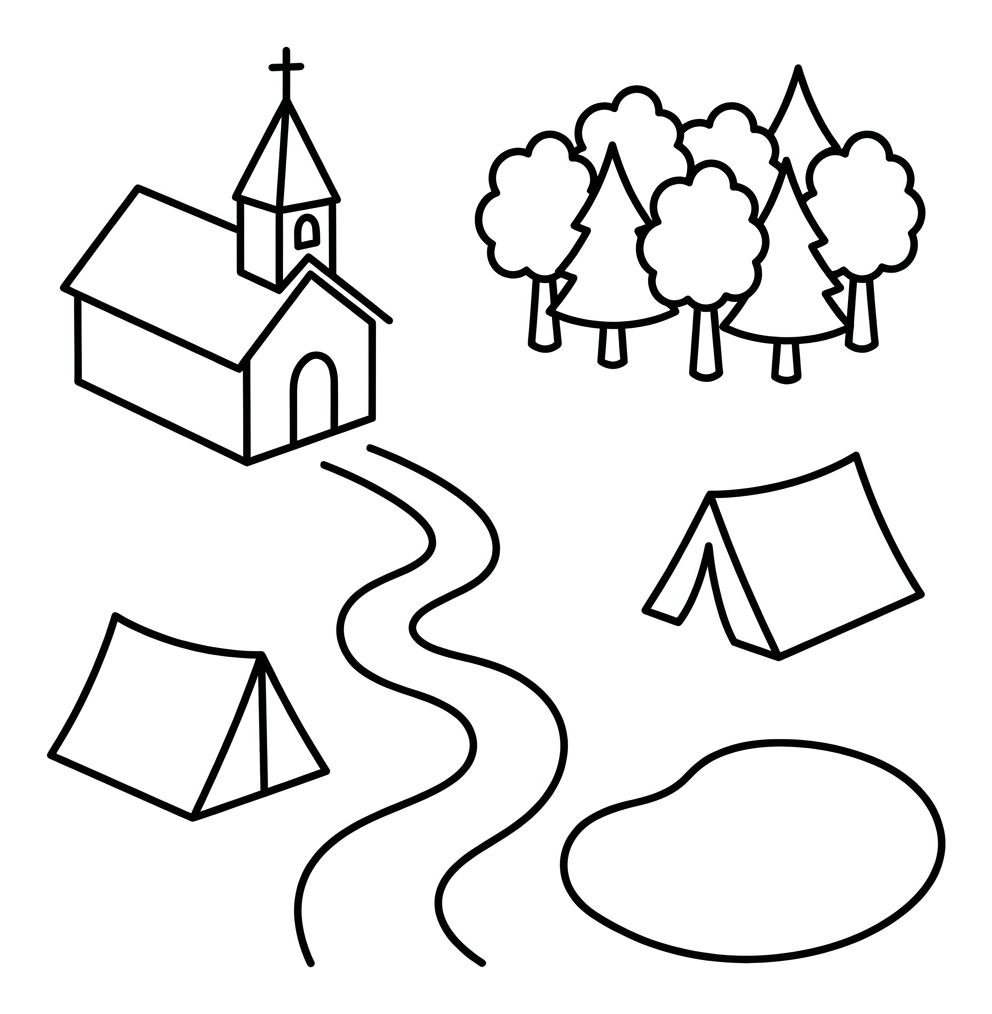
Crack the map code
Each number is next to a feature on the map. Write what the feature is. Use the word bank.
- 1
- 2
- 3
- 4
- 5
Colour it like an Ordnance Survey map
Real Ordnance Survey (OS) maps use the same colours for the same kinds of feature. Use them here.
- Colour the wood green.
- Colour the pond blue.
- Colour both tents blue. On OS maps a blue tent means a campsite.
- Draw short green dashes along the middle of the footpath.
Think like a map maker
Answer on the line.
On a real OS map, these features are shown as tiny symbols, not drawings like these. Why do maps use small symbols?
 Reading a Map: Symbols and a KeySheet 162
Answers: Reading a Map: Symbols and a Key
Sheet 162
- 1. church
- 2. wood
- 3. footpath
- 4. campsite
- 5. pond
- On a real OS map, these features are shown as tiny symbols, not drawings like these. Why do maps use small symbols? — Small symbols take up less space, so a map can show lots of features clearly in a small area.
For grown-ups. Free worksheets and the Owee quiz app at owee.world
Answer key
- 1. church
- 2. wood
- 3. footpath
- 4. campsite
- 5. pond
- On a real OS map, these features are shown as tiny symbols, not drawings like these. Why do maps use small symbols? — Small symbols take up less space, so a map can show lots of features clearly in a small area.
What this worksheet teaches
The worksheet focuses on a single, transferable idea: maps use simplified symbols to represent real places and features, and a key tells you what each one means. Children match five features on a simple picture map (a church, a wood, a footpath, a campsite and a pond) to the right words, then colour them the way an Ordnance Survey map does: green for woods, blue for water, a blue tent for a campsite and green dashes for a public footpath on OS Explorer maps. The drawings are pictures rather than real OS symbols. That is deliberate: the final question asks children to think about why real maps shrink features down to tiny symbols. On an OS map a church is a small black square or circle with a cross, depending on whether it has a tower or a spire.
Why map symbols matter in KS2 geography
In Key Stage 2, the National Curriculum asks children to use symbols and a key, including on Ordnance Survey maps, alongside compass points and grid references. Symbols are efficient: a single icon can stand for a feature that would be impossible to draw to scale. Learning to decode them supports wider topics too, from local fieldwork and route planning to understanding land use, settlement and the human and physical geography of the United Kingdom. The colouring task also shows that map makers use the same colour for the same kind of feature every time, which is what makes a key work.
How to use it at home or in class
Print one copy per child on A4. Start by talking about any maps the child already knows, perhaps a theme-park map, a bus map or a walking map. Read through the word bank together, then let the child match each numbered feature to a word and write it on the line. Encourage them to justify their thinking aloud ("a tent must mean somewhere to camp"). A common mix-up is the footpath: it is drawn wide here, so some children call it a river or a road. Point out that it leads to the church door and that the pond is the only water. For an extension, ask the child to draw a simple key for this map with their own small symbol for each feature.
Extending the learning
Once children are comfortable with this picture map, move them on to a simplified Ordnance Survey extract and challenge them to spot the same features in the real key. You could plan a short local walk and ask them to predict the symbols they will pass, then check on a printed or digital OS map afterwards. Pairing the worksheet with a compass-direction or grid-reference activity builds towards full fieldwork. The aim across KS2 is for children to move from reading a simple picture map to confidently interpreting standard maps of the UK and the wider world.
Frequently asked questions
What is a map key and why do maps use symbols?
A map key, sometimes called a legend, is a small list that explains what each symbol on a map means. Maps use symbols because they are a quick, space-saving way to show real features, such as a tent for a campsite or a cross for a church, without having to draw everything in detail or to scale.
Which key stage and age is this worksheet for?
It is designed for KS2 children in Years 5 and 6, roughly ages 9 to 11. The picture map itself is simple, so it also suits Year 3 and 4 children meeting map keys for the first time; the OS colours and the final question are the upper KS2 part.
Do children need a real Ordnance Survey map to complete it?
No. The worksheet is self-contained: the map picture and a word bank are printed on the page. The drawings are simple pictures, not real OS symbols, so it works best as a first step before children read a real Ordnance Survey map and its key.
Is this worksheet really free to print?
Yes. The worksheet is free to download and print for home or classroom use. It is designed to fit on one A4 page per child.
How does this link to the National Curriculum?
It supports the KS2 geography requirement to use symbols and a key, including Ordnance Survey maps, to build knowledge of the UK and the wider world. It also reinforces the broader skill of using maps and atlases to locate and describe features.
Curriculum links
- Key stage 2 Geography: Geographical skills and fieldwork (statutory): 'use the 8 points of a compass, 4- and 6-figure grid references, symbols and key (including the use of Ordnance Survey maps) to build their knowledge of the United Kingdom and the wider world'
- KS2 Geography, Geographical skills and fieldwork: 'use maps, atlases, globes and digital/computer mapping to locate countries and describe features studied'
Quoted word for word from Department for Education documents: the National Curriculum in England, the EYFS framework or the RSHE guidance. Contains public sector information licensed under the Open Government Licence v3.0.
Made by The Owee education team. Updated 13/10/2026. Free to print and share.
More geography worksheets
All Year 4 Geography worksheets →
Years 1–2 · Map skillsSheet 89
Compass Directions: North, East, South, West
Years 1–2 · Map skillsSheet 90
Map Symbols and a Key
Years 3–4 · Map skillsSheet 124
The 8-Point Compass
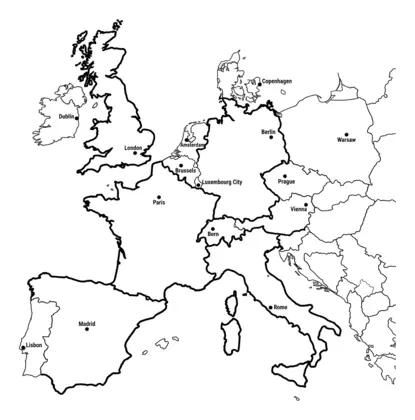
Years 4–5 · EuropeSheet 161
Countries and Capitals of Europe
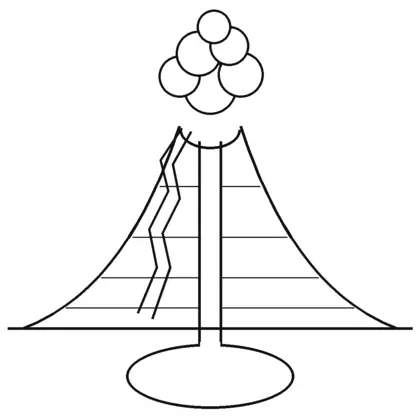
Years 3–4 · Volcanoes and earthquakesSheet 164
Inside a Volcano
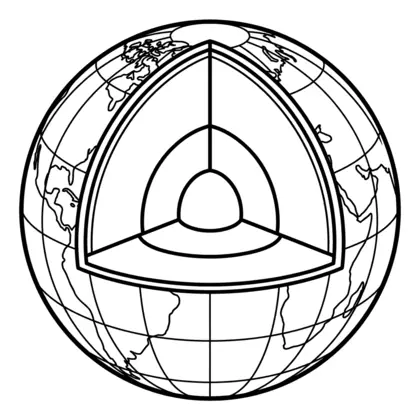
Years 3–4 · Volcanoes and earthquakesSheet 165
Layers of the Earth
Educational quiz app · Ages 5-10
More learning in the Owee app
Owee turns topics like this into quizzes for children aged 5 to 10, and a treehouse grows as they learn. No ads, no chat, no strangers.
- Family-friendly
- No ads
- Private
Educational quiz app · Ages 5-10
More learning in the Owee app
Owee turns topics like this into quizzes for children aged 5 to 10, and a treehouse grows as they learn. No ads, no chat, no strangers.
Scan with your phone camera
- Family-friendly
- No ads
- Private