Educational quiz app · Ages 5-10
This is what learning looks like


Educational quiz app · Ages 5-10
This is what learning looks like
No nagging required. Keep the learning going after the worksheet, with every question read aloud and Owee guiding each step.
Scan with your phone camera
- Family-friendly
- No ads
- Private
Maths · Ticking and colouring worksheet
Odd and Even Numbers Worksheet (Free KS1 Maths Printable)
This free printable helps children in Years 1 and 2 understand odd and even numbers through a simple, concrete idea: a number is even if its objects can be sorted into pairs with none left over, and odd if there is always one spare. Using socks on a washing line makes the maths tangible, because socks naturally come in pairs.
The worksheet prints to a single A4 page. Children count the six socks on the line, ring them in twos to see that none is left over, add a seventh sock to see what changes, then tick the even numbers in a short list. It pairs well with counting in twos and with practical sorting activities at home or in the classroom.
What your child is learning
‘recall and use multiplication and division facts for the 2, 5 and 10 multiplication tables, including recognising odd and even numbers’
Year 2 Maths: Number – multiplication and division, National Curriculum in England. Source and licence
Odd and Even: Socks on the Line
Free Maths worksheet · Ages 6 to 7
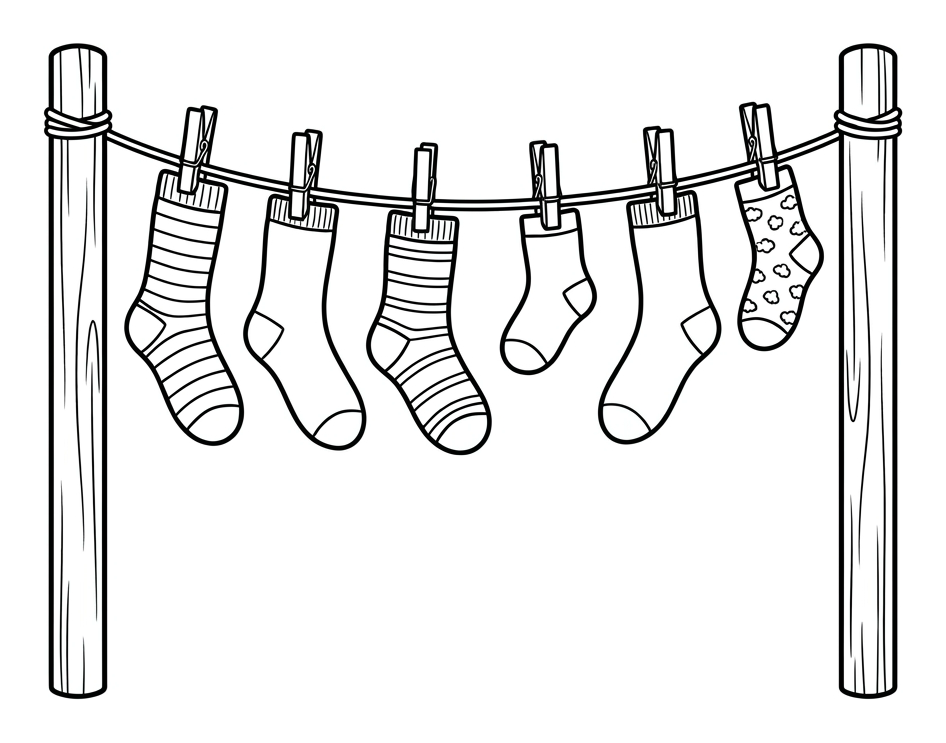
Socks on the line
Count the socks. Then draw a ring round them in twos. Write the numbers in the boxes.
- How many socks are on the line?
- How many twos did you ring?
- Draw one more sock on the line. How many socks are there now?
Odd or even?
Tick the even numbers. Even numbers make twos with none left over.
- 6 socks
- 7 socks
- 10 socks
- 13 socks
 Odd and Even: Socks on the LineSheet 61
Answers: Odd and Even: Socks on the Line
Sheet 61
- How many socks are on the line? — 6
- How many twos did you ring? — 3 (none left over, so 6 is even)
- Draw one more sock on the line. How many socks are there now? — 7 (one is left over, so 7 is odd)
- 6 socks — Tick: 6 is even
- 7 socks — No tick: 7 is odd
- 10 socks — Tick: 10 is even
- 13 socks — No tick: 13 is odd
For grown-ups. Free worksheets and the Owee quiz app at owee.world
Answer key
- How many socks are on the line? — 6
- How many twos did you ring? — 3 (none left over, so 6 is even)
- Draw one more sock on the line. How many socks are there now? — 7 (one is left over, so 7 is odd)
- 6 socks — Tick: 6 is even
- 7 socks — No tick: 7 is odd
- 10 socks — Tick: 10 is even
- 13 socks — No tick: 13 is odd
What odd and even numbers mean at KS1
In Key Stage 1, children learn that an even number of objects can be shared equally into two groups, or grouped into pairs, with nothing left over. An odd number always leaves one spare. By Year 2, the National Curriculum expects pupils to recognise odd and even numbers, and this worksheet keeps the idea concrete by asking children to pair up socks before deciding. Even numbers end in 0, 2, 4, 6 or 8; odd numbers end in 1, 3, 5, 7 or 9, but at this age the pairing model matters far more than the rule about last digits.
Why socks make pairing easy to see
Socks are an ideal context because they belong in pairs in real life, so the maths matches a child's everyday experience. When children draw a ring around two socks at a time, they can see whether one is left over: six socks make three twos exactly, but adding a seventh leaves one sock on its own. This 'one for you, one for me' approach links neatly to early division and sharing, and it builds the foundation for later work on multiples of two. Encourage children to say the count aloud in twos as they pair: two, four, six, and so on.
How to use this worksheet
Start with the picture: the child counts the socks, rings them in twos and then draws one more sock, so they see an even number become odd. For the tick list, children who are unsure can draw quick dots and ring them in twos; 13 is deliberately too big to picture easily, so it is a good check on whether they can count in twos past 10. A common mix-up is to think ‘odd’ means ‘strange’ or that a number is even because it is big; the pairing test settles both. Afterwards, children can colour the matching socks in the same colours.
Extending the learning at home
This printable connects to lots of practical everyday maths. Sorting real washing into pairs, counting steps in twos, or dividing snacks fairly between two people all reinforce the same idea. You might ask whether the number of people at the table is odd or even, or whether everyone in a board game can be split into two equal teams. Little conversations like these help the concept stick far better than worksheets alone, and they show children that maths is genuinely useful.
Frequently asked questions
What is an odd or even number for KS1 children?
An even number of objects can be split into two equal groups, or sorted into pairs, with nothing left over. An odd number always leaves one spare object. At KS1, children learn this best by physically pairing things up rather than by memorising rules.
What age are odd and even numbers taught in the UK?
Recognising odd and even numbers is a Year 2 objective in the National Curriculum, so it is usually taught around ages 6 to 7. It builds on Year 1 work counting in twos, which is why this worksheet suits children in Years 1 and 2.
How do I explain odd and even to a 6 year old?
Use real objects that come in pairs, such as socks or shoes. Ask the child to group them two at a time. If every object has a partner, the number is even; if one is left without a partner, the number is odd. Saying the count in twos out loud also helps.
Is zero odd or even?
Zero is even, because it can be divided into two equal groups with nothing left over. This is not usually emphasised at KS1, but if a child asks, it is a fair and accurate answer that fits the pairing idea perfectly.
Is this odd and even numbers worksheet free to print?
Yes. This worksheet is completely free to download and print. It fits on a single A4 page and is designed for use at home or in the classroom with children aged 6 to 7.
Curriculum links
- Year 2 Maths: Number – multiplication and division (statutory): 'recall and use multiplication and division facts for the 2, 5 and 10 multiplication tables, including recognising odd and even numbers'
Quoted word for word from Department for Education documents: the National Curriculum in England, the EYFS framework or the RSHE guidance. Contains public sector information licensed under the Open Government Licence v3.0.
Made by The Owee education team. Updated 13/10/2026. Free to print and share.
More maths worksheets
All Year 2 Maths worksheets →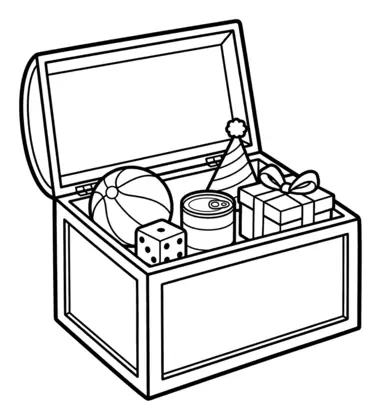
Years 1–2 · 3D shapesSheet 11
3D Shapes Around Us
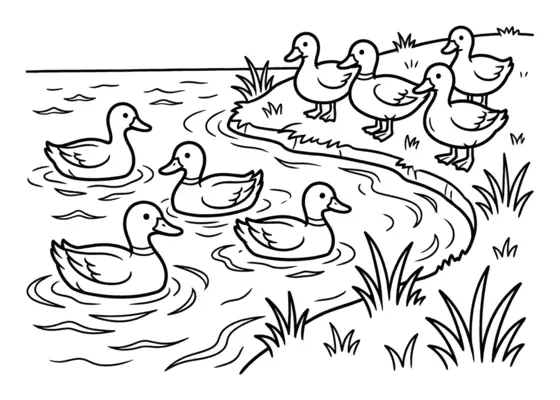
Reception–Year 1 · Addition and subtractionSheet 12
Adding to 10: Ducks on the Pond
Years 2–4 · SymmetrySheet 63
Butterfly Lines of Symmetry
Years 1–2 · CountingSheet 14
Count in 2s: Pairs of Wellies
Reception–Year 1 · CountingSheet 1
Count the Minibeasts
Reception–Year 1 · CountingSheet 15
Count to 20: Ladybird Spots
Educational quiz app · Ages 5-10
More learning in the Owee app
Owee turns topics like this into quizzes for children aged 5 to 10, and a treehouse grows as they learn. No ads, no chat, no strangers.
- Family-friendly
- No ads
- Private
Educational quiz app · Ages 5-10
More learning in the Owee app
Owee turns topics like this into quizzes for children aged 5 to 10, and a treehouse grows as they learn. No ads, no chat, no strangers.
Scan with your phone camera
- Family-friendly
- No ads
- Private