Educational quiz app · Ages 5-10
This is what learning looks like


Educational quiz app · Ages 5-10
This is what learning looks like
No nagging required. Keep the learning going after the worksheet, with every question read aloud and Owee guiding each step.
Scan with your phone camera
- Family-friendly
- No ads
- Private
Maths · Colouring and writing worksheet
Number Bonds to 10: Free KS1 Maths Worksheet
This free, printable number bonds to 10 worksheet helps children aged 5 to 7 learn the pairs of numbers that add together to make 10. Children count the nine apples in the basket, draw one more to make ten, colour them in two colours, then fill in the number bonds, such as 6 + 4 = 10 or 7 + 3 = 10.
It is completely free to print, use and share, at home or in the classroom. Just hit print, or save it as a PDF.
What your child is learning
‘represent and use number bonds and related subtraction facts within 20’
Year 1 Maths: Number – addition and subtraction, National Curriculum in England. Source and licence

Number Bonds to 10
Free Maths worksheet · Ages 5 to 7
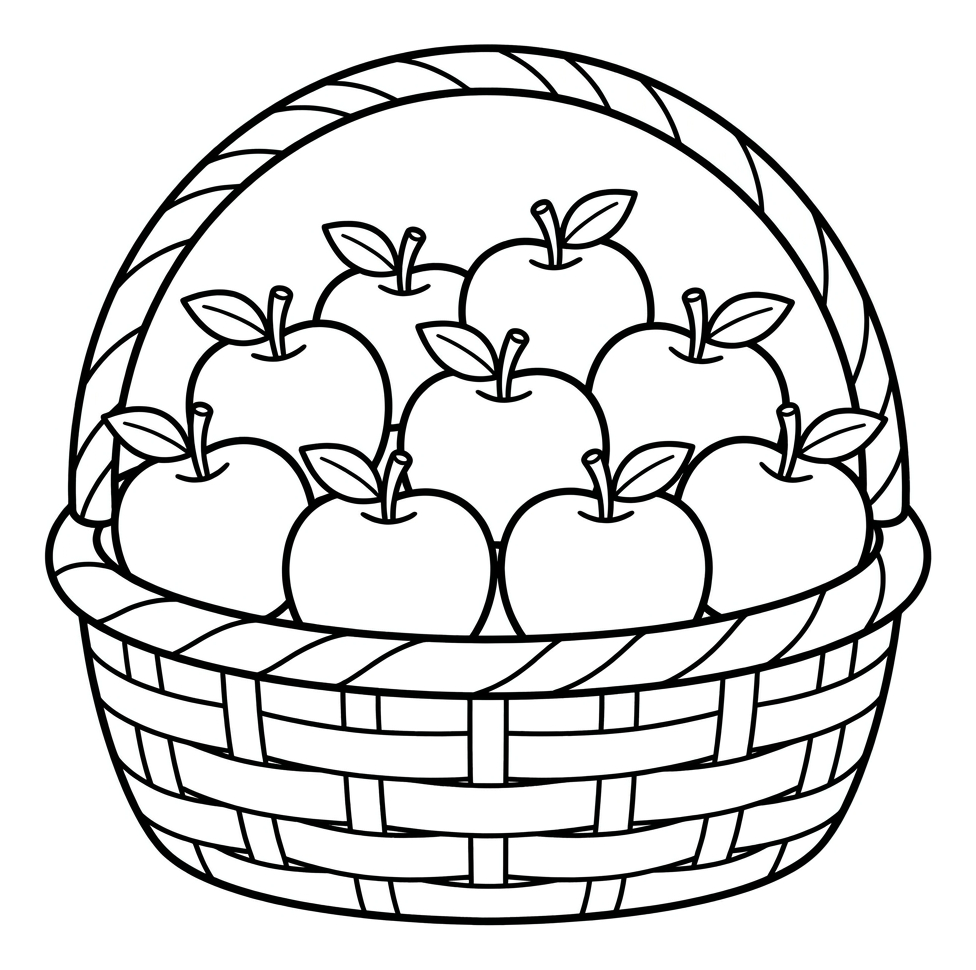
Count the apples
Touch each apple as you count it. Write the number in the box.
- How many apples are in the basket?
- Draw one more apple in the basket. How many apples are there now?
Colour a number bond
Colour some of the 10 apples red and the rest green.
Write your number bond, like 4 + 6 = 10.
Number bonds to 10
Write the missing number in each box.
- 1.0 + = 10
- 2.1 + = 10
- 3.2 + = 10
- 4.3 + = 10
- 5.4 + = 10
- 6.5 + = 10
- 7. + 3 = 10
- 8. + 1 = 10
- 9.10 − 4 =
 Number Bonds to 10Sheet 13
Answers: Number Bonds to 10
Sheet 13
- How many apples are in the basket? — 9
- Draw one more apple in the basket. How many apples are there now? — 10
- 0 + 10 = 10
- 1 + 9 = 10
- 2 + 8 = 10
- 3 + 7 = 10
- 4 + 6 = 10
- 5 + 5 = 10
- 7 + 3 = 10
- 9 + 1 = 10
- 10 − 4 = 6
For grown-ups. Free worksheets and the Owee quiz app at owee.world
Answer key
- How many apples are in the basket? — 9
- Draw one more apple in the basket. How many apples are there now? — 10
- 0 + 10 = 10
- 1 + 9 = 10
- 2 + 8 = 10
- 3 + 7 = 10
- 4 + 6 = 10
- 5 + 5 = 10
- 7 + 3 = 10
- 9 + 1 = 10
- 10 − 4 = 6
What is on the worksheet
One clear line drawing of a basket of nine apples. Children count them, then draw a tenth apple, which is itself a number bond: 9 and 1 make 10. Next they colour some apples red and the rest green and write the pair as a number sentence. The last task is nine missing-number sums: the bonds in order from 0 + 10 to 5 + 5, two with the missing number first, and one subtraction.
The picture is not just decoration: it is the model children use to work out each number bond. If they get stuck on a sum, they can cover some apples with a finger and count the rest.
How to use it at home or in the classroom
Print the worksheet, or open it on a tablet and print from there. Start by letting your child count the apples in the basket together, touching each one, to confirm there are ten in all.
Then show them how to colour, say, four apples red and the other six green, and talk about how 4 and 6 make 10. Encourage them to write that pair as a number sentence. In the sums, watch for children who add the two numbers they can see (3 + 10 = 13) instead of finding the missing part; reading the sum aloud as ‘3 and what make 10?’ usually sorts it out. For a class, it works well as a starter or as part of a session on number bonds, with cubes or counters alongside for children who need something to hold.
What your child will learn
By the end of the activity, your child should be able to recall and use the pairs of numbers that add together to make 10: 0 and 10, 1 and 9, 2 and 8, 3 and 7, 4 and 6, and 5 and 5. They will also begin to notice that 4 and 6 make 10 just as 6 and 4 do, an early taste of how addition can be done in any order.
Knowing number bonds to 10 off by heart is one of the most useful skills in early maths. It underpins quick mental addition and subtraction, helps with adding bigger numbers later, and gives children the confidence to work things out in their heads rather than counting one by one.
A note for teachers
This worksheet supports the Key Stage 1 mathematics programme of study for addition and subtraction, where pupils represent and use number bonds and related subtraction facts within 20. The ten-apple model makes the part-whole structure visible and links neatly to tens frames, Numicon and cube work.
There is no log-in, no watermark and no catch. You are welcome to print copies for your class and to link to this page from your school website or newsletter.
Frequently asked questions
What are the number bonds to 10?
The number bonds to 10 are the pairs of whole numbers that add together to make 10: 0 and 10, 1 and 9, 2 and 8, 3 and 7, 4 and 6, and 5 and 5. Each pair can also be written the other way round, such as 9 and 1, because addition can be done in any order.
What age or year group is this worksheet for?
It is designed for children aged 5 to 7, which is Years 1 and 2 (Key Stage 1) in England. Children typically first meet number bonds to 10 in Year 1, then practise recalling them quickly in Year 2.
Why are number bonds to 10 so important?
Knowing the pairs that make 10 by heart is a building block for nearly all later mental arithmetic. It speeds up addition and subtraction, helps children add larger numbers by 'making 10', and reduces the need to count on their fingers.
Is this number bonds worksheet free to print and share?
Yes. It is completely free to print, use at home or in class, and share. There is no sign-up and no watermark. You are welcome to link to this page from a school website or newsletter.
How do I print or save the worksheet?
Press the Print button on this page, or use your browser's print option. To keep a copy, choose 'Save as PDF' as the destination in the print dialog.
Curriculum links
- Year 1 Maths: Number – addition and subtraction (statutory): 'represent and use number bonds and related subtraction facts within 20'
- KS1 Year 1 Addition and Subtraction (statutory): 'add and subtract one-digit and two-digit numbers to 20, including zero'
- KS1 Year 2 Addition and Subtraction (statutory): 'recall and use addition and subtraction facts to 20 fluently, and derive and use related facts up to 100'
Quoted word for word from Department for Education documents: the National Curriculum in England, the EYFS framework or the RSHE guidance. Contains public sector information licensed under the Open Government Licence v3.0.
Made by The Owee education team. Updated 13/10/2026. Free to print and share.
More maths worksheets
All Year 1 Maths worksheets →
Year 4 · Addition and subtractionSheet 134
4-Digit Column Addition
Reception–Year 1 · Addition and subtractionSheet 12
Adding to 10: Ducks on the Pond
Years 3–4 · Addition and subtractionSheet 96
Column Addition
Years 3–4 · Addition and subtractionSheet 97
Column Subtraction
Years 2–3 · Addition and subtractionSheet 57
Number Bonds to 100
Years 1–2 · Addition and subtractionSheet 58
Number Bonds to 20
Educational quiz app · Ages 5-10
More learning in the Owee app
Owee turns topics like this into quizzes for children aged 5 to 10, and a treehouse grows as they learn. No ads, no chat, no strangers.
- Family-friendly
- No ads
- Private
Educational quiz app · Ages 5-10
More learning in the Owee app
Owee turns topics like this into quizzes for children aged 5 to 10, and a treehouse grows as they learn. No ads, no chat, no strangers.
Scan with your phone camera
- Family-friendly
- No ads
- Private