Educational quiz app · Ages 5-10
This is what learning looks like


Educational quiz app · Ages 5-10
This is what learning looks like
No nagging required. Keep the learning going after the worksheet, with every question read aloud and Owee guiding each step.
Scan with your phone camera
- Family-friendly
- No ads
- Private
English · Naming and counting worksheet
Nouns Worksheet for KS1: Free Naming Words Printable (Ages 5 to 7)
Nouns are one of the first word classes children learn to name in Key Stage 1. A noun is a naming word: the name of a person, a place, an animal or a thing. This free printable gives children a friendly picture of everyday objects to name out loud and write down, then asks them to spot the nouns inside short sentences, so the idea of a naming word feels concrete rather than abstract.
The worksheet prints neatly onto one sheet of A4, and the picture can be coloured in when the writing is done. It pairs well with a quick chat at home or in class about all the nouns you can spot in the room around you.
What your child is learning
‘noun, noun phrase’
Year 2 English: Terminology for pupils (Appendix 2), National Curriculum in England. Source and licence
Naming Words (Nouns)
Free English worksheet · Ages 5 to 7
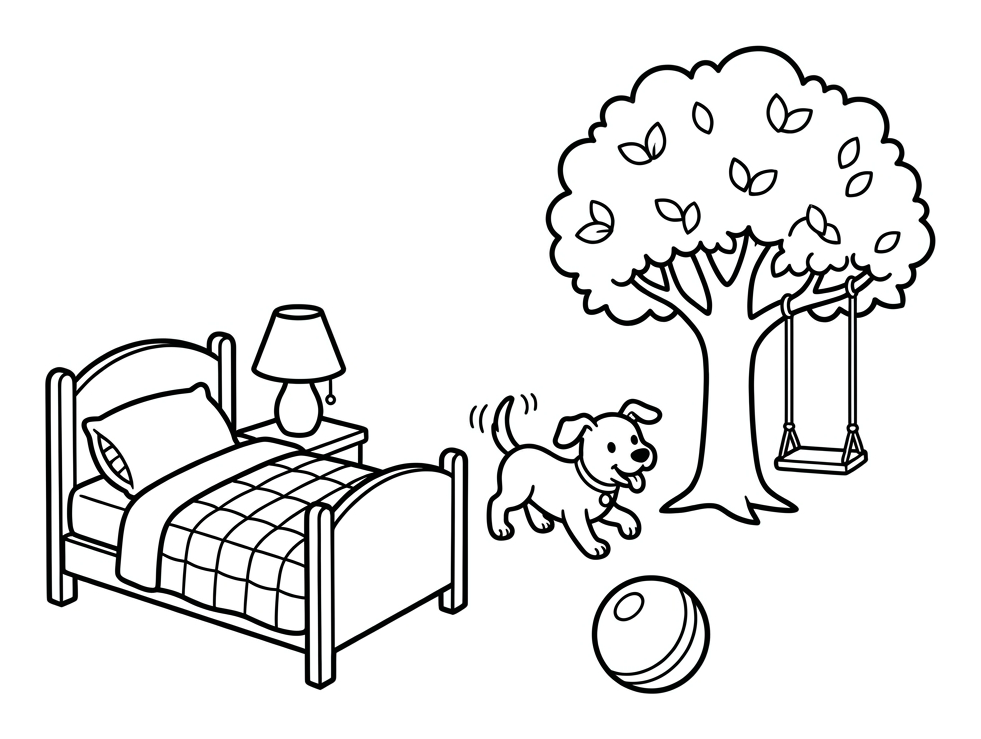
Name the naming words
Look at the picture. Read each clue and write the naming word (noun). Use the word bank to help with spelling.
Write the naming word for the thing you sleep in.
Write the naming word for the thing that gives light.
Write the naming word for the round thing you can throw and catch.
Write the naming word for the tall plant with branches and leaves.
Write the naming word for the friendly animal that says woof.
Count the naming words
How many naming words are in each sentence? Write the number in the box.
- The dog sat under the tree.
- My lamp is next to my bed.
- The dog chased the ball past the swing.
 Naming Words (Nouns)Sheet 73
Answers: Naming Words (Nouns)
Sheet 73
- Write the naming word for the thing you sleep in. — bed
- Write the naming word for the thing that gives light. — lamp
- Write the naming word for the round thing you can throw and catch. — ball
- Write the naming word for the tall plant with branches and leaves. — tree
- Write the naming word for the friendly animal that says woof. — dog
- The dog sat under the tree. — 2 (dog, tree)
- My lamp is next to my bed. — 2 (lamp, bed)
- The dog chased the ball past the swing. — 3 (dog, ball, swing)
For grown-ups. Free worksheets and the Owee quiz app at owee.world
Answer key
- Write the naming word for the thing you sleep in. — bed
- Write the naming word for the thing that gives light. — lamp
- Write the naming word for the round thing you can throw and catch. — ball
- Write the naming word for the tall plant with branches and leaves. — tree
- Write the naming word for the friendly animal that says woof. — dog
- The dog sat under the tree. — 2 (dog, tree)
- My lamp is next to my bed. — 2 (lamp, bed)
- The dog chased the ball past the swing. — 3 (dog, ball, swing)
What is a noun? A simple explanation for KS1
A noun is a naming word. It names a person (such as mum, teacher or Tom), a place (such as park, school or kitchen), an animal (such as dog, cat or rabbit) or a thing (such as ball, lamp or bed). The national curriculum lists 'noun' as one of the grammar words children learn in Year 2, alongside 'adjective', 'verb' and 'noun phrase'. A quick test for a noun is whether you can put a or the in front of it: a dog, the tree. There is no need to introduce proper nouns, common nouns or other categories at this stage; the goal is simply for children to understand that nouns name things, and to start using the term confidently.
How to use this naming words worksheet
Start by pointing to an item in the picture and asking, 'What is the name of this thing?' Each answer is a noun. Encourage your child to say the word, then write it on the line. In the second task they count the naming words in three short sentences. Reading each sentence aloud and pointing to every word helps: dog and tree are nouns, but sat and under are not. If your child finds writing tricky, you can scribe for them so the grammar learning is not held back by handwriting. To extend the activity, ask them to find the nouns that are not in the word bank, such as swing and pillow.
Why the word 'noun' matters in Year 2
The Year 2 grammar curriculum introduces a small set of technical terms, including 'noun', 'verb' and 'adjective', so that children build a shared language for talking about how sentences work. Meeting the word in a low-pressure, playful way means that when children go on to build noun phrases such as the big red ball, the vocabulary already feels familiar. Naming the objects in a picture is one of the clearest ways to make an abstract grammar term tangible: a child can point to a real thing and say, 'That is a noun.'
Linking nouns to simple sentences
Once children can spot and name nouns, the natural next step is to use them inside sentences. After completing the worksheet, ask your child to make a short spoken or written sentence using one of the nouns they found, for example, 'The dog is in the park.' This helps children see that nouns are not just isolated words but the building blocks of the sentences they read and write every day. Keeping sentences short and supportive at this stage builds confidence before more demanding writing tasks later in Key Stage 1.
Frequently asked questions
What is a noun for KS1 children?
For Key Stage 1, a noun is best explained as a naming word: it names a person, a place, an animal or a thing. Children learn the term 'noun' in Year 2 and begin to recognise naming words in pictures, in the world around them and in simple sentences.
Is this nouns worksheet free to print?
Yes. This worksheet is completely free to download and print. It is designed to fit on a single sheet of A4 so it is quick and economical to use at home or in the classroom.
What age or year group is this worksheet for?
It is aimed at children aged 5 to 7, which covers Years 1 and 2 in Key Stage 1. The term 'noun' is introduced in Year 2, so it suits Year 2 best. Confident Year 1 children can try it with an adult reading the sentences aloud.
Do I need to teach proper and common nouns at this stage?
No. The national curriculum does not ask Key Stage 1 children to learn the terms 'proper noun' or 'common noun'. The focus is on understanding that a noun is a naming word. Children do learn in Year 1 that names of people and places start with a capital letter, which is a natural way to talk about names later on.
How can I help my child if they find writing the words difficult?
You can act as a scribe and write the nouns down while your child says them aloud, so the grammar learning is not held back by handwriting. You can also let them trace or copy the words, and focus the praise on correctly naming each thing in the picture.
Curriculum links
- Year 2 English: Terminology for pupils (Appendix 2) (statutory): 'noun, noun phrase'
Quoted word for word from Department for Education documents: the National Curriculum in England, the EYFS framework or the RSHE guidance. Contains public sector information licensed under the Open Government Licence v3.0.
Made by The Owee education team. Updated 13/10/2026. Free to print and share.
More english worksheets
All Year 2 English worksheets →
Years 3–4 · GrammarSheet 109
Adverbs: How, When and Where
Years 2–3 · GrammarSheet 70
Conjunctions: because, but and so
Years 1–2 · GrammarSheet 71
Describing Words (Adjectives)
Years 1–2 · GrammarSheet 72
Doing Words (Verbs)
Years 2–3 · GrammarSheet 110
Prepositions: Where Is the Cat?
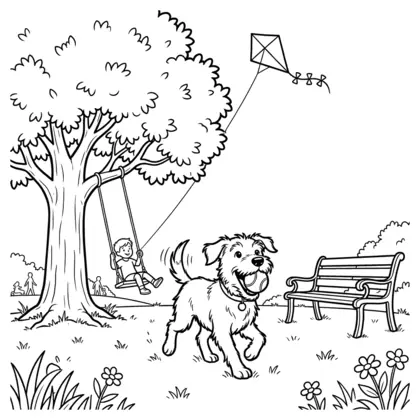
Years 2–3 · GrammarSheet 74
Spot the Nouns, Verbs and Adjectives
Educational quiz app · Ages 5-10
More learning in the Owee app
Owee turns topics like this into quizzes for children aged 5 to 10, and a treehouse grows as they learn. No ads, no chat, no strangers.
- Family-friendly
- No ads
- Private
Educational quiz app · Ages 5-10
More learning in the Owee app
Owee turns topics like this into quizzes for children aged 5 to 10, and a treehouse grows as they learn. No ads, no chat, no strangers.
Scan with your phone camera
- Family-friendly
- No ads
- Private