Educational quiz app · Ages 5-10
This is what learning looks like


Educational quiz app · Ages 5-10
This is what learning looks like
No nagging required. Keep the learning going after the worksheet, with every question read aloud and Owee guiding each step.
Scan with your phone camera
- Family-friendly
- No ads
- Private
Science · Colouring and short-answer worksheet
Muscles That Move Us: Free KS2 Science Worksheet
Muscles That Move Us is a free, printable science worksheet for children in Years 3 and 4 (ages 7 to 9). It introduces the idea that we move because muscles pull on our bones, and that many muscles work in pairs so that one can bend a joint while the other straightens it again.
The sheet pairs a few short questions with a friendly flexing-arm picture to colour, so children can explore the biceps and triceps in a hands-on way. It supports the Year 3 Animals, including humans topic and prints neatly onto a single A4 page for home or classroom use.
What your child is learning
‘identify that humans and some other animals have skeletons and muscles for support, protection and movement’
Year 3 Science: Animals, including humans, National Curriculum in England. Source and licence
Muscles That Move Us
Free Science worksheet · Ages 7 to 9
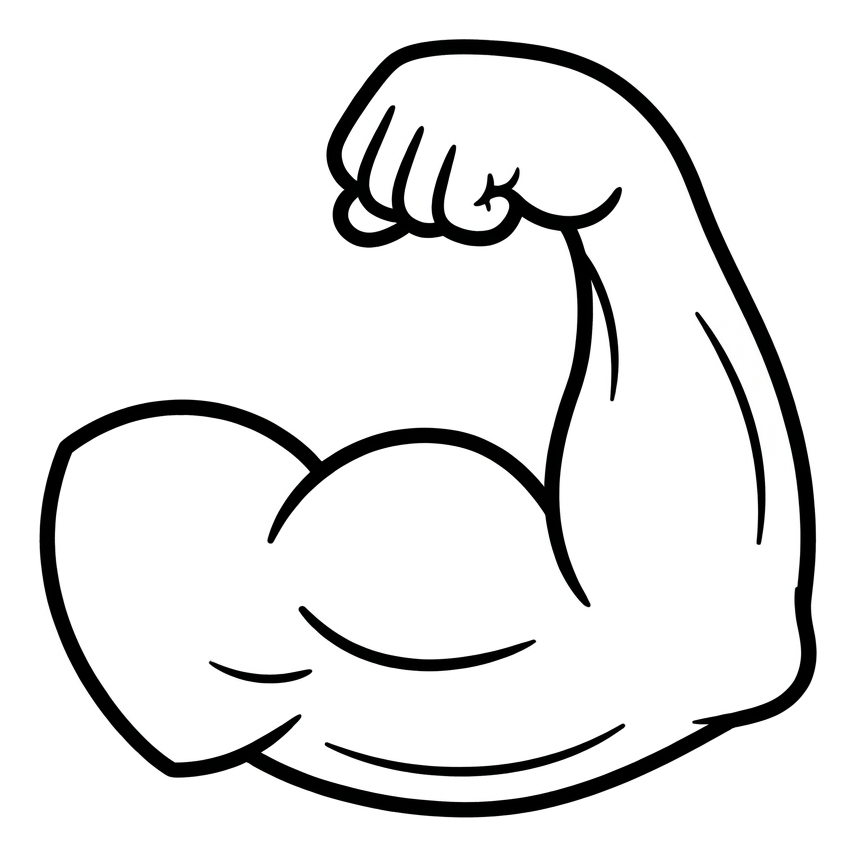
How the arm moves
Bend and straighten your own arm, then answer these questions. Use the word bank to help you.
What do we call the soft body parts, attached to our bones, that make us move?
Muscles can only do one thing to a bone. Do they push or pull it?
Which muscle on the front of the upper arm bends (flexes) the elbow?
Which muscle on the back of the upper arm straightens the elbow again?
Why must muscles work together in pairs to move the arm?
Colour the flexing arm
Colour the flexing arm. Use these colours.
- Colour the big bulge on top of the upper arm (the biceps) red.
- Colour the underneath of the upper arm (the triceps) blue.
- Colour the hand and fist a skin colour of your choice.
 Muscles That Move UsSheet 115
Answers: Muscles That Move Us
Sheet 115
- What do we call the soft body parts, attached to our bones, that make us move? — Muscles
- Muscles can only do one thing to a bone. Do they push or pull it? — Pull
- Which muscle on the front of the upper arm bends (flexes) the elbow? — The biceps
- Which muscle on the back of the upper arm straightens the elbow again? — The triceps
- Why must muscles work together in pairs to move the arm? — Because a muscle can only pull, not push, so one muscle bends the joint and its partner straightens it again.
For grown-ups. Free worksheets and the Owee quiz app at owee.world
Answer key
- What do we call the soft body parts, attached to our bones, that make us move? — Muscles
- Muscles can only do one thing to a bone. Do they push or pull it? — Pull
- Which muscle on the front of the upper arm bends (flexes) the elbow? — The biceps
- Which muscle on the back of the upper arm straightens the elbow again? — The triceps
- Why must muscles work together in pairs to move the arm? — Because a muscle can only pull, not push, so one muscle bends the joint and its partner straightens it again.
What this worksheet teaches
This worksheet helps children understand that movement happens when muscles contract and pull on bones. It focuses on the upper arm as a clear, familiar example: when you bend your elbow to lift something, the biceps muscle on the front of the upper arm contracts and shortens, pulling the lower arm up. The short questions encourage children to notice what happens to their own arm as they bend and straighten it, linking the diagram to their own body. By colouring the flexing-arm picture, children also begin to picture muscles as soft tissues wrapped around the bones rather than abstract labels in a textbook.
Why muscles work in pairs
A key idea at Year 3 level is that muscles can only pull, never push. Because of this, muscles are arranged in pairs that work in opposite directions, often called antagonistic pairs. In the upper arm, the biceps bends (flexes) the elbow and the triceps on the back of the arm straightens (extends) it. When one muscle in the pair contracts, the other relaxes and is gently stretched. This worksheet keeps the vocabulary simple and age-appropriate, but the underlying concept is accurate and prepares children for more detailed work on the muscular system later in Key Stage 2 and beyond.
How to use this sheet at home or in class
Before children write anything, invite them to flex their own arm and feel the muscle on the front harden as the elbow bends. Then ask them to straighten the arm and notice how the back of the arm tightens instead. A common idea is that the bulge appears because the muscle grows or fills with air. Explain that the biceps is getting shorter and fatter as it pulls, and that it goes back to its usual shape when it relaxes. The colouring activity works well as a calm follow-up: encourage neat colouring of the bulging muscle and the fist, and use the picture as a talking point about other movements, such as kicking a ball or nodding the head, that also rely on muscle pairs.
Linking to skeletons, support and protection
Muscles do not work alone. The Year 3 curriculum also asks children to learn that skeletons provide support and protection as well as movement. You can extend this worksheet by discussing how bones give the body its shape and protect organs, such as the skull protecting the brain and the ribs protecting the heart and lungs, while muscles attached to those bones make movement possible. Drawing this connection helps children see the skeleton and muscles as one working system rather than two separate topics.
Frequently asked questions
How do muscles make us move?
Muscles move us by contracting, which means tightening and getting shorter. When a muscle contracts it pulls on the bone it is attached to, and the bone moves at a joint. Muscles can only pull, never push, so they must work in pairs to move a body part both ways.
Which muscle bends the arm?
The biceps muscle on the front of the upper arm bends, or flexes, the elbow. When the biceps contracts it pulls the lower arm up towards the shoulder. The triceps on the back of the upper arm does the opposite job and straightens the arm again.
What does it mean that muscles work in pairs?
Because muscles can only pull and not push, they are arranged in pairs that pull in opposite directions. When one muscle contracts to bend a joint, its partner relaxes and stretches; to straighten the joint again, the second muscle contracts while the first relaxes. The biceps and triceps in the arm are a clear example.
Is this worksheet suitable for Year 3 science?
Yes. It is designed for the Year 3 Animals, including humans topic, which asks children to identify that humans and some other animals have skeletons and muscles for support, protection and movement. It also suits Year 4 children revisiting the topic and is aimed at ages 7 to 9.
Is the worksheet free to print?
Yes. The whole worksheet is free to download and print at home or in school. It is laid out to fit a single A4 page, with short questions and a flexing-arm picture to colour, so you can print as many copies as you need.
Curriculum links
- Year 3 Science: Animals, including humans (statutory): 'identify that humans and some other animals have skeletons and muscles for support, protection and movement'
- Working scientifically (lower KS2): 'asking relevant questions and using different types of scientific enquiries to answer them'
- Working scientifically (lower KS2): 'using straightforward scientific evidence to answer questions or to support their findings'
Quoted word for word from Department for Education documents: the National Curriculum in England, the EYFS framework or the RSHE guidance. Contains public sector information licensed under the Open Government Licence v3.0.
Made by The Owee education team. Updated 13/10/2026. Free to print and share.
More science worksheets
All Year 3 Science worksheets →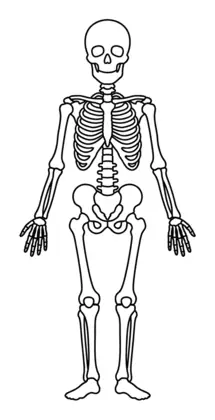
Years 3–4 · Human bodySheet 114
Label the Human Skeleton
Reception–Year 1 · Human bodySheet 34
Label the Parts of the Body
Reception–Year 1 · Human bodySheet 35
The Five Senses
Years 5–6 · Human bodySheet 180
The Heart and Healthy Exercise
Year 6 · Human bodySheet 181
The Human Heart
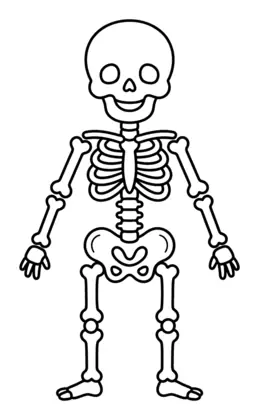
Years 3–4 · Human bodySheet 116
The Human Skeleton: Major Bones
Educational quiz app · Ages 5-10
More learning in the Owee app
Owee turns topics like this into quizzes for children aged 5 to 10, and a treehouse grows as they learn. No ads, no chat, no strangers.
- Family-friendly
- No ads
- Private
Educational quiz app · Ages 5-10
More learning in the Owee app
Owee turns topics like this into quizzes for children aged 5 to 10, and a treehouse grows as they learn. No ads, no chat, no strangers.
Scan with your phone camera
- Family-friendly
- No ads
- Private