Educational quiz app · Ages 5-10
This is what learning looks like


Educational quiz app · Ages 5-10
This is what learning looks like
No nagging required. Keep the learning going after the worksheet, with every question read aloud and Owee guiding each step.
Scan with your phone camera
- Family-friendly
- No ads
- Private
Maths · Arrays and short-answer worksheet
Multiplication Arrays Worksheet (Free KS2 Maths)
Arrays are one of the clearest ways to show a child what multiplication means: equal rows with the same number of objects in each row. On this free printable, your child reads four arrays of spots, writes the multiplication fact for each one, turns an array round to find a second fact, and uses an array to divide.\n\nDesigned for Year 3 pupils (ages 7 to 8), the sheet links equal rows to the times tables they are learning. It is free to print and share, with the answers on a separate page.
What your child is learning
‘write and calculate mathematical statements for multiplication and division using the multiplication tables that they know’
Year 3 Maths: Number – multiplication and division, National Curriculum in England. Source and licence

Multiplication Arrays
Free Maths worksheet · Ages 7 to 8
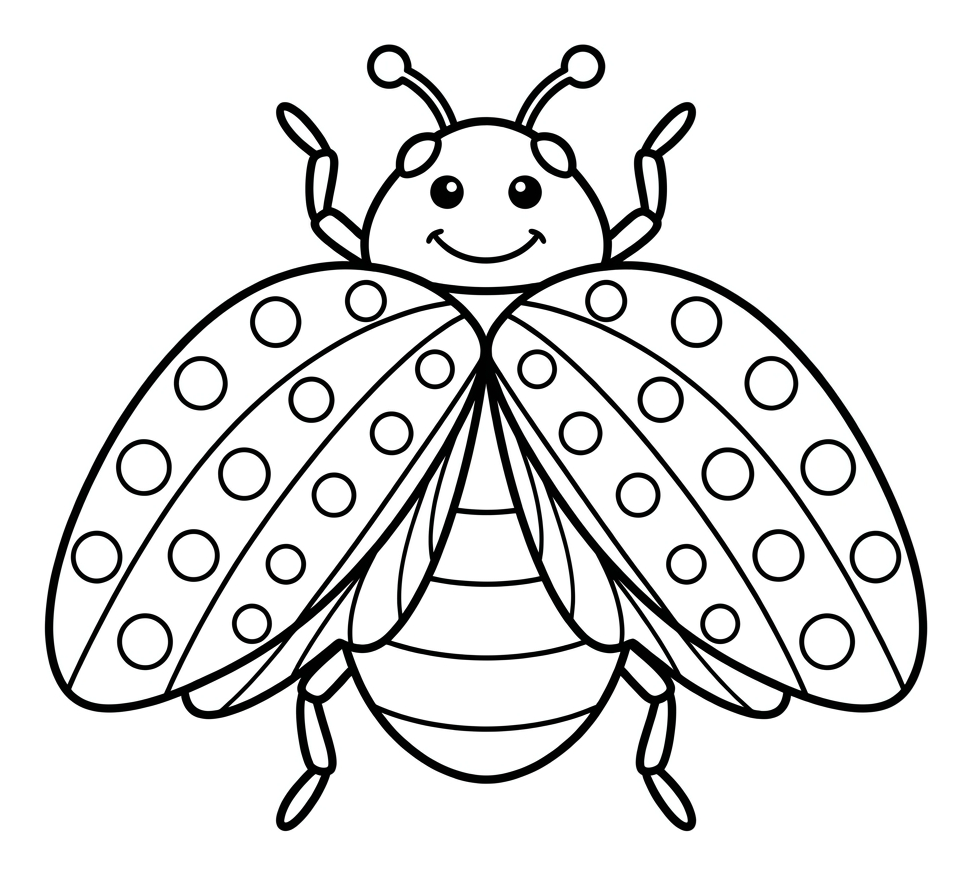
Write the fact for each array
Count the rows and the spots in each row. Then write the multiplication fact.
Array A: count the rows and the spots in each row. Write the fact.
Array B: count the rows and the spots in each row. Write the fact.
Array C: count the rows and the spots in each row. Write the fact.
Array D: count the rows and the spots in each row. Write the fact.
Turn it round and share it out
Use the arrays to answer these.
Turn array A round so it has 4 rows. Write the new fact.
Share the spots in array C into 4 equal rows. How many in each row? Write the division fact.
Array B has 16 spots. Double it. How many spots in 4 rows of 8?
 Multiplication ArraysSheet 101
Answers: Multiplication Arrays
Sheet 101
- Array A: count the rows and the spots in each row. Write the fact. — 3 rows of 4: 3 × 4 = 12
- Array B: count the rows and the spots in each row. Write the fact. — 2 rows of 8: 2 × 8 = 16
- Array C: count the rows and the spots in each row. Write the fact. — 4 rows of 5: 4 × 5 = 20
- Array D: count the rows and the spots in each row. Write the fact. — 3 rows of 6: 3 × 6 = 18
- Turn array A round so it has 4 rows. Write the new fact. — 4 × 3 = 12
- Share the spots in array C into 4 equal rows. How many in each row? Write the division fact. — 5 in each row: 20 ÷ 4 = 5
- Array B has 16 spots. Double it. How many spots in 4 rows of 8? — 32, because 4 × 8 = 32
For grown-ups. Free worksheets and the Owee quiz app at owee.world
Answer key
- Array A: count the rows and the spots in each row. Write the fact. — 3 rows of 4: 3 × 4 = 12
- Array B: count the rows and the spots in each row. Write the fact. — 2 rows of 8: 2 × 8 = 16
- Array C: count the rows and the spots in each row. Write the fact. — 4 rows of 5: 4 × 5 = 20
- Array D: count the rows and the spots in each row. Write the fact. — 3 rows of 6: 3 × 6 = 18
- Turn array A round so it has 4 rows. Write the new fact. — 4 × 3 = 12
- Share the spots in array C into 4 equal rows. How many in each row? Write the division fact. — 5 in each row: 20 ÷ 4 = 5
- Array B has 16 spots. Double it. How many spots in 4 rows of 8? — 32, because 4 × 8 = 32
Why arrays help children understand multiplication
An array arranges objects in equal rows and columns, making the structure of multiplication visible. Instead of seeing 4 × 3 as an abstract symbol, a child sees four rows of three spots and can count the total. This grounds the idea that multiplication is repeated, equal grouping rather than a memorised string of numbers. Arrays also make the link between multiplication and division explicit: the same picture of 12 spots can be read as 4 × 3, 3 × 4, 12 ÷ 3 or 12 ÷ 4. Building this flexible understanding early gives children something concrete to fall back on when they later meet larger calculations or forget a fact under pressure.
How to use this worksheet at home or school
Start with array A. Ask your child to point along each row and count, then say the fact aloud: three rows of four is twelve. Then try the others. Counters, buttons or dried pasta make the arrays real: build array A, then turn the whole thing round and notice that the total stays the same. That is the idea that 3 × 4 and 4 × 3 give the same answer.
Connecting arrays to the 3, 4 and 8 times tables
In Year 3 children are expected to recall and use facts for the 3, 4 and 8 multiplication tables, and arrays are a good stepping stone towards that recall. Arrays also show how the tables are linked. Put two arrays of 4 rows of 3 side by side and you have 8 rows of 3, so 8 × 3 is double 4 × 3. The worksheet asks for exactly this step. Pointing out patterns like this turns rote learning into reasoning, and a child who forgets a fact can rebuild it from a fact they know.
Writing the matching multiplication statement
The National Curriculum also asks Year 3 pupils to write and calculate mathematical statements for multiplication and division using the tables they know. This sheet asks children to write a complete number sentence, for example 3 × 4 = 12, not just the total. Writing the full statement practises the ×, ÷ and = signs and prepares children for written methods later in KS2. The last question reads an array the other way, as a division (12 ÷ 4 = 3). For an extra challenge, ask your child to write all four facts that one array shows.
Frequently asked questions
What is a multiplication array?
An array is a set of objects arranged in equal rows and columns. Counting the number of rows and the number in each row gives a multiplication fact, for example four rows of three spots is 4 × 3 = 12. Arrays make the meaning of multiplication visible and link it directly to division.
What age or year group is this arrays worksheet for?
It is designed for Year 3 children (ages 7 to 8) at Key Stage 2, where pupils learn the 3, 4 and 8 times tables. Confident Year 2 children and Year 4 pupils needing revision can also use it.
How do arrays help with the times tables?
Arrays show each fact as a picture of equal rows, so children understand what a fact means rather than only memorising it. They also reveal patterns, such as the 8 times table being double the 4 times table, which makes recall easier and more reliable.
Is this multiplication worksheet free to print?
Yes. The worksheet is completely free and prints onto one sheet of A4. There is no sign-up required, so you can download and print it for home or classroom use straight away.
How should I help my child read an array?
Ask two questions: how many rows are there, and how many are in each row? Encourage your child to count the equal rows aloud, then write the full multiplication statement such as 3 × 4 = 12. Reading the same array the other way (4 × 3) shows that the order does not change the answer. Building arrays with counters makes this easier to see.
Curriculum links
- Year 3 Maths: Number – multiplication and division (statutory): 'write and calculate mathematical statements for multiplication and division using the multiplication tables that they know'
- Year 3 Number – multiplication and division: 'recall and use multiplication and division facts for the 3, 4 and 8 multiplication tables'
Quoted word for word from Department for Education documents: the National Curriculum in England, the EYFS framework or the RSHE guidance. Contains public sector information licensed under the Open Government Licence v3.0.
Made by The Owee education team. Updated 13/10/2026. Free to print and share.
More maths worksheets
All Year 3 Maths worksheets →
Years 4–5 · Multiplication and divisionSheet 168
Division with Remainders
Years 1–2 · 3D shapesSheet 11
3D Shapes Around Us

Years 3–4 · AnglesSheet 135
Acute, Right and Obtuse Angles Castle

Years 2–4 · SymmetrySheet 63
Butterfly Lines of Symmetry
Years 3–4 · Addition and subtractionSheet 96
Column Addition
Years 3–4 · Addition and subtractionSheet 97
Column Subtraction
Educational quiz app · Ages 5-10
More learning in the Owee app
Owee turns topics like this into quizzes for children aged 5 to 10, and a treehouse grows as they learn. No ads, no chat, no strangers.
- Family-friendly
- No ads
- Private
Educational quiz app · Ages 5-10
More learning in the Owee app
Owee turns topics like this into quizzes for children aged 5 to 10, and a treehouse grows as they learn. No ads, no chat, no strangers.
Scan with your phone camera
- Family-friendly
- No ads
- Private