Educational quiz app · Ages 5-10
This is what learning looks like


Educational quiz app · Ages 5-10
This is what learning looks like
No nagging required. Keep the learning going after the worksheet, with every question read aloud and Owee guiding each step.
Scan with your phone camera
- Family-friendly
- No ads
- Private
Maths · Colouring and writing worksheet
Months and Seasons of the Year: Free KS1 Worksheet
This free printable worksheet helps children in Year 1 and Year 2 learn the twelve months of the year in order and connect each month to one of the four seasons. It pairs a simple colour-in year wheel with short writing tasks, so children practise calendar language while doing something hands-on.
Designed to print onto a single A4 page, it works well as a quick classroom starter, a homework sheet, or a calm activity at home. There is no login and no cost, and the page is laid out so it can be coloured in with pencils or crayons.
What your child is learning
‘recognise and use language relating to dates, including days of the week, weeks, months and years’
Year 1 Maths: Measurement, National Curriculum in England. Source and licence
Months and Seasons of the Year
Free Maths worksheet · Ages 6 to 7
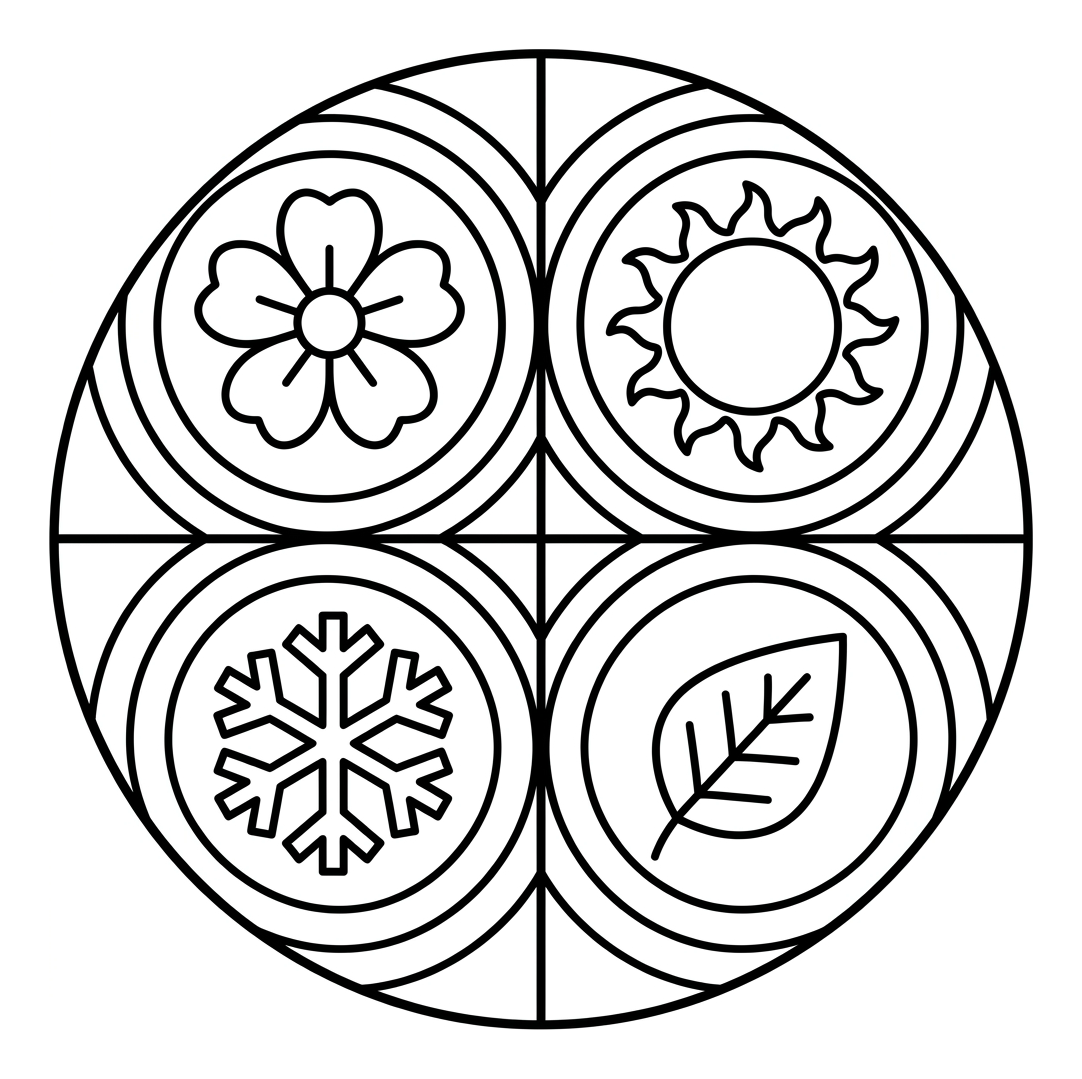
Colour the year wheel
Colour each quarter of the wheel to show its season.
- Colour the flower quarter green for spring.
- Colour the sun quarter yellow for summer.
- Colour the leaf quarter orange for autumn.
- Colour the snowflake quarter blue for winter.
Months and seasons
Write your answer on the line. The word bank shows the months in order.
Which month comes after May?
Which month comes after December?
Which three months are in spring?
Which three months are in winter?
How many months are there in one year?
 Months and Seasons of the YearSheet 18
Answers: Months and Seasons of the Year
Sheet 18
- Which month comes after May? — June
- Which month comes after December? — January
- Which three months are in spring? — March, April and May
- Which three months are in winter? — December, January and February
- How many months are there in one year? — 12 (twelve)
For grown-ups. Free worksheets and the Owee quiz app at owee.world
Answer key
- Which month comes after May? — June
- Which month comes after December? — January
- Which three months are in spring? — March, April and May
- Which three months are in winter? — December, January and February
- How many months are there in one year? — 12 (twelve)
What children practise on this worksheet
This sheet brings together two everyday ideas that often get muddled: months and seasons. Children colour a year wheel by season, then answer five short questions: which month comes next, which months belong to spring and winter in the United Kingdom, and how many months make a year. One question asks what comes after December, so children have to remember that the year starts again at January. The round wheel shows the same idea: a year is a repeating cycle, not a straight line with an end. This supports later work on dates, timetables and reading a calendar.
How months and seasons fit together in the UK
In the UK we usually group the seasons like this: spring (March, April, May), summer (June, July, August), autumn (September, October, November) and winter (December, January, February). This is the common meteorological grouping used in many schools and weather reports. You may also meet the astronomical seasons, which begin on the solstices and equinoxes between about the 20th and 23rd of March, June, September and December, so a date such as 21 December marks the start of astronomical winter. For children aged 6 to 7, the three-months-per-season grouping is the clearest starting point, and it is worth mentioning that not every country has four seasons in the same way.
Ways to use it at home or in class
Before children write, you might say the months aloud together or sing a familiar months song to anchor the order. Encourage them to point to each quarter of the wheel and name the season before colouring it. The seasons go round the wheel clockwise, spring, summer, autumn, winter, just as they follow each other through the year. The sheet suggests spring green, summer yellow, autumn orange and winter blue. To extend the activity, ask your child to find the month of their own birthday in the word bank, work out which season it falls in, and talk about what the weather and daylight are like then.
Common mix-ups to watch for
Two errors are very common at this age. First, children often place the months in the wrong order around the turn of the year, forgetting that December is followed by January. Second, they may assume winter is only December, when in the UK grouping it also includes January and February. Gently checking these two points will catch most mistakes. It also helps to remind children that the year is a loop: after December the cycle starts again, which is exactly what the round year wheel is designed to show.
Frequently asked questions
What are the twelve months of the year in order?
The twelve months in order are January, February, March, April, May, June, July, August, September, October, November and December. After December the year starts again at January, which is why a year is often shown as a circle or wheel.
What are the four seasons and which months belong to each?
The four seasons are spring, summer, autumn and winter. In the UK they are commonly grouped as spring (March, April, May), summer (June, July, August), autumn (September, October, November) and winter (December, January, February).
Is this worksheet suitable for Year 1 and Year 2?
Yes. It supports the Year 1 measurement objective on using language relating to dates, including days, weeks, months and years, and it makes useful revision in Year 2. Year 1 children may need the word bank and some help with reading; most Year 2 children will manage it on their own.
How do I print this months and seasons worksheet?
The worksheet is designed to fit a single A4 page. Use your browser's print option and select A4 or Letter at 100% scale, with margins set to default, so the year wheel and writing lines stay clear and easy to colour.
Do the seasons always start on the first of the month?
It depends on which definition you use. The simple grouping taught in many primary schools treats each season as three whole months. The astronomical seasons begin on the solstices and equinoxes, between about the 20th and 23rd of March, June, September and December, which is worth mentioning to older or curious children.
Curriculum links
- Year 1 Maths: Measurement (statutory): 'recognise and use language relating to dates, including days of the week, weeks, months and years'
Quoted word for word from Department for Education documents: the National Curriculum in England, the EYFS framework or the RSHE guidance. Contains public sector information licensed under the Open Government Licence v3.0.
Made by The Owee education team. Updated 13/10/2026. Free to print and share.
More maths worksheets
All Year 1 Maths worksheets →
Reception–Year 1 · Days and monthsSheet 17
Days of the Week
Years 1–2 · 3D shapesSheet 11
3D Shapes Around Us
Reception–Year 1 · Addition and subtractionSheet 12
Adding to 10: Ducks on the Pond

Years 2–4 · SymmetrySheet 63
Butterfly Lines of Symmetry
Years 1–2 · CountingSheet 14
Count in 2s: Pairs of Wellies
Reception–Year 1 · CountingSheet 1
Count the Minibeasts
Educational quiz app · Ages 5-10
More learning in the Owee app
Owee turns topics like this into quizzes for children aged 5 to 10, and a treehouse grows as they learn. No ads, no chat, no strangers.
- Family-friendly
- No ads
- Private
Educational quiz app · Ages 5-10
More learning in the Owee app
Owee turns topics like this into quizzes for children aged 5 to 10, and a treehouse grows as they learn. No ads, no chat, no strangers.
Scan with your phone camera
- Family-friendly
- No ads
- Private