Educational quiz app · Ages 5-10
This is what learning looks like


Educational quiz app · Ages 5-10
This is what learning looks like
No nagging required. Keep the learning going after the worksheet, with every question read aloud and Owee guiding each step.
Scan with your phone camera
- Family-friendly
- No ads
- Private
Science · Classification key worksheet
Make a Minibeast Classification Key: Free KS2 Science Worksheet
This free printable worksheet introduces Year 4 children to the idea of a classification key through familiar garden minibeasts. By looking closely at observable features such as the number of legs, the presence of wings, a shell or body segments, children begin to sort living things into groups and tell them apart.
It is designed to support the Year 4 Living things and their habitats objectives and prints neatly onto a single A4 page. Children work through a five-question branching key, writing the name of the minibeast each answer leads to, then write a first question of their own. The minibeasts can be coloured once the key is finished.
What your child is learning
‘explore and use classification keys to help group, identify and name a variety of living things in their local and wider environment’
Year 4 Science: Living things and their habitats, National Curriculum in England. Source and licence
Make a Minibeast Classification Key
Free Science worksheet · Ages 8 to 9
Finish the key
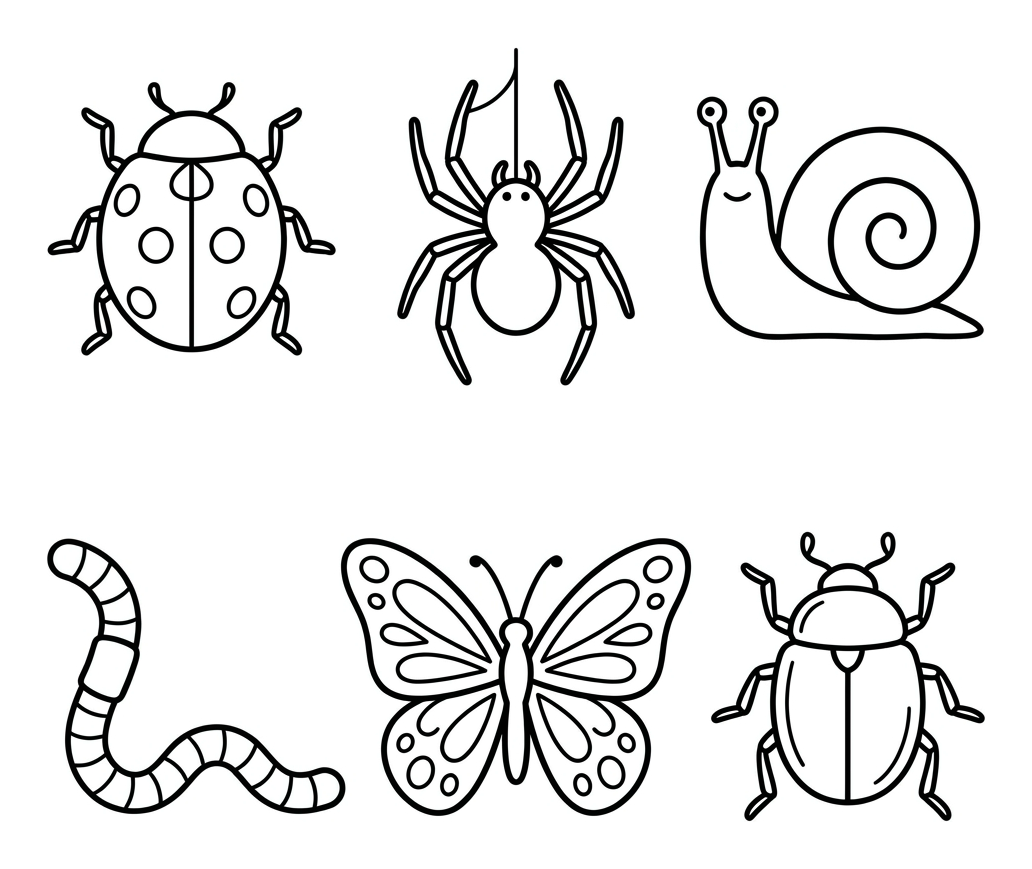
This key sorts the six minibeasts with yes or no questions. Start at question 1 with each minibeast and follow the steps. Write the name each "yes" or "no" leads to. When you have finished, colour the minibeasts.
1. Can you see four big wings? Yes: it is the ... No: go to 2.
2. Does it have eight legs? Yes: it is the ... No: go to 3.
3. Does it have a coiled shell? Yes: it is the ... No: go to 4.
4. Does it have legs? No: it is the ... Yes: go to 5.
5. Does it have spots on its back? Yes: it is the ... No: it is the ...
Now write a different first question that would split the six minibeasts into two groups.
 Make a Minibeast Classification KeySheet 154
Answers: Make a Minibeast Classification Key
Sheet 154
- 1. Can you see four big wings? Yes: it is the ... No: go to 2. — butterfly
- 2. Does it have eight legs? Yes: it is the ... No: go to 3. — spider
- 3. Does it have a coiled shell? Yes: it is the ... No: go to 4. — snail
- 4. Does it have legs? No: it is the ... Yes: go to 5. — earthworm
- 5. Does it have spots on its back? Yes: it is the ... No: it is the ... — ladybird; beetle
- Now write a different first question that would split the six minibeasts into two groups. — Any yes or no question about a feature you can see, e.g. 'Does it have a shell?' or 'Does it have eight legs?'
For grown-ups. Free worksheets and the Owee quiz app at owee.world
Answer key
- 1. Can you see four big wings? Yes: it is the ... No: go to 2. — butterfly
- 2. Does it have eight legs? Yes: it is the ... No: go to 3. — spider
- 3. Does it have a coiled shell? Yes: it is the ... No: go to 4. — snail
- 4. Does it have legs? No: it is the ... Yes: go to 5. — earthworm
- 5. Does it have spots on its back? Yes: it is the ... No: it is the ... — ladybird; beetle
- Now write a different first question that would split the six minibeasts into two groups. — Any yes or no question about a feature you can see, e.g. 'Does it have a shell?' or 'Does it have eight legs?'
What is a classification key?
A classification key is a tool scientists use to identify living things by answering a series of questions, usually with two possible answers each time. In a branching (or dichotomous) key, each question splits the group in two — for example, 'Does it have wings?' sends you down one path if the answer is yes and another if it is no. By following the branches, you eventually arrive at the name of a single organism. Year 4 children are not expected to design a complex key independently, but they should explore how keys work and use simple ones to group, identify and name living things. This worksheet builds that thinking by focusing on the observable features minibeasts can be sorted by.
Observable features to sort minibeasts
The key skill here is looking carefully and noticing features that can be counted or seen. Useful features for garden minibeasts include the number of legs (insects such as ladybirds, beetles and butterflies have six; spiders have eight; worms and snails have none), whether there are wings, whether there is a shell, and whether the body is divided into clear segments. Encourage children to describe what they can actually observe rather than what they already know the animal is called. A good example is the butterfly: it has six legs, but they are not drawn in this picture, which is why the key asks about the four big wings you can see first. This habit — sorting by evidence — is exactly what underpins a scientific classification key, and it transfers to any living things they meet in their local environment.
Why minibeasts work so well for this topic
Minibeasts suit this topic well because they are abundant, easy to find in a garden, park or school grounds, and varied enough to show clear differences. A ladybird and a spider look similar in size yet belong to very different groups once you count their legs. Children are often surprised to learn that a ladybird is a kind of beetle: its spotted back is a pair of hard wing cases, with flying wings folded underneath. Comparing a snail's shell with a worm's soft, segmented body, or a butterfly's wings with a wingless ant, gives children concrete contrasts to reason about. Because they are part of a child's everyday environment, minibeasts also link the classroom to real fieldwork, supporting the curriculum's emphasis on the local and wider environment.
How to use this worksheet at home or in class
Start by talking through each minibeast in the picture and naming the features you can see together. Then let children take one minibeast at a time through the key, starting at question 1 every time, and write the name each answer leads to. If a branch sends them to the wrong animal, ask which question they answered differently and look at the picture again; this checking is the heart of using a key. For an extension, take the worksheet outdoors on a minibeast hunt and challenge children to find a creature for each group, or to invent their own first question for a branching key. A magnifying glass and a gentle reminder to return minibeasts safely to where they were found turn this into a memorable bit of fieldwork.
Frequently asked questions
What is a classification key in KS2 science?
A classification key is a tool that helps you identify a living thing by answering a series of questions, usually with yes or no answers. In KS2, children explore branching keys where each question splits a group of living things into two, until only one organism is left. It is part of the Year 4 'Living things and their habitats' unit.
How do you classify minibeasts by their features?
You sort minibeasts using observable features you can count or see, such as the number of legs, whether they have wings, whether they have a shell, and whether the body has clear segments. For example, insects like ladybirds and beetles have six legs, spiders have eight legs, and worms and snails have none.
What age is this minibeast classification worksheet for?
It is designed for children aged 8 to 9 in Year 4 (Lower KS2), in line with the National Curriculum objective on using classification keys. It can also suit confident Year 3 pupils or be used for revision in Year 5.
How many legs does a spider have compared to an insect?
A spider has eight legs and is an arachnid, not an insect. Insects such as ladybirds, beetles and butterflies have six legs. Counting legs is one of the easiest and most reliable features children can use to start sorting minibeasts into groups.
Is this minibeast worksheet free to print?
Yes. This worksheet is completely free to download and print. It includes a picture of six minibeasts and a short branching key to finish, for use at home or in class.
Curriculum links
- Year 4 Science: Living things and their habitats (statutory): 'explore and use classification keys to help group, identify and name a variety of living things in their local and wider environment'
- Year 4 Science — Living things and their habitats: 'recognise that living things can be grouped in a variety of ways'
- Working scientifically (Years 3 and 4): 'identifying differences, similarities or changes related to simple scientific ideas and processes'
- Working scientifically (Years 3 and 4): 'making systematic and careful observations and, where appropriate, taking accurate measurements'
Quoted word for word from Department for Education documents: the National Curriculum in England, the EYFS framework or the RSHE guidance. Contains public sector information licensed under the Open Government Licence v3.0.
Made by The Owee education team. Updated 13/10/2026. Free to print and share.
More science worksheets
All Year 4 Science worksheets →
Years 5–6 · Living things and habitatsSheet 183
Helpful and Harmful Microbes
Years 1–2 · Living things and habitatsSheet 85
Living, Dead or Never Alive?
Years 3–4 · Teeth and digestionSheet 157
Animal Teeth and What They Eat
Years 3–4 · Food chainsSheet 152
Build a Food Chain: Label and Colour
Years 3–4 · Food chainsSheet 153
Build a Food Chain: Label and True or False
Years 3–5 · Forces and magnetsSheet 175
Forces and Friction
Educational quiz app · Ages 5-10
More learning in the Owee app
Owee turns topics like this into quizzes for children aged 5 to 10, and a treehouse grows as they learn. No ads, no chat, no strangers.
- Family-friendly
- No ads
- Private
Educational quiz app · Ages 5-10
More learning in the Owee app
Owee turns topics like this into quizzes for children aged 5 to 10, and a treehouse grows as they learn. No ads, no chat, no strangers.
Scan with your phone camera
- Family-friendly
- No ads
- Private