Educational quiz app · Ages 5-10
This is what learning looks like


Educational quiz app · Ages 5-10
This is what learning looks like
No nagging required. Keep the learning going after the worksheet, with every question read aloud and Owee guiding each step.
Scan with your phone camera
- Family-friendly
- No ads
- Private
Science · Tick and write worksheet
Material Properties Worksheet (Free KS1 Science Printable)
This free printable introduces the Year 1 science topic of everyday materials, helping children begin to describe and compare what objects are made from and how they feel or behave. The worksheet pairs a colourable picture of four familiar objects with simple tick and write tasks, so learning stays hands-on and low-pressure.
It is designed for ages 5 to 7 and prints cleanly to a single A4 page, making it equally suitable for the classroom carpet, a home learning table or a quiet afternoon activity.
What your child is learning
‘describe the simple physical properties of a variety of everyday materials’
Year 1 Science: Everyday materials, National Curriculum in England. Source and licence
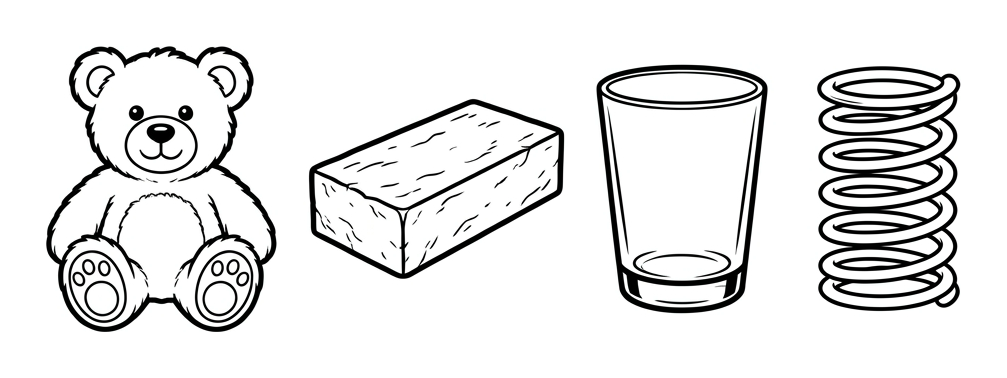
Material Properties Sort
Free Science worksheet · Ages 5 to 7
Activity 1
Colour the four objects. Make the teddy look soft and fluffy. Colour the glass very lightly so it still looks see-through.
Activity 2
Read each sentence. Tick the box if it is true.
- The brick feels rough.
- The glass feels smooth.
- You can see through the teddy bear.
- The brick is soft and squashy.
- You can squash the spring and it springs back.
Activity 3
Write a describing word for each object. Use the word bank to help you.
How does the teddy bear feel?
How does the brick feel?
You can see through the glass. What is the word for this?
The spring can bend and spring back. What word describes it?
 Material Properties SortSheet 36
Answers: Material Properties Sort
Sheet 36
- The brick feels rough. — tick (true)
- The glass feels smooth. — tick (true)
- You can see through the teddy bear. — no tick (false): the teddy is not see-through
- The brick is soft and squashy. — no tick (false): the brick is hard
- You can squash the spring and it springs back. — tick (true)
- How does the teddy bear feel? — soft
- How does the brick feel? — hard (rough is also right)
- You can see through the glass. What is the word for this? — transparent
- The spring can bend and spring back. What word describes it? — bendy (springy is also right)
For grown-ups. Free worksheets and the Owee quiz app at owee.world
Answer key
- The brick feels rough. — tick (true)
- The glass feels smooth. — tick (true)
- You can see through the teddy bear. — no tick (false): the teddy is not see-through
- The brick is soft and squashy. — no tick (false): the brick is hard
- You can squash the spring and it springs back. — tick (true)
- How does the teddy bear feel? — soft
- How does the brick feel? — hard (rough is also right)
- You can see through the glass. What is the word for this? — transparent
- The spring can bend and spring back. What word describes it? — bendy (springy is also right)
What this worksheet covers
The activities focus on the simple physical properties that young children can observe and feel for themselves: hard and soft, bendy and stiff, transparent and opaque, and rough and smooth. Rather than asking children to memorise definitions, the sheet invites them to look closely at four everyday objects, a teddy, a brick, a glass and a spring, and decide which words best describe each one. This observation-led approach mirrors how the Year 1 programme of study expects children to encounter materials science.
How to use it at home or in class
Begin by colouring the picture together and naming each object. Before tackling the written tasks, encourage some real handling where it is safe to do so: a soft toy, a building brick and a smooth tumbler give children direct sensory evidence to draw on. Talk through one example aloud, modelling the language ("the teddy feels soft"), then let children complete the ticks and the short writing tasks independently. Two of the five sentences are false, so children need to read each one carefully rather than ticking everything. The word bank supports early spellers and reduces the writing load so the focus stays on the science.
Why describing materials matters
Sorting and describing materials lays the groundwork for later science, where children compare materials more formally and investigate why a particular material is chosen for a job, such as glass for a window because it is transparent. Building a confident vocabulary of property words early on, and learning that one object can have several properties at once, helps children explain their thinking and gives them the language they will reuse throughout Key Stage 1 and beyond.
Extending the activity
Once the sheet is complete, turn it into a short material hunt around the room or home. Ask children to find one more thing that is soft, one that is transparent and one that is bendy, then describe it using two property words. A simple sorting tray, with headings such as "hard" and "soft", lets children group real objects and reinforces the idea that materials can be compared and grouped on the basis of how they look, feel and behave.
Frequently asked questions
What are the simple physical properties children learn in KS1?
In Year 1 children describe properties they can see or feel, such as hard or soft, bendy or stiff, transparent or opaque, rough or smooth, shiny or dull, and waterproof or not waterproof. This worksheet focuses on the first four pairs, which are the easiest to observe with everyday objects.
Is this worksheet suitable for Year 1 or Year 2?
It is pitched at Year 1, where everyday materials is the relevant topic, but it also works well as revision or consolidation in early Year 2, and for confident Reception children with adult support.
What is the difference between an object and a material?
An object is a thing, such as a window or a teddy, while the material is what it is made from, such as glass or fabric. Helping children separate the two is an explicit Year 1 objective, and you can reinforce it by asking "what is it?" and then "what is it made of?"
Can one object have more than one property?
Yes, and this is an important idea for children to grasp. A drinking glass, for example, is hard, transparent and smooth all at once. Encourage children to use more than one describing word for each object. A common mix-up is to think hard means strong: a glass is hard, but it can still break if it is dropped.
Is the worksheet free to print?
Yes. The worksheet is completely free, prints to a single A4 page in black and white, and can be used at home or in school without any account or sign-up.
Curriculum links
- Year 1 Science: Everyday materials (statutory): 'describe the simple physical properties of a variety of everyday materials'
- Year 1 Science, Everyday materials: 'compare and group together a variety of everyday materials on the basis of their simple physical properties'
- Year 1 Science, Everyday materials: 'distinguish between an object and the material from which it is made'
Quoted word for word from Department for Education documents: the National Curriculum in England, the EYFS framework or the RSHE guidance. Contains public sector information licensed under the Open Government Licence v3.0.
Made by The Owee education team. Updated 13/10/2026. Free to print and share.
More science worksheets
All Year 1 Science worksheets →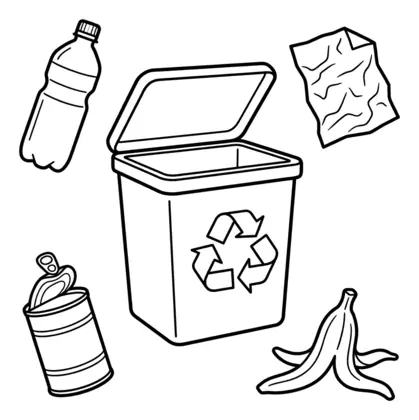
Years 1–2 · MaterialsSheet 37
Sort It for Recycling
Years 1–2 · MaterialsSheet 38
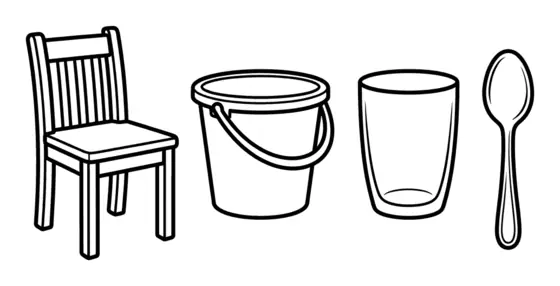
What Is It Made From?
Years 1–2 · AnimalsSheet 79
Animals and Their Survival Needs
Years 1–2 · AnimalsSheet 27
Animals of the Frozen Poles
Years 1–2 · AnimalsSheet 28
British Garden Birds Spotting Sheet
Years 1–2 · AnimalsSheet 29
Carnivore, Herbivore or Omnivore?
Educational quiz app · Ages 5-10
More learning in the Owee app
Owee turns topics like this into quizzes for children aged 5 to 10, and a treehouse grows as they learn. No ads, no chat, no strangers.
- Family-friendly
- No ads
- Private
Educational quiz app · Ages 5-10
More learning in the Owee app
Owee turns topics like this into quizzes for children aged 5 to 10, and a treehouse grows as they learn. No ads, no chat, no strangers.
Scan with your phone camera
- Family-friendly
- No ads
- Private