Educational quiz app · Ages 5-10
This is what learning looks like


Educational quiz app · Ages 5-10
This is what learning looks like
No nagging required. Keep the learning going after the worksheet, with every question read aloud and Owee guiding each step.
Scan with your phone camera
- Family-friendly
- No ads
- Private
Science · Colouring and labelling worksheet
The Human Skeleton: Major Bones - Free KS2 Worksheet
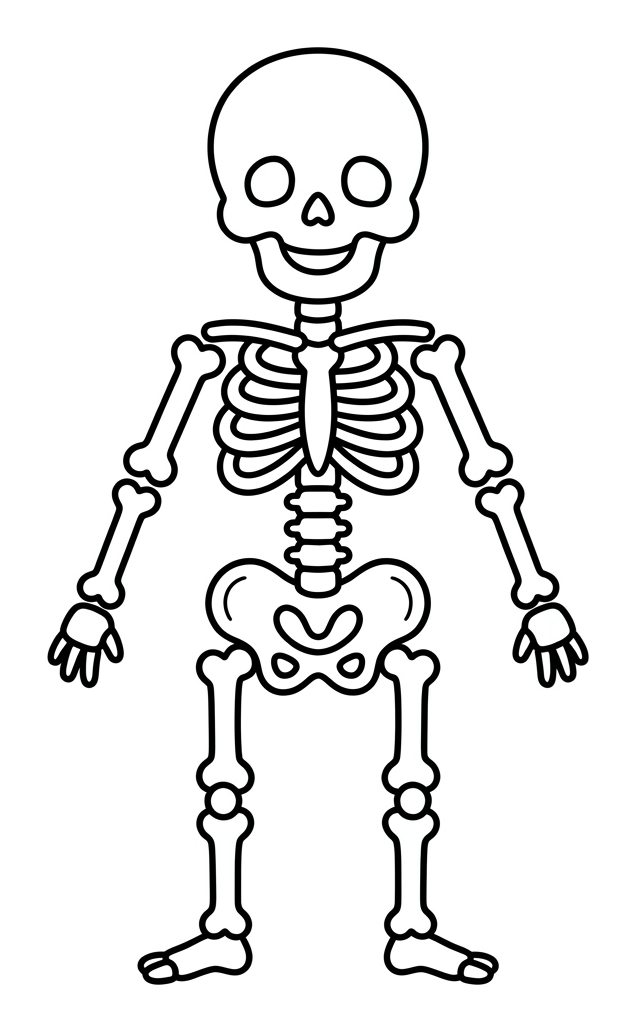
This free printable worksheet supports the Year 3 science topic Animals, including humans, focusing on the human skeleton. Children colour a friendly cartoon skeleton and then name some of its major bones, helping them learn that humans have a skeleton for support, protection and movement.
The sheet prints onto a single A4 page and works well as a lesson starter, a homework task, or a calm activity at home. The colouring helps younger learners look closely at where each bone sits before they attempt to name it.
What your child is learning
‘identify that humans and some other animals have skeletons and muscles for support, protection and movement’
Year 3 Science: Animals, including humans, National Curriculum in England. Source and licence
The Human Skeleton: Major Bones
Free Science worksheet · Ages 7 to 8
Activity 1
Colour the skeleton. Use these colours, and look carefully at where each bone sits.
- Colour the skull (head bone) blue.
- Colour the ribs (rib cage) red.
- Colour the spine (backbone) green.
- Colour the pelvis (hip bones) yellow.
- Colour the arm and leg bones orange.
Activity 2
Read each clue. Write the name of the bone on the line. Use the word bank to help you.
This bone is at the top of your body and protects your brain.
These curved bones make a cage that protects your heart and lungs.
This long row of bones runs down your back. We also call it the backbone.
These bones are at your hips and help hold up your body.
These long, strong bones let you walk, run and jump.
 The Human Skeleton: Major BonesSheet 116
Answers: The Human Skeleton: Major Bones
Sheet 116
- This bone is at the top of your body and protects your brain. — skull
- These curved bones make a cage that protects your heart and lungs. — ribs
- This long row of bones runs down your back. We also call it the backbone. — spine
- These bones are at your hips and help hold up your body. — pelvis
- These long, strong bones let you walk, run and jump. — leg bones
For grown-ups. Free worksheets and the Owee quiz app at owee.world
Answer key
- This bone is at the top of your body and protects your brain. — skull
- These curved bones make a cage that protects your heart and lungs. — ribs
- This long row of bones runs down your back. We also call it the backbone. — spine
- These bones are at your hips and help hold up your body. — pelvis
- These long, strong bones let you walk, run and jump. — leg bones
What this worksheet covers
The worksheet introduces the idea that humans, like many other animals, have an internal skeleton made of bones. Children colour a single cartoon skeleton and then identify some of its major bones using a word bank: the skull, the ribs (rib cage), the spine (backbone), the pelvis (hip bones) and the long leg bones. The activity is deliberately kept to a manageable handful of named bones so that seven and eight year olds build confidence with the vocabulary rather than feeling overwhelmed by anatomical detail. Colouring first, in the colours listed on the sheet, encourages children to study the position and shape of each bone group before they write.
Why humans have a skeleton
At Key Stage 2 the curriculum asks children to understand three jobs the skeleton does. First, support: the skeleton is a sturdy internal frame that holds the body up and gives it shape, much as a frame holds up a tent. Second, protection: hard bones shield the soft, vital organs, so the skull guards the brain and the rib cage protects the heart and lungs. Third, movement: bones work together with muscles, which pull on the bones at the joints to make the body move. Talking through these three ideas while children colour helps the names of the bones stick to a clear purpose.
How to use it at home or in class
Begin by inviting children to feel some of their own bones: the hard skull, the ribs across the chest, the knobbly spine down the back, and the hip bones. Linking the picture to their own body makes the learning concrete. Encourage them to use the word bank rather than relying on memory alone, and accept everyday names such as 'backbone' for spine or 'hip bones' for pelvis at this stage. As an extension, ask which bones protect which organs, or compare the human skeleton with an animal one, such as a fish or a bird, to lead into later work on different animal skeletons.
Linking to muscles and movement
The Year 3 objective pairs the skeleton with muscles, so this sheet works well alongside a short discussion of how the two work together. Bones cannot move by themselves; muscles attached to them shorten and pull, bending the body at joints such as the elbow and knee. A simple demonstration, like bending an arm and feeling the muscle tighten, reinforces the link between the named bones on the worksheet and the movement children make every day. This prepares the ground for later lessons on muscles working in pairs.
Frequently asked questions
What are the major bones of the human skeleton for KS2?
For Key Stage 2, the major bones children are usually expected to recognise are the skull, the ribs (rib cage), the spine or backbone, the pelvis (hip bones), and the long bones of the arms and legs. This worksheet focuses on these so that Year 3 children build the vocabulary without being overloaded with anatomical detail.
What age and year group is this skeleton worksheet for?
It is written for children aged 7 to 8, which is Year 3 in Key Stage 2. It links directly to the Year 3 science topic 'Animals, including humans', where pupils learn that humans have a skeleton and muscles for support, protection and movement.
Why do humans have a skeleton?
The skeleton has three main jobs: support, giving the body its shape and holding it upright; protection, shielding soft organs such as the brain and heart; and movement, working with muscles that pull on the bones at the joints. These three ideas are the heart of the Year 3 curriculum objective.
Is this worksheet free to print?
Yes. The worksheet is completely free to download and print at home or in school. It is designed to fit onto a single A4 page so you can simply print and go, with no login required.
How do I use the colour-and-label activity?
Children first colour the cartoon skeleton, using the colours listed on the sheet so they look closely at where each bone sits. They then use the word bank to write the name of each major bone next to its description. Accepting everyday names such as 'backbone' for spine is fine at this stage.
Curriculum links
- Year 3 Science: Animals, including humans (statutory): 'identify that humans and some other animals have skeletons and muscles for support, protection and movement'
Quoted word for word from Department for Education documents: the National Curriculum in England, the EYFS framework or the RSHE guidance. Contains public sector information licensed under the Open Government Licence v3.0.
Made by The Owee education team. Updated 13/10/2026. Free to print and share.
More science worksheets
All Year 3 Science worksheets →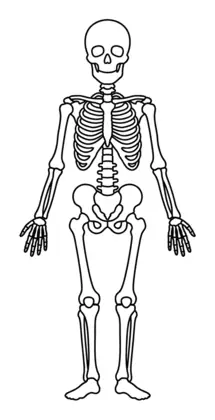
Years 3–4 · Human bodySheet 114
Label the Human Skeleton
Reception–Year 1 · Human bodySheet 34
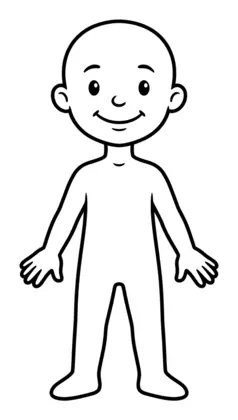
Label the Parts of the Body
Years 3–4 · Human bodySheet 115
Muscles That Move Us
Reception–Year 1 · Human bodySheet 35
The Five Senses
Years 5–6 · Human bodySheet 180
The Heart and Healthy Exercise
Year 6 · Human bodySheet 181
The Human Heart
Educational quiz app · Ages 5-10
More learning in the Owee app
Owee turns topics like this into quizzes for children aged 5 to 10, and a treehouse grows as they learn. No ads, no chat, no strangers.
- Family-friendly
- No ads
- Private
Educational quiz app · Ages 5-10
More learning in the Owee app
Owee turns topics like this into quizzes for children aged 5 to 10, and a treehouse grows as they learn. No ads, no chat, no strangers.
Scan with your phone camera
- Family-friendly
- No ads
- Private