Educational quiz app · Ages 5-10
This is what learning looks like


Educational quiz app · Ages 5-10
This is what learning looks like
No nagging required. Keep the learning going after the worksheet, with every question read aloud and Owee guiding each step.
Scan with your phone camera
- Family-friendly
- No ads
- Private
Geography · Labelling and colouring worksheet
Layers of the Rainforest Worksheet (Free KS2 Geography)
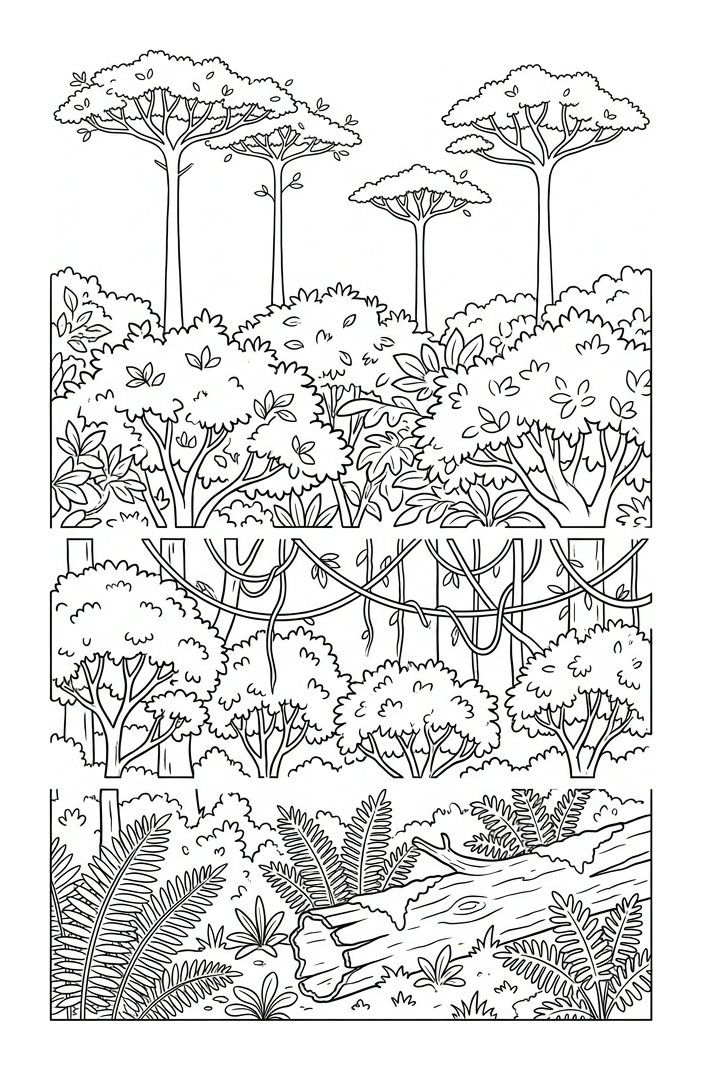
Tropical rainforests are layered like a tall block of flats, with different plants and animals living at each height. This free worksheet gives children one rainforest scene, split into four bands, to label and colour. It helps them understand how light, height and wildlife change from the sunny treetops down to the shady forest floor.
Designed for Years 3 and 4, it supports the KS2 geography topic of biomes and vegetation belts. Children use the word bank to label the four layers, answer three short questions about light and animals, then colour the scene. Print it on plain A4 and it is ready to use in class or at home.
What your child is learning
‘physical geography, including: climate zones, biomes and vegetation belts, rivers, mountains, volcanoes and earthquakes, and the water cycle’
Key stage 2 Geography: Human and physical geography (biomes and vegetation belts), National Curriculum in England. Source and licence
Layers of the Rainforest
Free Geography worksheet · Ages 7 to 9
Label the layers
Write the name of each numbered layer. Use the word bank. Clue: the tallest trees poke out at the very top.
- 1
- 2
- 3
- 4
Light and life
Answer each question.
Which layer gets the least sunlight?
In which layer do most rainforest animals live?
Why do only a few plants grow on the forest floor?
Colour the rainforest
Colour the leaves and ferns in different greens. Colour the tree trunks, vines and the fallen log brown.
 Layers of the RainforestSheet 163
Answers: Layers of the Rainforest
Sheet 163
- 1. Canopy
- 2. Forest floor
- 3. Emergent
- 4. Understorey
- Which layer gets the least sunlight? — Forest floor
- In which layer do most rainforest animals live? — Canopy
- Why do only a few plants grow on the forest floor? — The trees above block most of the sunlight, so it is too dark.
For grown-ups. Free worksheets and the Owee quiz app at owee.world
Answer key
- 1. Canopy
- 2. Forest floor
- 3. Emergent
- 4. Understorey
- Which layer gets the least sunlight? — Forest floor
- In which layer do most rainforest animals live? — Canopy
- Why do only a few plants grow on the forest floor? — The trees above block most of the sunlight, so it is too dark.
What are the four layers of a rainforest?
A tropical rainforest is usually described as having four layers, each set apart by its height and the amount of sunlight it gets. The emergent layer is made up of the tallest trees, which can grow over 50 metres tall and poke out above everything else into full sunlight. Below it is the canopy, a thick roof of treetops where most rainforest animals live and most of the fruit and leaves are found. Beneath the canopy is the cooler, darker understorey, with shrubs, young trees and climbing vines. At the bottom is the forest floor: dim, damp and covered in fallen leaves and logs, which insects and fungi break down. Picturing the layers from top to bottom helps the new words stick.
How light and life change with height
The key idea behind rainforest layers is sunlight. The canopy is so thick that only a tiny amount of light, often said to be about 2 per cent, reaches the forest floor. That is why few plants grow on the ground and the lower layers feel shady and still. It also explains why so much rainforest wildlife, from monkeys and sloths to birds and insects, lives high up in the canopy, where food and light are plentiful. A common mix-up is to think the forest floor is empty: in fact many insects live there, along with larger animals such as jaguars, tapirs and gorillas. Linking each layer to the animals that live there makes the diagram feel real.
Using this worksheet at home or in class
Begin by reading the four words in the word bank together. Point to each band of the picture, starting with the tallest trees at the top, and ask your child what they notice: where is it sunny, and where would it be dark? They then write the name of each numbered layer on the matching line. The numbers are mixed up on purpose, so they need to look carefully rather than just write the words in order. Next they answer the three questions and colour the scene. As an extension, children could draw an animal in each layer, such as a harpy eagle in the emergent layer, a sloth in the canopy, a tree frog in the understorey and a jaguar on the forest floor.
Frequently asked questions
What are the four layers of a tropical rainforest?
From top to bottom they are the emergent layer (the tallest trees), the canopy (the dense roof of treetops), the understorey (shorter trees, shrubs and vines) and the forest floor (the dark, humid ground layer). This worksheet asks children to label all four.
What age and key stage is this rainforest worksheet for?
It is aimed at children aged 7 to 9, which is Years 3 and 4 in KS2. The labelling and vocabulary suit the KS2 Geography topic on biomes and vegetation belts, though able Year 2 pupils may also enjoy it with support.
Is this rainforest layers worksheet free to print?
Yes. The worksheet is free and prints to a single A4 page in black and white, so it works on any home or school printer.
Which rainforest layer has the most animals?
The canopy is home to the most rainforest animals because it has plenty of sunlight, fruit and leaves. The emergent layer above it is home to large birds such as eagles, and to bats and butterflies. The forest floor has fewer kinds of animals, but many insects live there, as well as large animals such as jaguars, tapirs and gorillas.
How does this worksheet link to the National Curriculum?
It supports the KS2 Geography objective to describe and understand key aspects of physical geography, including biomes and vegetation belts. Labelling the layers also builds the geographical skill of using diagrams to describe physical features.
Curriculum links
- Key stage 2 Geography: Human and physical geography (biomes and vegetation belts) (statutory): 'physical geography, including: climate zones, biomes and vegetation belts, rivers, mountains, volcanoes and earthquakes, and the water cycle'
- KS2 Science (Year 4), Living things and their habitats: 'recognise that environments can change and that this can sometimes pose dangers to living things'
Quoted word for word from Department for Education documents: the National Curriculum in England, the EYFS framework or the RSHE guidance. Contains public sector information licensed under the Open Government Licence v3.0.
Made by The Owee education team. Updated 13/10/2026. Free to print and share.
More geography worksheets
All Year 4 Geography worksheets →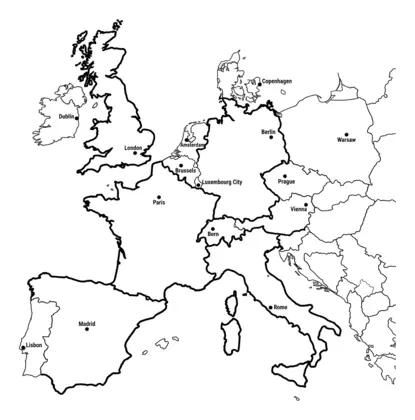
Years 4–5 · EuropeSheet 161
Countries and Capitals of Europe
Years 3–4 · Volcanoes and earthquakesSheet 164
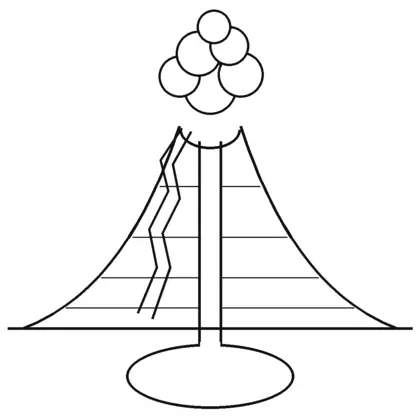
Inside a Volcano
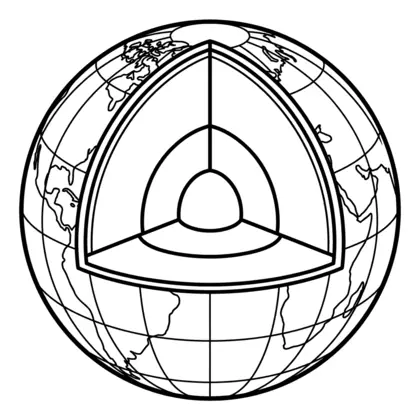
Years 3–4 · Volcanoes and earthquakesSheet 165
Layers of the Earth
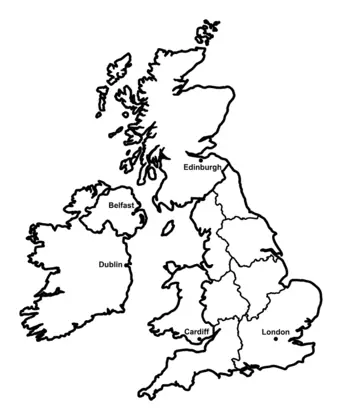
Years 2–3 · The UKSheet 93
Map of the United Kingdom
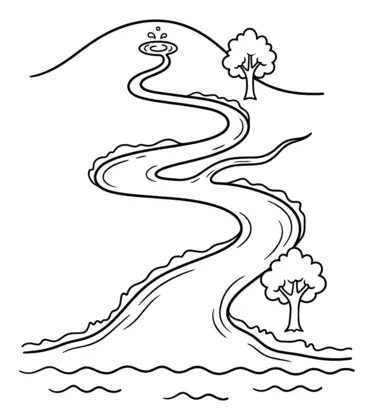
Years 3–4 · RiversSheet 125
Parts of a River
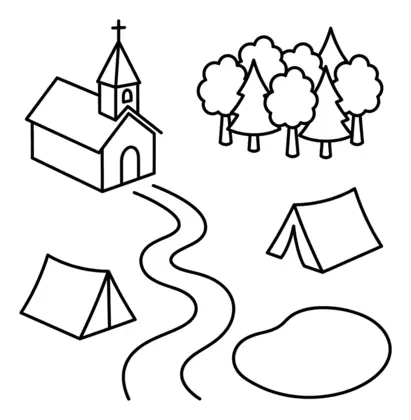
Years 4–5 · Map skillsSheet 162
Reading a Map: Symbols and a Key
Educational quiz app · Ages 5-10
More learning in the Owee app
Owee turns topics like this into quizzes for children aged 5 to 10, and a treehouse grows as they learn. No ads, no chat, no strangers.
- Family-friendly
- No ads
- Private
Educational quiz app · Ages 5-10
More learning in the Owee app
Owee turns topics like this into quizzes for children aged 5 to 10, and a treehouse grows as they learn. No ads, no chat, no strangers.
Scan with your phone camera
- Family-friendly
- No ads
- Private