Educational quiz app · Ages 5-10
This is what learning looks like


Educational quiz app · Ages 5-10
This is what learning looks like
No nagging required. Keep the learning going after the worksheet, with every question read aloud and Owee guiding each step.
Scan with your phone camera
- Family-friendly
- No ads
- Private
Science · Labelling and colouring worksheet
Label the Human Skeleton: Free KS2 Science Worksheet
This free printable worksheet introduces children aged 7 to 9 to the main bones of the human skeleton. It pairs a clear, child-friendly skeleton diagram with a labelling task and a colouring activity, so learning feels hands-on rather than purely written.
It is designed to support the Year 3 topic Animals, including humans, where children learn that humans and some other animals have skeletons and muscles for support, protection and movement. Everything fits onto a single A4 page, ready to print at home or in the classroom.
What your child is learning
‘identify that humans and some other animals have skeletons and muscles for support, protection and movement’
Year 3 Science: Animals, including humans, National Curriculum in England. Source and licence
Label the Human Skeleton
Free Science worksheet · Ages 7 to 9
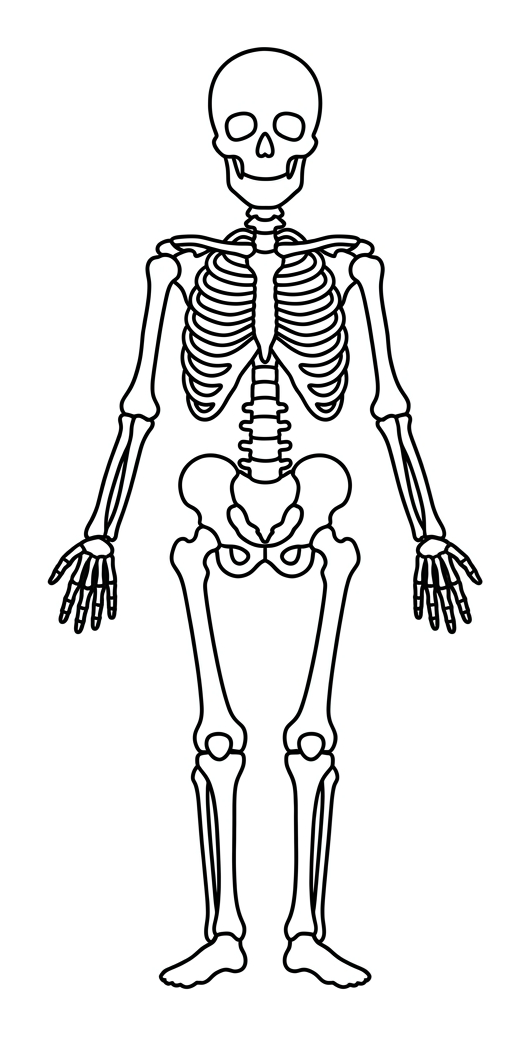
Label the skeleton
Look at each number on the skeleton. Write the name of that part on the matching line. Use the word bank to help you.
- 1
- 2
- 3
- 4
- 5
- 6
Why do we have a skeleton?
Write your answer on the line under each question.
Your skull protects your brain. What does your ribcage protect?
Your skeleton has three jobs. One job is protection. What are the other two?
Colour the skeleton
Colour each numbered part in a different colour.
 Label the Human SkeletonSheet 114
Answers: Label the Human Skeleton
Sheet 114
- 1. Skull
- 2. Ribcage
- 3. Backbone (spine)
- 4. Arm bones
- 5. Hip bones
- 6. Leg bones
- Your skull protects your brain. What does your ribcage protect? — The heart and lungs.
- Your skeleton has three jobs. One job is protection. What are the other two? — Support (holding the body up) and movement.
For grown-ups. Free worksheets and the Owee quiz app at owee.world
Answer key
- 1. Skull
- 2. Ribcage
- 3. Backbone (spine)
- 4. Arm bones
- 5. Hip bones
- 6. Leg bones
- Your skull protects your brain. What does your ribcage protect? — The heart and lungs.
- Your skeleton has three jobs. One job is protection. What are the other two? — Support (holding the body up) and movement.
What is on the worksheet
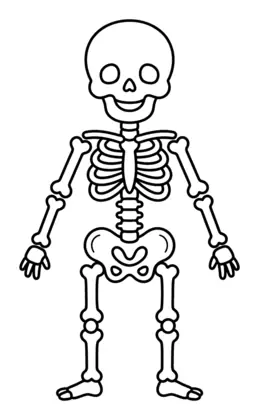
The worksheet shows a single, front-facing human skeleton drawn in simple line art, with six numbered markers on the main bone groups: the skull, the ribcage, the backbone (spine), the arm bones, the hip bones and the leg bones. Children write the name of each numbered part on its line, using the word bank. Two short questions then ask what the ribcage protects and what the skeleton's three jobs are. Finally, children colour each bone group, which reinforces where one part of the skeleton ends and the next begins.
How to use it at home or in the classroom
Print the sheet on plain A4 paper. Before children start writing, ask them to point to each bone group on their own body and gently feel where it is, for example tapping the ribs or running a hand down the spine. This links the diagram to their own experience. Children then use the word bank to label each part, and colour the diagram afterwards. As an extension, ask why each bone group is useful, for example that the skull protects the brain and the ribcage protects the heart and lungs. The colouring stage also makes a calm, focused activity for the end of a lesson or a quiet moment at home.
What your child will learn
Children will be able to name the main bones of the human skeleton and locate them on a diagram and on themselves. They will understand that the skeleton has three big jobs: it supports the body and helps us stand upright, it protects soft organs such as the brain, heart and lungs, and it allows movement by giving muscles something firm to pull against. Many children picture bones as dry and lifeless, like a museum skeleton. It helps to explain that the bones inside us are alive: they grow as we grow and can mend after a break, which is why a broken arm is held still in a cast while it heals.
A note for teachers
This sheet supports the statutory Year 3 objective within Animals, including humans. The labelling uses everyday, age-appropriate terms (skull, ribcage, backbone or spine, arm bones, hip bones, leg bones) rather than full anatomical names such as cranium, vertebrae or femur, which keeps the cognitive load suitable for lower KS2. If you wish to stretch more confident pupils, you can introduce the correct scientific names alongside the simpler ones, or ask children to add the matching organ that each bone group protects. The word bank can be folded under or covered to turn the task into a recall activity for assessment.
Frequently asked questions
What are the main bones of the human skeleton for KS2?
For lower KS2, children usually learn the main bone groups in everyday terms: the skull, the ribcage, the backbone (also called the spine), the arm bones, the hip bones and the leg bones. This worksheet uses these simpler names, with scientific terms such as cranium or vertebrae left as an optional extension for more confident children.
Why do humans have a skeleton?
A skeleton has three main jobs: support, protection and movement. It supports the body and helps us stand upright, it protects soft organs such as the brain, heart and lungs, and it allows movement by giving the muscles something firm to pull against. This matches the wording of the Year 3 National Curriculum objective.
What age and key stage is this worksheet for?
It is aimed at children aged 7 to 9 in KS2 (Years 3 to 4), and it supports the statutory Year 3 topic Animals, including humans. Confident younger children or those needing a little more support in older year groups may also find it useful.
Is this skeleton worksheet free to print?
Yes. The worksheet is completely free to download and print. It is designed to fit on a single A4 page, so it is easy to use at home or to print as a class set.
How can I make the worksheet harder or easier?
To make it easier, leave the word bank visible so children simply match the names to the diagram. To make it harder, cover or fold away the word bank so children recall the names from memory, or ask them to add the correct scientific names and the organ each bone group protects.
Curriculum links
- Year 3 Science: Animals, including humans (statutory): 'identify that humans and some other animals have skeletons and muscles for support, protection and movement'
- KS2 Science working scientifically: 'identifying differences, similarities or changes related to simple scientific ideas and processes'
- KS2 Science working scientifically: 'using straightforward scientific evidence to answer questions or to support their findings'
Quoted word for word from Department for Education documents: the National Curriculum in England, the EYFS framework or the RSHE guidance. Contains public sector information licensed under the Open Government Licence v3.0.
Made by The Owee education team. Updated 13/10/2026. Free to print and share.
More science worksheets
All Year 3 Science worksheets →
Reception–Year 1 · Human bodySheet 34
Label the Parts of the Body
Years 3–4 · Human bodySheet 115
Muscles That Move Us
Reception–Year 1 · Human bodySheet 35
The Five Senses
Years 5–6 · Human bodySheet 180
The Heart and Healthy Exercise
Year 6 · Human bodySheet 181
The Human Heart
Years 3–4 · Human bodySheet 116
The Human Skeleton: Major Bones
Educational quiz app · Ages 5-10
More learning in the Owee app
Owee turns topics like this into quizzes for children aged 5 to 10, and a treehouse grows as they learn. No ads, no chat, no strangers.
- Family-friendly
- No ads
- Private
Educational quiz app · Ages 5-10
More learning in the Owee app
Owee turns topics like this into quizzes for children aged 5 to 10, and a treehouse grows as they learn. No ads, no chat, no strangers.
Scan with your phone camera
- Family-friendly
- No ads
- Private