Educational quiz app · Ages 5-10
This is what learning looks like


Educational quiz app · Ages 5-10
This is what learning looks like
No nagging required. Keep the learning going after the worksheet, with every question read aloud and Owee guiding each step.
Scan with your phone camera
- Family-friendly
- No ads
- Private
Art · Colouring and counting worksheet
Kandinsky Circles: Free KS1 Art Colouring Worksheet
Wassily Kandinsky is often described as one of the first artists to paint in a purely abstract way, using shape and colour to express feeling rather than to picture real things. His best-known classroom inspiration is the 1913 study Squares with Concentric Circles, a grid of rings in surprising colour combinations that has become a staple of Key Stage 1 art lessons.
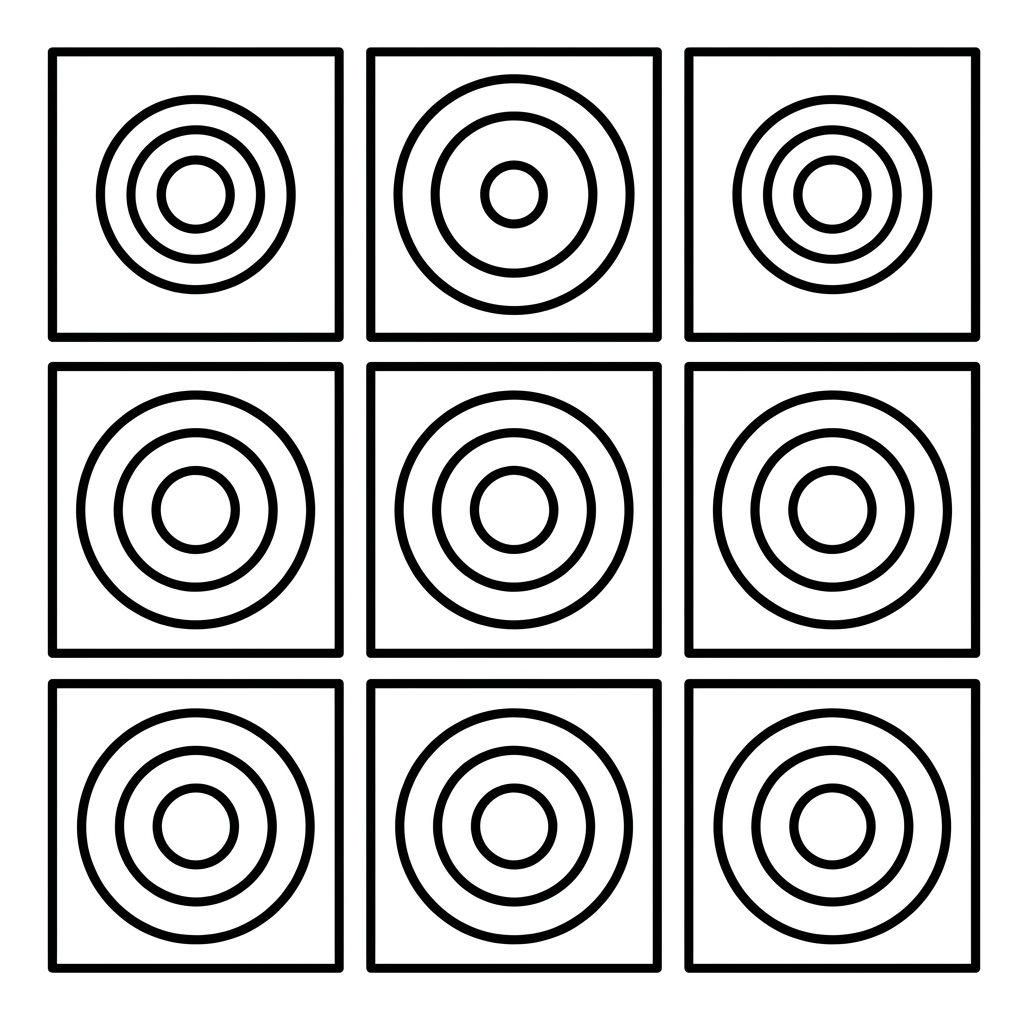
This free printable gives young children a ready-made grid of circle "targets" to colour however they choose, plus a simple counting task. It introduces the idea that art does not always have to look like something real, and that an artist makes deliberate choices about colour and shape.
What your child is learning
‘about the work of a range of artists, craft makers and designers, describing the differences and similarities between different practices and disciplines, and making links to their own work’
Key stage 1 Art and design, National Curriculum in England. Source and licence
Kandinsky Circles
Free Art worksheet · Ages 5 to 7
Colour like Kandinsky
Colour each ring in the grid in a bold colour. Like Kandinsky, try surprising colours that you would not normally see together. There are no wrong answers!
- Colour the centre of each circle a different colour from the ring around it.
- Try putting a warm colour (red, orange or yellow) next to a cool colour (blue, green or purple).
- Colour the spaces in the corners of the squares too, so the whole grid is filled.
Count the shapes
Look carefully at the grid and count the shapes. Write your answer in the box.
- How many squares are in the grid?
- How many circles are inside one square?
- How many circles are in the top row of squares?
 Kandinsky CirclesSheet 51
Answers: Kandinsky Circles
Sheet 51
- How many squares are in the grid? — 9
- How many circles are inside one square? — 3
- How many circles are in the top row of squares? — 9
For grown-ups. Free worksheets and the Owee quiz app at owee.world
Answer key
- How many squares are in the grid? — 9
- How many circles are inside one square? — 3
- How many circles are in the top row of squares? — 9
Who was Wassily Kandinsky?
Wassily Kandinsky (1866 to 1944) was a Russian-born painter who spent much of his career in Germany and France. He trained first in law and economics and only turned seriously to art in his thirties, which makes him a reassuring example for children that creativity can begin at any time. Kandinsky is widely regarded as a pioneer of abstract art: paintings built from colours, lines and shapes rather than recognisable people, places or objects. He believed colours and forms could express emotion in much the same way that music does, and he often spoke of his work in musical terms. For a Key Stage 1 audience, the key idea to convey is simply that Kandinsky painted shapes and colours for their own sake, and that this is a valid and exciting way to make art.
About Squares with Concentric Circles
The grid of rings most teachers use is a small 1913 study, properly titled Squares with Concentric Circles (Farbstudie Quadrate). It was never intended as a finished masterpiece; it was one of several colour experiments Kandinsky made to explore how different combinations sit beside one another. Each square holds a set of concentric circles (rings sharing the same centre) painted in unexpected pairings, often with a warm colour right next to a cool one. Its grid and bold, contrasting colours suit young children well: the layout is clear and there is no single correct way to colour it. This worksheet recreates that grid in simple line art so children can make their own colour decisions.
How to use this worksheet
Print one copy per child on A4. Before colouring, you might show children a print or screen image of the original study and talk briefly about how the colours surprise us. Encourage bold, contrasting choices rather than realistic ones; there are no wrong answers, which makes this an accessible activity for children of differing confidence levels. As children work, model the vocabulary of circle, square, ring, centre and concentric. The counting task at the end links art with early number work: children count the squares, the circles in one square and the circles in one row. Some children will count the circles one by one; others will spot that each square holds 3, so a row of 3 squares holds 3, 6, 9. Both are fine.
What children learn
Beyond the enjoyment of colouring, this activity builds several early skills. Children begin to understand that art can be abstract, meaning it does not have to represent real objects. They practise making and explaining personal colour choices, an early step towards evaluating their own work, and they encounter the name of a significant artist. The counting element reinforces one-to-one correspondence and the language of two-dimensional shapes. Talking about whether the colours feel calm, loud, warm or cool also supports the development of descriptive and emotional vocabulary.
Frequently asked questions
Who was Kandinsky and what is he famous for?
Wassily Kandinsky (1866 to 1944) was a Russian-born painter regarded as a pioneer of abstract art. He is famous for paintings made from colours, lines and shapes rather than realistic pictures, and for the idea that colour and form can express feeling like music does.
What is the Kandinsky circles painting called?
The grid of rings most schools use is a 1913 colour study titled Squares with Concentric Circles (Farbstudie Quadrate). It shows squares, each containing rings that share the same centre, painted in surprising colour combinations.
Is this Kandinsky worksheet suitable for KS1?
Yes. It is designed for children aged 5 to 7 in Years 1 and 2. The clear grid and open-ended colouring make it accessible for all abilities, and it links directly to the Key Stage 1 Art and Design objective about studying the work of a range of artists.
What are concentric circles?
Concentric circles are circles of different sizes that all share the same centre point, like the rings of a target or the ripples from a stone dropped in water. Each square on this worksheet holds a set of concentric circles for children to colour.
Is this printable free to download?
Yes. This Kandinsky circles worksheet is completely free to print at home or in the classroom. It is designed to fit on a single A4 page with one black-and-white illustration that children colour themselves.
Curriculum links
- Key stage 1 Art and design (statutory): 'about the work of a range of artists, craft makers and designers, describing the differences and similarities between different practices and disciplines, and making links to their own work'
- Art and Design, Key Stage 1: 'to use a range of materials creatively to design and make products'
- Art and Design, Key Stage 1: 'to use drawing, painting and sculpture to develop and share their ideas, experiences and imagination'
- Art and Design, Key Stage 1: 'to develop a wide range of art and design techniques in using colour, pattern, texture, line, shape, form and space'
Quoted word for word from Department for Education documents: the National Curriculum in England, the EYFS framework or the RSHE guidance. Contains public sector information licensed under the Open Government Licence v3.0.
Made by The Owee education team. Updated 13/10/2026. Free to print and share.
Educational quiz app · Ages 5-10
More learning in the Owee app
Owee turns topics like this into quizzes for children aged 5 to 10, and a treehouse grows as they learn. No ads, no chat, no strangers.
- Family-friendly
- No ads
- Private
Educational quiz app · Ages 5-10
More learning in the Owee app
Owee turns topics like this into quizzes for children aged 5 to 10, and a treehouse grows as they learn. No ads, no chat, no strangers.
Scan with your phone camera
- Family-friendly
- No ads
- Private