Educational quiz app · Ages 5-10
This is what learning looks like


Educational quiz app · Ages 5-10
This is what learning looks like
No nagging required. Keep the learning going after the worksheet, with every question read aloud and Owee guiding each step.
Scan with your phone camera
- Family-friendly
- No ads
- Private
Geography · Colouring and matching worksheet
Jobs People Do: Free KS1 Geography Worksheet for Ages 5 to 7
This free, printable worksheet helps children aged 5 to 7 recognise some of the people who help in our community and match each one to what they do. Children colour in four friendly figures — a doctor, a firefighter, a teacher and a farmer — then read four short clues and write the job that matches each one, using the word bank to help.
It is completely free to print, use and share, at home or in the classroom. Just hit print, or save it as a PDF.
What your child is learning
‘Talk about the lives of the people around them and their roles in society.’
Reception (EYFS): Past and Present early learning goal, Department for Education. Source and licence
Jobs People Do
Free Geography worksheet · Ages 5 to 7
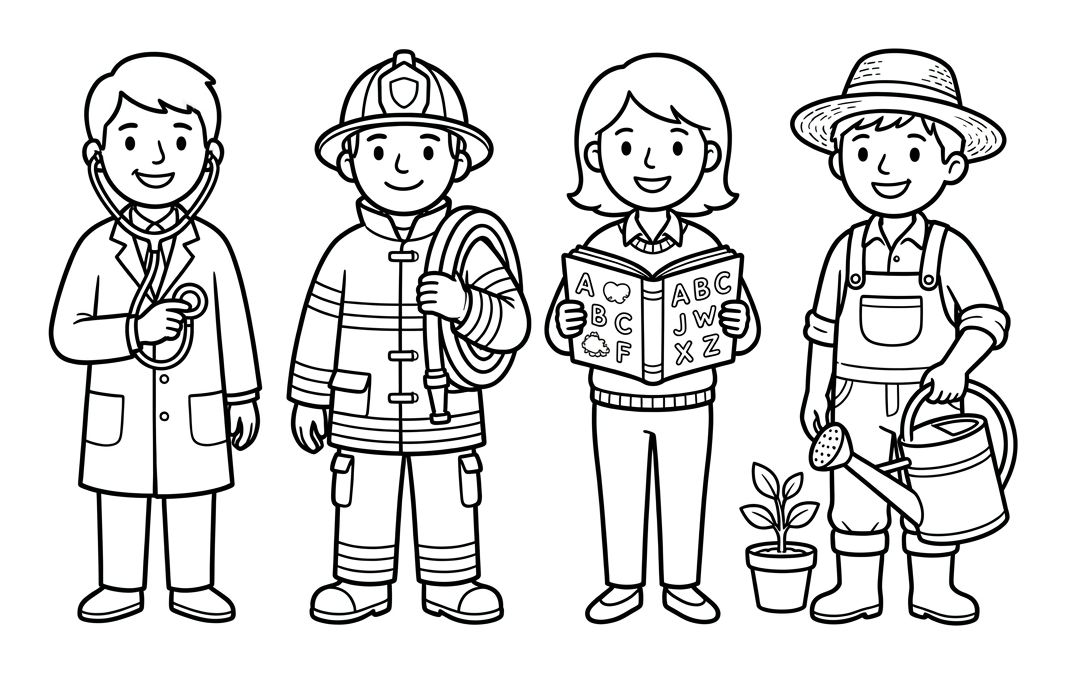
Colour the people who help us
Colour the four people. Look closely at what each person is holding. It is a clue to their job.
Match the job to what they do
Read each clue. Write the job on the line. Use the word bank to help you.
This person helps people who are poorly to get better. They have a stethoscope.
This person puts out fires and keeps people safe. They are holding a hose.
This person helps children learn at school. They are holding a book.
This person grows food and looks after animals. They are holding a watering can.
 Jobs People DoSheet 9
Answers: Jobs People Do
Sheet 9
- This person helps people who are poorly to get better. They have a stethoscope. — Doctor
- This person puts out fires and keeps people safe. They are holding a hose. — Firefighter
- This person helps children learn at school. They are holding a book. — Teacher
- This person grows food and looks after animals. They are holding a watering can. — Farmer
For grown-ups. Free worksheets and the Owee quiz app at owee.world
Answer key
- This person helps people who are poorly to get better. They have a stethoscope. — Doctor
- This person puts out fires and keeps people safe. They are holding a hose. — Firefighter
- This person helps children learn at school. They are holding a book. — Teacher
- This person grows food and looks after animals. They are holding a watering can. — Farmer
What is on the worksheet
One clear line drawing of four people doing different community jobs, shown side by side: a doctor with a stethoscope, a firefighter holding a hose, a teacher holding a book, and a farmer with a watering can. The figures have bold, even outlines, so they are comfortable for small hands to colour.
Underneath, there is a short matching activity with a word bank. Each clue says what a person does and what they are holding, and children write the matching job on the line. Because each figure carries a familiar object, children have a picture clue to help them before they read or write a word.
How to use it at home or in the classroom
Print the worksheet, or open it on a tablet and print from there. Start with the colouring: there are no wrong colours, so it is a relaxed, confidence-building way in, and a good moment to talk together about each person and the object they are holding.
Then move to the matching. Read the descriptions aloud with your child and help them find the right job for each one. For early readers, point to the picture and the matching object as a clue, and read the word bank together. In class it works well as a starter for a topic on people who help us, or before a visit from a nurse, police officer or firefighter.
The picture happens to show a man as the doctor, firefighter and farmer and a woman as the teacher. It is worth saying out loud that anyone can do any of these jobs, and asking your child whether they know a woman who is a doctor or a man who is a teacher.
What your child will learn
By the end of the activity, your child should be able to name four common jobs and say what each person does: a doctor helps people who are poorly and keeps us well; a firefighter puts out fires and keeps people safe; a teacher helps children learn at school; and a farmer grows crops and looks after animals so we have food to eat.
They will also begin to understand that lots of different people do important jobs in their community, and that we rely on one another. This is an early step in personal, social and health education (PSHE) and in learning about the local area, and it lays the groundwork for later learning about places, work and the wider world.
A note for teachers
This worksheet supports the Early Years Foundation Stage area Understanding the World. Its 'Past and Present' early learning goal asks children to talk about the lives of the people around them and their roles in society, and the EYFS framework mentions meeting important members of society such as police officers, nurses and firefighters. It also suits the 'people who help us' topics many schools teach in Key Stage 1 PSHE.
It makes a useful talking point ahead of, or following, a visit from a community helper, and pairs well with role-play, picture books and a class discussion about the jobs children's own family members do. The four jobs shown are deliberately familiar and broad; you may wish to extend the activity by inviting children to name other helpers they know, such as a nurse, dentist, bus driver, postal worker or vet. There is no log-in and no watermark. You are welcome to print copies for your class and to link to this page from your school website or newsletter.
Frequently asked questions
What jobs are on this people who help us worksheet?
The worksheet shows four familiar community helpers: a doctor with a stethoscope, a firefighter with a hose, a teacher holding a book, and a farmer with a watering can. Children colour each person, then match the job to a simple description of what that person does.
What age or year group is this worksheet for?
It is designed for children aged 5 to 7, which is Years 1 and 2 (Key Stage 1) in England, and it also suits reception and EYFS children working on 'people who help us'. Older children revising the topic will enjoy it too.
Does this worksheet match the EYFS and KS1 curriculum?
It supports the EYFS area Understanding the World, in particular the 'Past and Present' early learning goal: talk about the lives of the people around them and their roles in society. It also fits the 'people who help us' topics often taught in Key Stage 1 PSHE.
What other jobs could we talk about with this worksheet?
Once children have matched the four jobs shown, extend the activity by naming other helpers they know, such as a nurse, dentist, vet, police officer, bus driver, postal worker, dustbin collector or shopkeeper. Talking about the jobs family members do is a good follow-on.
Is this jobs people do worksheet free to print and share?
Yes. It is completely free to print, use at home or in class, and share. There is no sign-up and no watermark. You are welcome to link to this page from a school website or newsletter.
Curriculum links
- Reception (EYFS): Past and Present early learning goal (statutory): 'Talk about the lives of the people around them and their roles in society.'
Quoted word for word from Department for Education documents: the National Curriculum in England, the EYFS framework or the RSHE guidance. Contains public sector information licensed under the Open Government Licence v3.0.
Made by The Owee education team. Updated 13/10/2026. Free to print and share.

Educational quiz app · Ages 5-10
More learning in the Owee app
Owee turns topics like this into quizzes for children aged 5 to 10, and a treehouse grows as they learn. No ads, no chat, no strangers.
- Family-friendly
- No ads
- Private
Educational quiz app · Ages 5-10
More learning in the Owee app
Owee turns topics like this into quizzes for children aged 5 to 10, and a treehouse grows as they learn. No ads, no chat, no strangers.
Scan with your phone camera
- Family-friendly
- No ads
- Private