Educational quiz app · Ages 5-10
This is what learning looks like


Educational quiz app · Ages 5-10
This is what learning looks like
No nagging required. Keep the learning going after the worksheet, with every question read aloud and Owee guiding each step.
Scan with your phone camera
- Family-friendly
- No ads
- Private
Geography · Labelling and colouring worksheet
Inside a Volcano: Free KS2 Geography Worksheet
This free printable worksheet introduces children aged 7 to 9 to the main parts of a volcano using one clear cross-section diagram. Children answer short questions about the magma chamber, vent, crater and lava, put the parts in order from bottom to top, then colour the diagram. It supports the KS2 physical geography topic on volcanoes and earthquakes.
The sheet prints on one A4 page and needs only a pencil and some colouring pens. It works well as a lesson starter, a homework task or a quick recap before moving on to how volcanoes erupt and where they are found in the world.
What your child is learning
‘physical geography, including: climate zones, biomes and vegetation belts, rivers, mountains, volcanoes and earthquakes, and the water cycle’
Key stage 2 Geography: Human and physical geography, National Curriculum in England. Source and licence
Inside a Volcano
Free Geography worksheet · Ages 7 to 9
Volcano questions
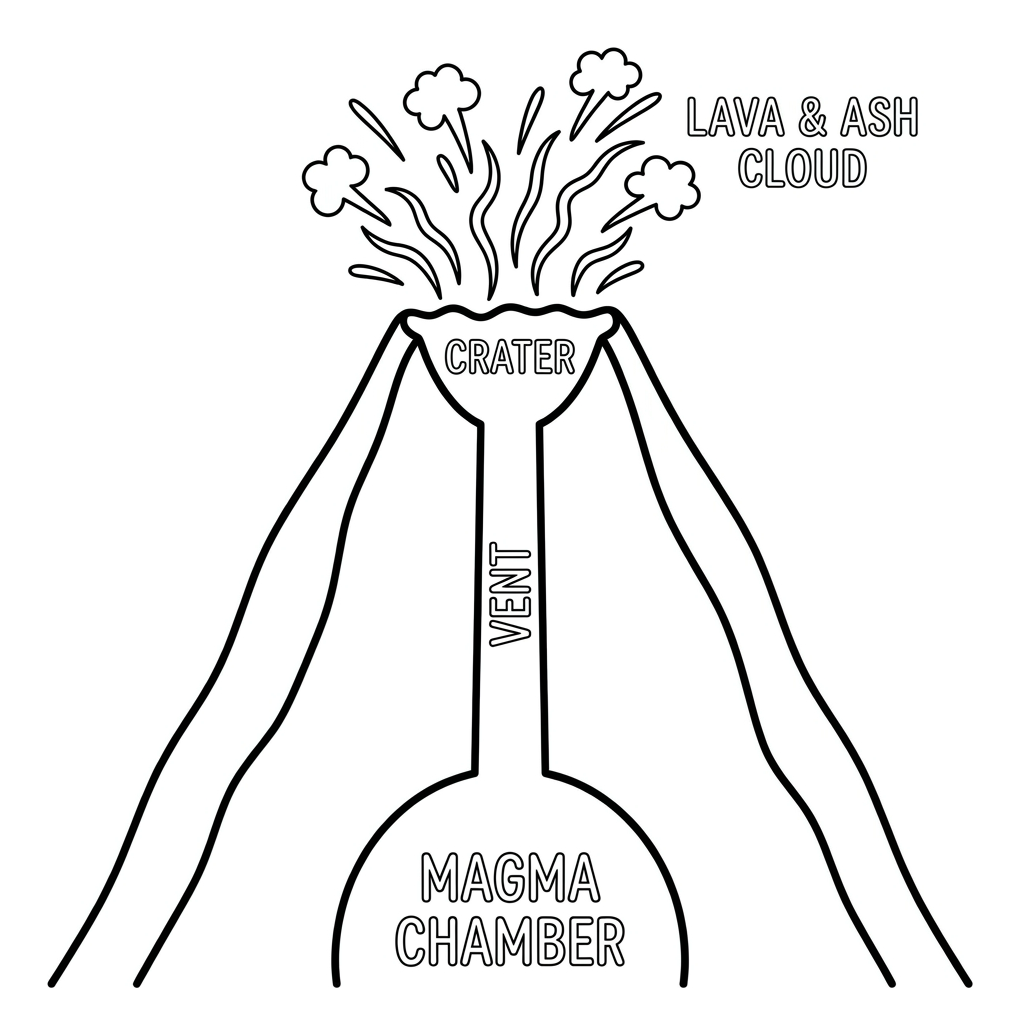
Look at the diagram. Answer each question. Use the word bank to help you.
What is the bowl-shaped hole at the top of the volcano called?
Which part is the pipe that carries magma up to the top?
Melted rock under the ground is called magma. What is it called when it comes out of the volcano?
Write the magma chamber, crater and vent in order, from the bottom of the volcano to the top.
Each eruption adds a new layer to the outside of the volcano. What two things are the layers made of?
Colour the volcano
Now colour the diagram.
- Colour the magma chamber, the vent and the lava red and orange.
- Colour the sides of the volcano grey or brown.
- Colour the ash clouds grey.
 Inside a VolcanoSheet 164
Answers: Inside a Volcano
Sheet 164
- What is the bowl-shaped hole at the top of the volcano called? — Crater
- Which part is the pipe that carries magma up to the top? — Vent
- Melted rock under the ground is called magma. What is it called when it comes out of the volcano? — Lava
- Write the magma chamber, crater and vent in order, from the bottom of the volcano to the top. — Magma chamber, vent, crater
- Each eruption adds a new layer to the outside of the volcano. What two things are the layers made of? — Cooled lava and ash
For grown-ups. Free worksheets and the Owee quiz app at owee.world
Answer key
- What is the bowl-shaped hole at the top of the volcano called? — Crater
- Which part is the pipe that carries magma up to the top? — Vent
- Melted rock under the ground is called magma. What is it called when it comes out of the volcano? — Lava
- Write the magma chamber, crater and vent in order, from the bottom of the volcano to the top. — Magma chamber, vent, crater
- Each eruption adds a new layer to the outside of the volcano. What two things are the layers made of? — Cooled lava and ash
What this worksheet covers
The diagram shows the inside of a typical cone-shaped volcano, with its main parts named on the picture. Children learn what each part does: the magma chamber is the store of molten rock deep below the volcano, the vent is the pipe that carries magma upwards, the crater is the bowl-shaped opening at the top, and lava is molten rock once it has come out. Because the names are already on the diagram, the questions ask children to use them: to explain the difference between magma and lava, to put the parts in order and to say how the cone shape builds up.
How to use it in a lesson or at home
Look at the diagram together and trace the path of the magma with a finger, from the chamber, up the vent and out through the crater. Then read the word bank aloud. The most common mix-up is between magma and lava. It is the same melted rock: we call it magma while it is underground and lava once it has escaped to the surface. Your child then answers the five questions. Finish by colouring the diagram: reds and oranges for the magma and lava, grey or brown for the sides of the volcano, and grey for the ash clouds. To stretch the task, ask your child to draw arrows showing the way the magma travels.
Building accurate subject knowledge
Most volcanoes form where molten rock from beneath the Earth's crust can reach the surface, usually at the edges of tectonic plates. Pressure builds in the magma chamber until magma is forced up the vent and erupts through the crater as lava, ash, gas and rock. Each eruption leaves a new layer of cooled lava and ash, and over many eruptions these layers build up the cone shape. Learning the order (chamber, then vent, then crater) helps children see a volcano as one connected system rather than a set of separate labels, which supports later work on eruptions, hazards and why people live near active volcanoes.
Where this fits in the curriculum
Naming the parts of a volcano is part of the KS2 physical geography strand, which lists volcanoes and earthquakes among the key aspects pupils should describe and understand. It also links closely to Year 3 science, where children learn about rocks: when magma or lava cools and hardens, it forms igneous rock such as granite or basalt. Pair the sheet with a world map showing where well-known volcanoes are, such as Mount Etna in Italy or Mount Fuji in Japan, so children can see that volcanoes cluster in particular parts of the world.
Frequently asked questions
What are the main parts of a volcano for KS2?
The main parts children learn at KS2 are the magma chamber (the store of molten rock deep underground), the vent (the pipe that carries magma up), the crater (the bowl-shaped opening at the top) and the lava (molten rock that has come out). Many diagrams also show an ash cloud above the top and layers of cooled lava and ash in the sides of the cone.
What is the difference between magma and lava?
It is the same molten rock, with two different names depending on where it is. While it is still inside the Earth, for example in the magma chamber or the vent, it is called magma. Once it erupts and reaches the surface, it is called lava.
What age group is this volcano worksheet for?
It is written for children aged 7 to 9, which covers Years 3 and 4 (Lower KS2). The vocabulary and descriptions are pitched for this age, though confident Year 2 pupils or Year 5 pupils revising the topic can also use it.
Is this volcano worksheet free to print?
Yes. The worksheet is free to download and print. It is designed to fit on a single A4 page, so it is easy to use at home or in the classroom with no special equipment.
How do volcanoes erupt?
Pressure builds up in the magma chamber beneath a volcano. When the pressure becomes great enough, magma is forced up the main vent and bursts out through the crater as lava, ash and gas. Over many eruptions, the cooled material builds up the cone shape of the volcano.
Curriculum links
- Key stage 2 Geography: Human and physical geography (statutory): 'physical geography, including: climate zones, biomes and vegetation belts, rivers, mountains, volcanoes and earthquakes, and the water cycle'
Quoted word for word from Department for Education documents: the National Curriculum in England, the EYFS framework or the RSHE guidance. Contains public sector information licensed under the Open Government Licence v3.0.
Made by The Owee education team. Updated 13/10/2026. Free to print and share.
More geography worksheets
All Year 4 Geography worksheets →
Years 3–4 · Volcanoes and earthquakesSheet 165
Layers of the Earth
Years 4–5 · EuropeSheet 161
Countries and Capitals of Europe
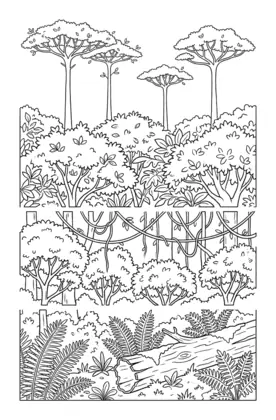
Years 3–4 · RainforestsSheet 163
Layers of the Rainforest
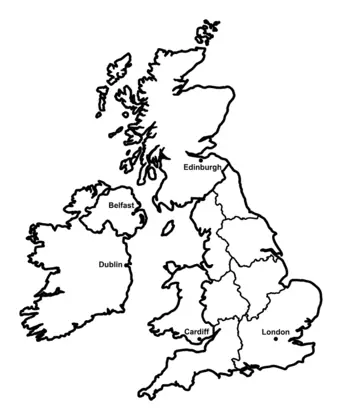
Years 2–3 · The UKSheet 93
Map of the United Kingdom
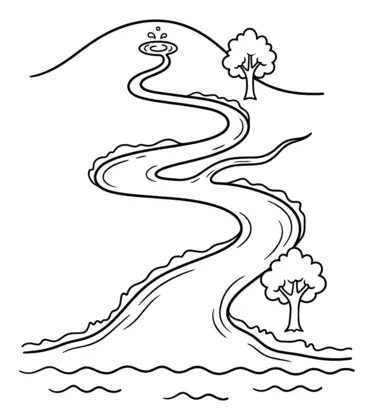
Years 3–4 · RiversSheet 125
Parts of a River
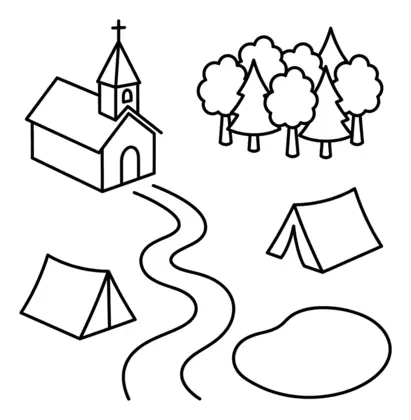
Years 4–5 · Map skillsSheet 162
Reading a Map: Symbols and a Key
Educational quiz app · Ages 5-10
More learning in the Owee app
Owee turns topics like this into quizzes for children aged 5 to 10, and a treehouse grows as they learn. No ads, no chat, no strangers.
- Family-friendly
- No ads
- Private
Educational quiz app · Ages 5-10
More learning in the Owee app
Owee turns topics like this into quizzes for children aged 5 to 10, and a treehouse grows as they learn. No ads, no chat, no strangers.
Scan with your phone camera
- Family-friendly
- No ads
- Private