Educational quiz app · Ages 5-10
This is what learning looks like


Educational quiz app · Ages 5-10
This is what learning looks like
No nagging required. Keep the learning going after the worksheet, with every question read aloud and Owee guiding each step.
Scan with your phone camera
- Family-friendly
- No ads
- Private
Science · Colouring and labelling worksheet
How We See Things: Free Year 6 Light Worksheet
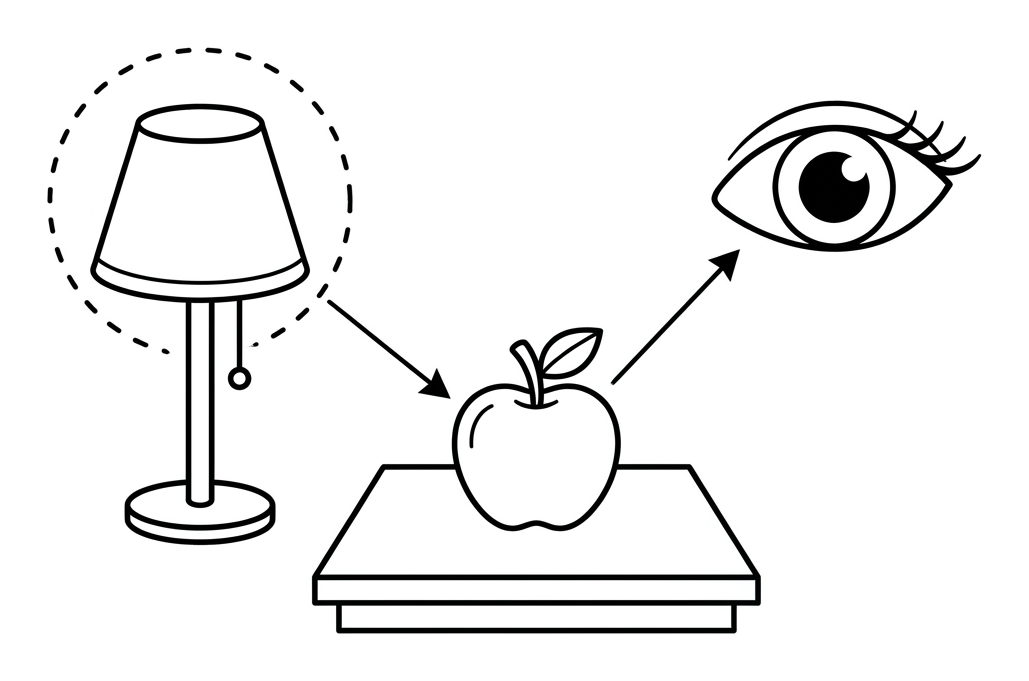
This free printable worksheet supports the Year 6 light topic, helping children understand that we see objects because light travels from a source, reflects off the object, and then enters the eye. The single line-art scene shows a lamp, an apple and an eye joined by two straight rays, making the pathway of light easy to follow and colour in.
The page works well for classroom teaching, homework or home learning. Children colour the diagram and then explain the journey light takes, reinforcing the key idea that light travels in straight lines and that nothing can be seen in total darkness.
What your child is learning
‘use the idea that light travels in straight lines to explain that objects are seen because they give out or reflect light into the eye’
Year 6 Science: Light, National Curriculum in England. Source and licence
How We See Things
Free Science worksheet · Ages 10 to 11
Activity 1
Colour the lamp, the apple and the eye.
- Colour the lamp yellow, because it is a light source.
- Go over both arrows in orange to show the path the light takes.
Activity 2
Use the picture to answer the questions. The word bank may help you. Write your answers on the lines.
Which object in the picture gives out its own light?
How does light travel from the lamp to the apple?
Why can we see the apple, even though it does not make its own light?
In your own words, explain how the light reaches the eye.
The lamp is switched off and the room is in complete darkness. Can you see the apple? Explain why.
 How We See ThingsSheet 182
Answers: How We See Things
Sheet 182
- Which object in the picture gives out its own light? — The lamp (it is the light source).
- How does light travel from the lamp to the apple? — In straight lines.
- Why can we see the apple, even though it does not make its own light? — Because it reflects light from the lamp into our eyes.
- In your own words, explain how the light reaches the eye. — Light travels in straight lines from the lamp (the source) to the apple, then reflects off the apple and travels in a straight line into the eye, so we can see it.
- The lamp is switched off and the room is in complete darkness. Can you see the apple? Explain why. — No. No light reaches the apple, so no light reflects off it into the eye.
For grown-ups. Free worksheets and the Owee quiz app at owee.world
Answer key
- Which object in the picture gives out its own light? — The lamp (it is the light source).
- How does light travel from the lamp to the apple? — In straight lines.
- Why can we see the apple, even though it does not make its own light? — Because it reflects light from the lamp into our eyes.
- In your own words, explain how the light reaches the eye. — Light travels in straight lines from the lamp (the source) to the apple, then reflects off the apple and travels in a straight line into the eye, so we can see it.
- The lamp is switched off and the room is in complete darkness. Can you see the apple? Explain why. — No. No light reaches the apple, so no light reflects off it into the eye.
What Year 6 children learn about how we see
By Year 6, children move beyond simply naming light sources to explaining the full pathway of vision. The key scientific idea is that we see an object only when light from it enters our eyes: light from a source (such as the Sun or a lamp) travels in straight lines to an object, reflects off that object, and then travels into the eye. This worksheet captures that complete journey in one clear diagram — lamp to apple, apple to eye — so children can rehearse the explanation in the correct order. A common misconception worth addressing is the idea that the eye sends out rays to 'look at' things; in fact, light always travels into the eye, never out of it.
Light sources and reflectors
Children should be able to distinguish between objects that give out light and objects that only reflect it. Luminous sources — the Sun, a flame, a bulb, a screen — produce their own light. Most everyday things, including the apple in the diagram, are non-luminous: they are visible only because they reflect light from a source into our eyes. This is why a room with no light source is completely dark, and why we cannot see anything in it no matter how long we wait. Encouraging children to sort familiar items into 'sources' and 'reflectors' is a useful way to check understanding before they tackle the worksheet.
Why light travelling in straight lines matters
The idea that light travels in straight lines underpins many later observations: it explains why a shadow has the same outline as the object that casts it, why we cannot see around corners, and why a mirror reflects an image in a predictable direction. On this worksheet the two rays are deliberately drawn as straight lines so children can connect the abstract rule to a concrete picture. When discussing the diagram, it helps to point out that the ray from the lamp reaches the apple in a straight line, and the reflected ray then travels in a straight line into the eye — two separate journeys that together explain why the apple can be seen.
Using this worksheet at home or in class
This sheet pairs well with simple practical work: shining a torch onto a coloured object in a darkened room, or covering and uncovering a light source to show that the object 'disappears' when no light reaches it. After colouring the diagram, children write a short explanation of how the light reaches the eye, which gives a quick assessment of whether they can sequence the steps correctly. A word bank is provided to support those who need it, while more confident children can be encouraged to write the explanation without it and to mention reflection explicitly. The last question, about a completely dark room, checks whether children understand that the apple needs light from a source before it can reflect anything into the eye.
Frequently asked questions
Why do we see objects, according to Year 6 science?
We see objects because light from a source travels in straight lines to the object, reflects off it, and then travels into our eyes. Objects that do not give out their own light are visible only because they reflect light from a source, which is why nothing can be seen in complete darkness.
Does light travel in straight lines?
Yes. A key Year 6 idea is that light appears to travel in straight lines. This explains why a shadow has the same outline as the object that casts it and why we cannot see around corners. On this worksheet the rays from the lamp and from the apple are both drawn as straight lines to make this clear.
What is the difference between a light source and a reflector?
A light source, such as the Sun, a flame or a bulb, gives out its own light. A reflector, such as an apple, the Moon or a wall, does not make its own light; we see it only because it reflects light from a source into our eyes.
Do our eyes send out light to see things?
No. This is a common misconception. Light always travels into the eye, never out of it. We see an object only when light that has reflected off it enters our eyes, which is why the diagram shows a ray travelling from the apple to the eye.
Is this light worksheet free to print?
Yes. This worksheet is completely free to download and print. It fits on one A4 page and is designed for Year 6 children (ages 10 to 11) studying the KS2 light topic at home or at school.
Curriculum links
- Year 6 Science: Light (statutory): 'use the idea that light travels in straight lines to explain that objects are seen because they give out or reflect light into the eye'
- Year 6 Science, Light: 'recognise that light appears to travel in straight lines'
- Year 6 Science, Light: 'explain that we see things because light travels from light sources to our eyes or from light sources to objects and then to our eyes'
Quoted word for word from Department for Education documents: the National Curriculum in England, the EYFS framework or the RSHE guidance. Contains public sector information licensed under the Open Government Licence v3.0.
Made by The Owee education team. Updated 13/10/2026. Free to print and share.
More science worksheets
All Year 6 Science worksheets →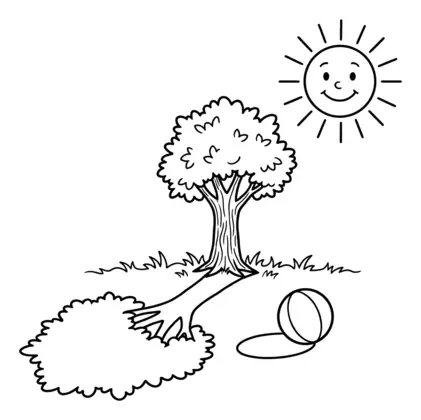
Years 3–4 · LightSheet 118
How Shadows Are Made
Years 5–6 · Earth and spaceSheet 170
Day and Night on Earth
Years 3–5 · Forces and magnetsSheet 175
Forces and Friction
Years 5–6 · Living things and habitatsSheet 183
Helpful and Harmful Microbes
Years 3–5 · PlantsSheet 119
Inside a Flower
Years 4–5 · Life cyclesSheet 176
Life Cycle of a Frog
Educational quiz app · Ages 5-10
More learning in the Owee app
Owee turns topics like this into quizzes for children aged 5 to 10, and a treehouse grows as they learn. No ads, no chat, no strangers.
- Family-friendly
- No ads
- Private
Educational quiz app · Ages 5-10
More learning in the Owee app
Owee turns topics like this into quizzes for children aged 5 to 10, and a treehouse grows as they learn. No ads, no chat, no strangers.
Scan with your phone camera
- Family-friendly
- No ads
- Private