Educational quiz app · Ages 5-10
This is what learning looks like


Educational quiz app · Ages 5-10
This is what learning looks like
No nagging required. Keep the learning going after the worksheet, with every question read aloud and Owee guiding each step.
Scan with your phone camera
- Family-friendly
- No ads
- Private
Science · Colouring and writing worksheet
How a Fossil Is Made: Free KS2 Worksheet (Ages 7 to 8)
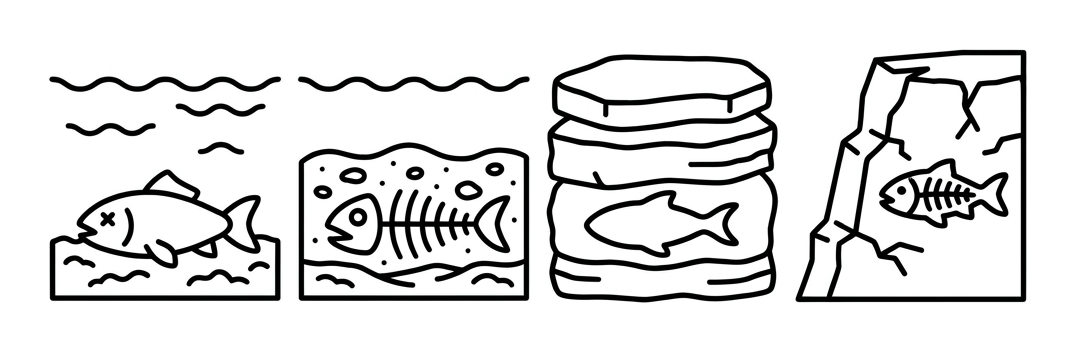
This free printable worksheet helps children aged 7 to 8 understand how fossils are formed — a key part of the Year 3 science unit on rocks. The single illustration shows the same fish at four stages, from lying on the seabed to being found as a fossil in a cliff, so children can see the process unfold across millions of years.
Children colour the picture and then write what is happening in each stage in their own words. It is easy to use at home or in the classroom with no preparation beyond a printer and some colouring pencils.
What your child is learning
‘describe in simple terms how fossils are formed when things that have lived are trapped within rock’
Year 3 Science: Rocks, National Curriculum in England. Source and licence
How a Fossil Is Made
Free Science worksheet · Ages 7 to 8
Activity 1
Colour the four pictures. Use blue for the sea, brown for the mud and sand, and grey for the rock. Make the fossil in the cliff stand out.
Activity 2
Write what is happening in each picture, from left to right. Use the word bank to help you.
Picture 1: What happens to the fish?
Picture 2: What happens to the soft parts of the fish, and what covers the bones?
Picture 3: What happens to the layers over millions of years?
Picture 4: How is the fossil found?
 How a Fossil Is MadeSheet 120
Answers: How a Fossil Is Made
Sheet 120
- Picture 1: What happens to the fish? — The fish dies and sinks to the seabed.
- Picture 2: What happens to the soft parts of the fish, and what covers the bones? — The soft parts rot away. Mud and sand settle on top and cover the bones.
- Picture 3: What happens to the layers over millions of years? — More layers build up and press down. The layers slowly turn into rock, and the fish's remains become a fossil.
- Picture 4: How is the fossil found? — The rock wears away (for example, by the sea, wind or rain) and the fossil is uncovered in the cliff.
For grown-ups. Free worksheets and the Owee quiz app at owee.world
Answer key
- Picture 1: What happens to the fish? — The fish dies and sinks to the seabed.
- Picture 2: What happens to the soft parts of the fish, and what covers the bones? — The soft parts rot away. Mud and sand settle on top and cover the bones.
- Picture 3: What happens to the layers over millions of years? — More layers build up and press down. The layers slowly turn into rock, and the fish's remains become a fossil.
- Picture 4: How is the fossil found? — The rock wears away (for example, by the sea, wind or rain) and the fossil is uncovered in the cliff.
What this worksheet teaches
This worksheet introduces the idea that fossils are the preserved remains or traces of living things, formed over a very long time. Children learn the simple sequence at the heart of the Year 3 curriculum: an animal dies and sinks to the seabed, its soft parts rot away, layers of mud and sand bury the hard parts such as bones or shells, and over millions of years the layers slowly turn to rock. Much later, the sea, wind and rain wear the rock away and the fossil is uncovered, which is the last picture on the sheet. The four-stage picture gives children a clear visual model so they can talk through and write about each step with confidence.
Why fossils sit within the rocks topic
In the National Curriculum, fossils are taught as part of the wider Year 3 unit on rocks. This is because most fossils are found in sedimentary rock, which itself forms from layers of mud, sand and other material that build up and harden over time. Linking the two ideas helps children understand why fossils are usually found in layers and why deeper layers are older. It is worth reminding children that only hard parts — bones, teeth and shells — tend to survive, while soft parts almost always rot away, which is why we so rarely find fossils of jellyfish or worms.
Key vocabulary to introduce
Building the right vocabulary helps children explain the process clearly. Useful words for this topic include fossil (the remains or trace of a living thing preserved in rock), sediment (small pieces of mud, sand and rock that settle in layers), layer (a band of rock or sediment), decay or rot (when soft parts break down), and millions of years (the very long time the process takes). Encourage children to use these words when they write their answers rather than relying on everyday phrasing.
How to use this sheet at home or in class
Begin by talking through the picture from left to right, asking children to describe what is happening in each stage before they write anything. They can then colour the scene — perhaps using blue for the sea, brown for the mud and grey for the finished rock — which reinforces the idea that the surroundings change as time passes. Finish with the writing task, where children describe each of the four pictures in their own words. A common misconception is that a fossil is always the actual bone; explain that, over a very long time, minerals in the water often replace the bone bit by bit, so many fossils are really rock in the shape of the bone. To extend the activity, ask why we mostly find the hard parts of animals and what a fossil can tell us about creatures that lived long ago.
Frequently asked questions
How are fossils formed for KS2 children?
In simple terms, a fossil forms when an animal dies and sinks to the seabed, its soft parts rot away, and layers of mud and sand bury the hard parts such as bones or shells. Over millions of years the layers harden into rock and the buried remains become a fossil. Much later, the rock wears away and the fossil is uncovered. This is the level of explanation expected in Year 3.
What age group is this fossils worksheet for?
It is written for children aged 7 to 8 (Year 3), the stage at which fossil formation is introduced in the National Curriculum as part of the rocks topic. Confident younger children or those revisiting the topic in Year 4 may also find it useful.
Is this fossil worksheet free to print?
Yes. The worksheet is completely free to download and print. You only need a printer and some colouring pencils — no login or payment is required.
Why are only the hard parts of an animal fossilised?
Soft parts such as skin, muscle and organs usually rot away quickly after an animal dies. Hard parts like bones, teeth and shells are far more likely to survive long enough to be buried by sediment and turned into rock, which is why most fossils show only these hard parts.
How long does it take for a fossil to form?
Fossils form very slowly, usually over millions of years. The sediment must build up, bury the remains and then gradually harden into rock, which is a process that takes far longer than a human lifetime.
Curriculum links
- Year 3 Science: Rocks (statutory): 'describe in simple terms how fossils are formed when things that have lived are trapped within rock'
- Year 3 Science (Rocks): 'compare and group together different kinds of rocks on the basis of their appearance and simple physical properties'
Quoted word for word from Department for Education documents: the National Curriculum in England, the EYFS framework or the RSHE guidance. Contains public sector information licensed under the Open Government Licence v3.0.
Made by The Owee education team. Updated 13/10/2026. Free to print and share.
More science worksheets
All Year 3 Science worksheets →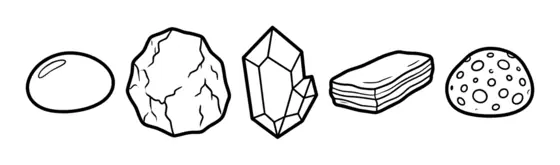
Years 3–4 · Rocks and fossilsSheet 121
Sorting Rocks
Years 3–4 · Rocks and fossilsSheet 122
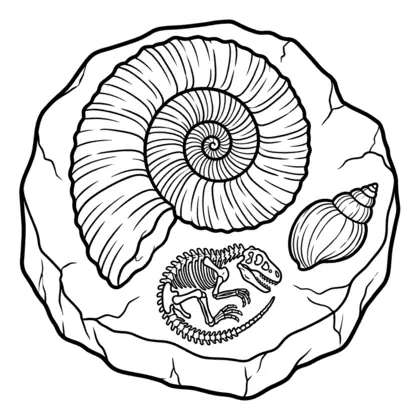
What Is a Fossil? Mary Anning
Years 3–4 · Teeth and digestionSheet 157
Animal Teeth and What They Eat
Years 3–4 · Food chainsSheet 152
Build a Food Chain: Label and Colour
Years 3–4 · Food chainsSheet 153
Build a Food Chain: Label and True or False
Years 3–5 · Forces and magnetsSheet 175
Forces and Friction
Educational quiz app · Ages 5-10
More learning in the Owee app
Owee turns topics like this into quizzes for children aged 5 to 10, and a treehouse grows as they learn. No ads, no chat, no strangers.
- Family-friendly
- No ads
- Private
Educational quiz app · Ages 5-10
More learning in the Owee app
Owee turns topics like this into quizzes for children aged 5 to 10, and a treehouse grows as they learn. No ads, no chat, no strangers.
Scan with your phone camera
- Family-friendly
- No ads
- Private