Educational quiz app · Ages 5-10
This is what learning looks like


Educational quiz app · Ages 5-10
This is what learning looks like
No nagging required. Keep the learning going after the worksheet, with every question read aloud and Owee guiding each step.
Scan with your phone camera
- Family-friendly
- No ads
- Private
Music · Colouring and tick worksheet
High and Low Sounds: Free KS1 Pitch Worksheet
Pitch is one of the first ideas children meet in music: some sounds are high and some are low. This free printable helps Year 1 and Year 2 children connect that idea to things they already know — a tiny bird singing high in a tree makes a high sound, while a big lion roaring on the ground makes a low sound.
Children colour the scene first, then listen in their heads to six everyday sounds and tick the ones that are high. It prints to a single A4 page and works well as a quick lesson starter, a follow-up after a singing or listening activity, or a calm task for home.
What your child is learning
‘experiment with, create, select and combine sounds using the interrelated dimensions of music’
Key stage 1 Music, National Curriculum in England. Source and licence
High and Low Sounds: Pitch
Free Music worksheet · Ages 5 to 7
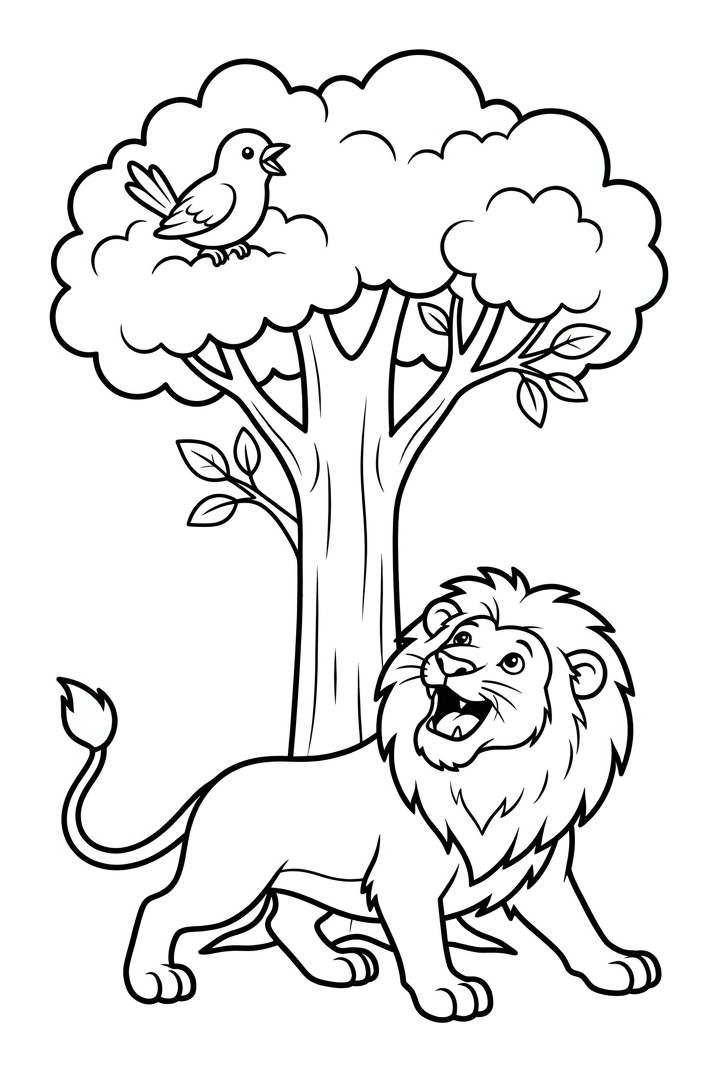
Colour the picture
Colour the picture. The little bird up in the tree sings a HIGH sound. The big lion on the ground makes a LOW sound.
- Colour the bird high up in the tree.
- Colour the lion down on the ground.
- Colour the tree and its leaves.
Tick the high sounds
Some things make a HIGH sound and some make a LOW sound. Tick the things that make a HIGH sound.
- A tiny mouse squeaking
- A big bass drum
- A ship's foghorn
- A small bell ringing
- A cow mooing
- A whistle being blown
 High and Low Sounds: PitchSheet 53
Answers: High and Low Sounds: Pitch
Sheet 53
- A tiny mouse squeaking — high – tick
- A big bass drum — low – no tick
- A ship's foghorn — low – no tick
- A small bell ringing — high – tick
- A cow mooing — low – no tick
- A whistle being blown — high – tick
For grown-ups. Free worksheets and the Owee quiz app at owee.world
Answer key
- A tiny mouse squeaking — high – tick
- A big bass drum — low – no tick
- A ship's foghorn — low – no tick
- A small bell ringing — high – tick
- A cow mooing — low – no tick
- A whistle being blown — high – tick
What is pitch and why does it matter at KS1?
Pitch describes how high or low a sound is. A whistle, a small bell or a chirping bird sit at the high end; a big drum, a foghorn or a roaring lion sit at the low end. Pitch is one of the interrelated dimensions of music that KS1 children are expected to explore alongside tempo, dynamics and duration. Hearing the difference between high and low is an early listening skill that underpins singing in tune, matching notes and, later, reading music. Linking pitch to familiar pictures (small and high, big and low) gives children something to hold on to. It is a rule of thumb, not a law: a big orchestra has high instruments too, so keep listening rather than guessing from size alone.
How to use this worksheet
Begin away from the page. Sing a short phrase high, like a little bird, then growl it low, like a lion, and ask children to point up or down. Make high and low sounds with classroom instruments or your voices, and have children move their hands to match. Once they have heard the contrast, hand out the sheet. Colouring the bird, tree and lion settles children and reinforces the high-up and low-down placement. They then move to the tick task, deciding which sounds are high. Encourage them to make each sound with their voice before they decide, and to say why: “A mouse is small and squeaks high. A cow is big and moos low.”
Common misconceptions about high and low sounds
Children often confuse pitch with volume, assuming that loud means high and quiet means low. A roaring lion is loud but low; a quiet bird can be high. It helps to keep volume the same while you change pitch so the two ideas stay separate. Some children also mix up high meaning physical height with high meaning pitch. The bird-and-lion picture deliberately uses height to support the idea, but be ready to demonstrate that you can make a high sound with an instrument held low down, and a low sound with one held high up. Plenty of listening examples will quickly secure the distinction.
Extending the learning at home or in class
After the sheet, try a sorting game: name everyday sounds — a mouse, a tiger, a tiny bell, a big bass drum — and ask children to sort them into high and low. Use a glockenspiel or a piano app to play two notes and ask which is higher. Singing nursery rhymes and exaggerating the high and low notes builds the same skill. You could also let children invent high and low sounds with their own voices and bodies, choosing and combining them, which moves them towards the creative side of the KS1 music curriculum.
Frequently asked questions
What is pitch in music for KS1 children?
Pitch is how high or low a sound is. A bird singing or a small bell makes a high sound, while a big drum or a roaring lion makes a low sound. At KS1, children are not expected to name notes; they simply learn to hear and describe sounds as high or low, which is a key early listening skill.
How do I teach the difference between high and low sounds?
Start with your voice: sing high like a bird, then low like a lion, and ask children to point up or down. Keep the volume the same so they do not confuse pitch with loudness. Use instruments to play two notes and ask which is higher, then sort everyday sounds into high and low. This worksheet supports that with a colour-in scene and a tick task.
Is this pitch worksheet suitable for Reception or Year 1?
It is designed for KS1, so Years 1 and 2 (ages 5 to 7). Many confident Reception children will enjoy it too, especially the colouring, with an adult reading the tick questions aloud. The task is deliberately simple so the focus stays on hearing high and low.
What do children need to do on the worksheet?
First they colour the bird high in the sky and the lion on the ground, which reinforces the high-up and low-down idea. Then they read six everyday sounds, such as a tiny mouse squeaking and a big bass drum, and tick the ones that make a high sound.
Is the worksheet free and printable?
Yes. It is completely free, with no sign-up needed, and prints to a single A4 page. You can use it in class, in music sessions or at home, and print as many copies as you like.
Curriculum links
- Key stage 1 Music (statutory): 'experiment with, create, select and combine sounds using the interrelated dimensions of music'
- Music KS1: 'use their voices expressively and creatively by singing songs and speaking chants and rhymes'
- Music KS1: 'listen with concentration and understanding to a range of high-quality live and recorded music'
Quoted word for word from Department for Education documents: the National Curriculum in England, the EYFS framework or the RSHE guidance. Contains public sector information licensed under the Open Government Licence v3.0.
Made by The Owee education team. Updated 13/10/2026. Free to print and share.
Educational quiz app · Ages 5-10
More learning in the Owee app
Owee turns topics like this into quizzes for children aged 5 to 10, and a treehouse grows as they learn. No ads, no chat, no strangers.
- Family-friendly
- No ads
- Private
Educational quiz app · Ages 5-10
More learning in the Owee app
Owee turns topics like this into quizzes for children aged 5 to 10, and a treehouse grows as they learn. No ads, no chat, no strangers.
Scan with your phone camera
- Family-friendly
- No ads
- Private