Educational quiz app · Ages 5-10
This is what learning looks like


Educational quiz app · Ages 5-10
This is what learning looks like
No nagging required. Keep the learning going after the worksheet, with every question read aloud and Owee guiding each step.
Scan with your phone camera
- Family-friendly
- No ads
- Private
Science · Colouring and writing worksheet
The Life Cycle of a Frog: Free KS1 Worksheet
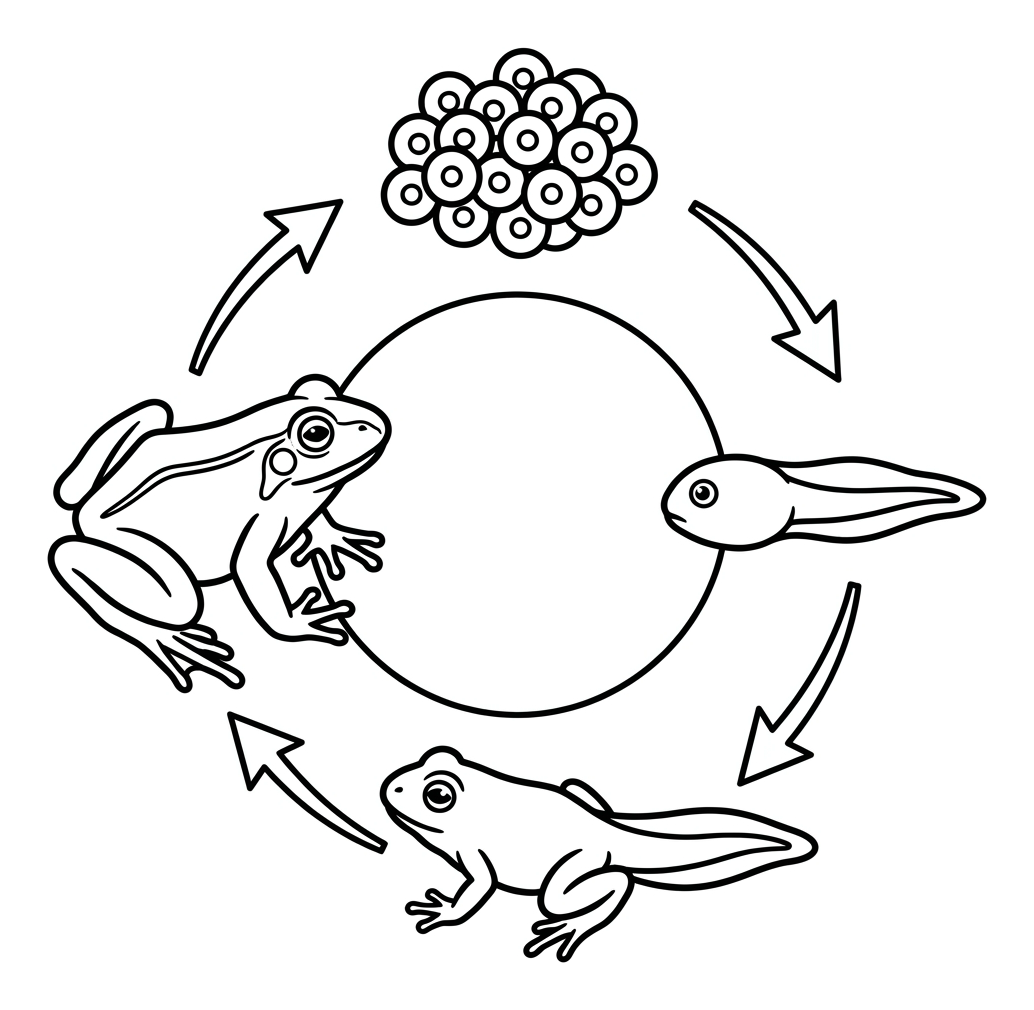
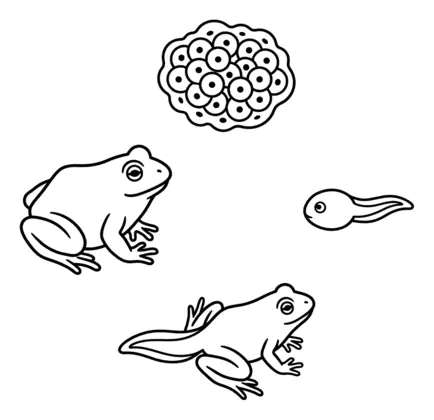
This free printable worksheet introduces children aged 5 to 7 to the life cycle of a frog, one of the clearest and most engaging examples of an animal changing form as it grows. The single line drawing shows the four key stages — frogspawn, tadpole, froglet and adult frog — arranged around a circle so children can both colour the picture and talk about the order in which the changes happen.
It supports the KS1 Year 2 science objective on animals having offspring that grow into adults. Print it onto one sheet of A4 and use it at home or in the classroom — no preparation or special equipment needed beyond colouring pencils.
What your child is learning
‘notice that animals, including humans, have offspring which grow into adults’
Year 2 Science: Animals, including humans, National Curriculum in England. Source and licence
The Life Cycle of a Frog
Free Science worksheet · Ages 5 to 7
Name the stages
Look at the picture. Finish each sentence with the name of the stage. Use the word bank to help you.
The jelly-like eggs laid in the pond are called ...
The little swimmer with a long tail and no legs is a ...
A young frog that has grown legs but still has a tail is a ...
The grown-up animal with four legs that hops on land is a ...
Colour the life cycle
Colour in the four stages of the frog's life cycle. Try to make your frog and froglet the same colour so you can see how the tadpole grows up.
- Colour the little dot in the middle of each egg black.
- Colour the tadpole and the froglet's tail dark grey or brown.
- Colour the adult frog and the froglet's body green.
- Colour the big circle in the middle light blue, like a pond.
 The Life Cycle of a FrogSheet 84
Answers: The Life Cycle of a Frog
Sheet 84
- The jelly-like eggs laid in the pond are called ... — frogspawn
- The little swimmer with a long tail and no legs is a ... — tadpole
- A young frog that has grown legs but still has a tail is a ... — froglet
- The grown-up animal with four legs that hops on land is a ... — frog
For grown-ups. Free worksheets and the Owee quiz app at owee.world
Answer key
- The jelly-like eggs laid in the pond are called ... — frogspawn
- The little swimmer with a long tail and no legs is a ... — tadpole
- A young frog that has grown legs but still has a tail is a ... — froglet
- The grown-up animal with four legs that hops on land is a ... — frog
What children learn from the frog life cycle
A frog is an amphibian, which means it can live both in water and on land. Its life cycle is a favourite topic in Key Stage 1 because the changes are so dramatic and easy to see: a tiny egg becomes a swimming tadpole, then a tadpole grows legs and becomes a froglet, and finally the froglet turns into an adult frog. This kind of change is called metamorphosis. Naming and ordering these stages helps children grasp the bigger idea that all animals have offspring that grow and change as they get older.
The four stages explained simply
Frogspawn is a clump of jelly-like eggs, each with a tiny black dot inside, usually laid in a pond in early spring. After one to three weeks, a tadpole hatches; it has a round body and a long tail and breathes underwater using gills, much like a fish. As it grows, the tadpole becomes a froglet, sprouting back legs and then front legs while its tail slowly shrinks. Finally it becomes an adult frog with four legs and lungs for breathing air, able to hop out of the water onto land. The adult frog will one day lay its own frogspawn, and the cycle begins again.
How to use this worksheet at home or in class
Begin by looking at the picture together and asking the child to point to the egg and the grown-up frog. Encourage them to describe what they notice changing — the tail getting shorter, the legs appearing. They can then write the name of each stage on the lines provided, using the word bank for support, and colour the picture in. Follow the arrows round with a finger so children see that the frog lays new frogspawn and the cycle starts again. If you have a local pond, a spring walk to look for frogspawn brings the worksheet to life; look closely, but leave the spawn where it is so it can hatch safely.
Linking to wider KS1 science
The frog life cycle sits within the Year 2 topic 'Animals, including humans', which asks children to notice that animals have offspring that grow into adults. It pairs naturally with the human life cycle (baby, child, adult) and with the basic needs of animals for survival — food, water and air. Comparing a frog's life cycle with a butterfly's or a chicken's helps children see that while every animal grows up, the journey looks different for each one. These early comparisons build the foundation for more detailed work on classification and life processes later in primary school.
Frequently asked questions
What are the four stages of a frog's life cycle for KS1?
The four stages taught at Key Stage 1 are frogspawn (the eggs), tadpole, froglet (a young frog with legs and a tail) and the adult frog. The frog then lays its own frogspawn and the cycle starts again.
What age is this frog life cycle worksheet for?
It is designed for children aged 5 to 7 in Key Stage 1 (Years 1 and 2), and matches the Year 2 science objective on animals having offspring that grow into adults. It also works as a gentle introduction or revision for slightly older children.
Is a frog a mammal, a fish or an amphibian?
A frog is an amphibian. Amphibians begin life in water, breathing through gills like a fish, and most grow lungs and legs so they can also live on land as adults. This change in body form is one reason frogs are such a popular science topic.
How long does it take for frogspawn to become a frog?
It usually takes around twelve to sixteen weeks for frogspawn to develop into a young adult frog, though the exact time depends on the species and the water temperature. Tadpoles hatch within a week or two, and the legs appear over the following weeks.
Is this worksheet free to print?
Yes. The worksheet is completely free to download and print. It fits onto one sheet of A4, so you only need a printer and some colouring pencils to use it at home or in the classroom.
Curriculum links
- Year 2 Science: Animals, including humans (statutory): 'notice that animals, including humans, have offspring which grow into adults'
- KS1 Year 2 Science, Animals including humans: 'find out about and describe the basic needs of animals, including humans, for survival (water, food and air)'
Quoted word for word from Department for Education documents: the National Curriculum in England, the EYFS framework or the RSHE guidance. Contains public sector information licensed under the Open Government Licence v3.0.
Made by The Owee education team. Updated 13/10/2026. Free to print and share.
More science worksheets
All Year 2 Science worksheets →
Years 2–3 · Life cyclesSheet 117
Life Cycle of a Bean Plant
Years 1–2 · Life cyclesSheet 82
Life Cycle of a Butterfly
Years 4–5 · Life cyclesSheet 176
Life Cycle of a Frog
Years 1–2 · Life cyclesSheet 83
Life Cycle of a Sunflower
Years 1–2 · AnimalsSheet 79
Animals and Their Survival Needs
Years 1–2 · AnimalsSheet 27
Animals of the Frozen Poles
Educational quiz app · Ages 5-10
More learning in the Owee app
Owee turns topics like this into quizzes for children aged 5 to 10, and a treehouse grows as they learn. No ads, no chat, no strangers.
- Family-friendly
- No ads
- Private
Educational quiz app · Ages 5-10
More learning in the Owee app
Owee turns topics like this into quizzes for children aged 5 to 10, and a treehouse grows as they learn. No ads, no chat, no strangers.
Scan with your phone camera
- Family-friendly
- No ads
- Private