Educational quiz app · Ages 5-10
This is what learning looks like


Educational quiz app · Ages 5-10
This is what learning looks like
No nagging required. Keep the learning going after the worksheet, with every question read aloud and Owee guiding each step.
Scan with your phone camera
- Family-friendly
- No ads
- Private
Science · Writing and colouring worksheet
The Five Senses: Free KS1 Science Worksheet
This free printable worksheet introduces children aged 5 to 7 to the five senses and the part of the body we use for each one: we see with our eyes, hear with our ears, smell with our nose, taste with our tongue and touch with our skin and hands. A clear picture of a child's face and hand is paired with a matching task and a colouring activity, so the learning feels hands-on rather than purely written.
It is designed to support the Year 1 topic Animals, including humans, where children name the basic parts of the body and say which part is linked to each sense. Everything fits onto a single A4 page, ready to print at home or in the classroom.
What your child is learning
‘identify, name, draw and label the basic parts of the human body and say which part of the body is associated with each sense’
Year 1 Science: Animals, including humans, National Curriculum in England. Source and licence
The Five Senses
Free Science worksheet · Ages 5 to 7
Activity 1
Read each clue. Write the body part you use for that sense. Use the word bank to help you.
You use these to see things, such as a colourful picture
You use these to hear sounds, such as music or a friend talking
You use this to smell things, such as flowers or your dinner cooking
You use this to taste things, such as whether food is sweet or sour
You use this to touch and feel things, such as whether something is soft or rough
Activity 2
Now colour the child. Use these colours.
- Colour the eyes blue
- Colour the ears pink
- Colour the nose orange
- Colour the tongue red
- Colour the hand to match your own skin
 The Five SensesSheet 35
Answers: The Five Senses
Sheet 35
- You use these to see things, such as a colourful picture — Eyes
- You use these to hear sounds, such as music or a friend talking — Ears
- You use this to smell things, such as flowers or your dinner cooking — Nose
- You use this to taste things, such as whether food is sweet or sour — Tongue
- You use this to touch and feel things, such as whether something is soft or rough — Skin (hands)
For grown-ups. Free worksheets and the Owee quiz app at owee.world
Answer key
- You use these to see things, such as a colourful picture — Eyes
- You use these to hear sounds, such as music or a friend talking — Ears
- You use this to smell things, such as flowers or your dinner cooking — Nose
- You use this to taste things, such as whether food is sweet or sour — Tongue
- You use this to touch and feel things, such as whether something is soft or rough — Skin (hands)
What is on the worksheet
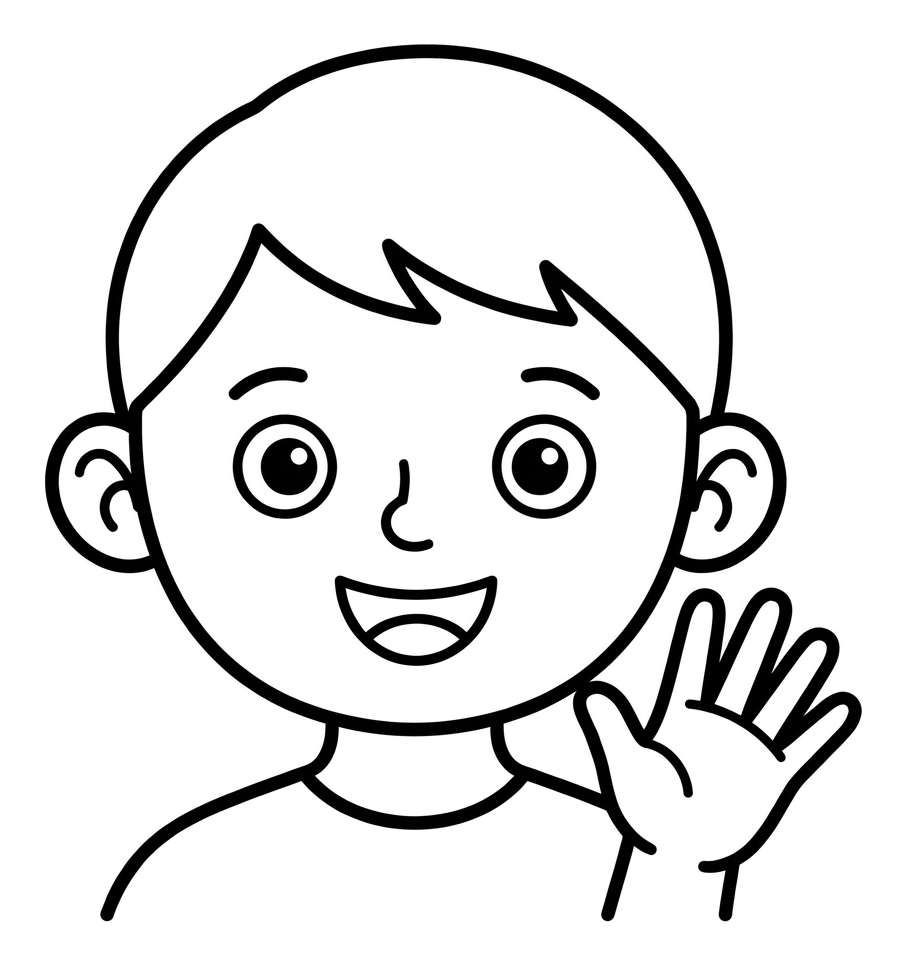
The worksheet shows a single, friendly line drawing of a child's head, shoulders and one raised hand, with the eyes, ears, nose, mouth, tongue and hand all clearly visible. Underneath, children read five simple clues, one for each sense, and use the word bank to write the matching body part on each line: eyes, ears, nose, tongue and skin (or hands). Once they have matched all five senses, they colour the picture in. The whole activity fits neatly on one A4 sheet, with bold outlines and plenty of white space for small hands.
How to use it at home or in the classroom
Print the sheet on plain A4 paper. Before children start writing, play a quick game with each sense: ask them to close their eyes and listen to a sound, to sniff something in the kitchen, or to feel a smooth and a rough object. This links each sense to a real, memorable experience. Children then read the five clues and use the word bank to write the matching body part on each line. They finish by colouring the picture however they like. As an extension, ask which sense they would use to enjoy a favourite food, a piece of music or a soft toy, which encourages them to talk about the senses in everyday life.
What your child will learn
Children will be able to name the five senses, sight, hearing, smell, taste and touch, and say which part of the body is linked to each one. They will learn that we see with our eyes, hear with our ears, smell with our nose, taste with our tongue and feel things by touch through our skin, especially our hands. Talking about the senses also builds early scientific vocabulary and observation skills, as children describe what things look, sound, smell, taste and feel like. A common mix-up is thinking we can only feel with our hands. Ask your child to feel a cold spoon on their arm or a soft scarf on their cheek: skin all over the body senses touch, warmth and cold, and our hands and fingertips are simply the most sensitive.
A note for teachers
This sheet supports the statutory Year 1 objective within Animals, including humans, which asks pupils to identify and name the basic parts of the body and say which part is associated with each sense. The clues use everyday language so that early and emerging readers can take part, and the word bank can be left visible for support or covered to turn the task into a recall activity for assessment. It pairs well with a sensory exploration session, a feely bag or a listening walk. There is no log-in and no watermark, and you are welcome to print copies for your class and to link to this page from a school website or newsletter.
Frequently asked questions
What are the five senses for KS1?
The five senses are sight, hearing, smell, taste and touch. At KS1 children learn that we see with our eyes, hear with our ears, smell with our nose, taste with our tongue and feel things by touch through our skin, especially our hands. This worksheet matches each sense to the correct body part.
Which part of the body is used for each sense?
We use our eyes for sight, our ears for hearing, our nose for smell, our tongue for taste and our skin and hands for touch. Linking each sense to a body part is exactly what the Year 1 National Curriculum objective asks children to do.
What age and key stage is this worksheet for?
It is aimed at children aged 5 to 7 in KS1 (Years 1 and 2), and it supports the statutory Year 1 topic Animals, including humans. Confident younger children, and older children who need a little more support, may also find it useful.
Is this five senses worksheet free to print and share?
Yes. The worksheet is completely free to print, use at home or in class, and share. There is no sign-up and no watermark, and it is designed to fit on a single A4 page, so it is easy to print as a class set.
How can I make the worksheet harder or easier?
To make it easier, leave the word bank visible so children simply match the words to the clues. To make it harder, cover or fold away the word bank so children recall each body part from memory, or ask them to name something they could enjoy with each sense.
Curriculum links
- Year 1 Science: Animals, including humans (statutory): 'identify, name, draw and label the basic parts of the human body and say which part of the body is associated with each sense'
- KS1 Science working scientifically: 'using their observations and ideas to suggest answers to questions'
- KS1 Science working scientifically: 'observing closely, using simple equipment'
Quoted word for word from Department for Education documents: the National Curriculum in England, the EYFS framework or the RSHE guidance. Contains public sector information licensed under the Open Government Licence v3.0.
Made by The Owee education team. Updated 13/10/2026. Free to print and share.
More science worksheets
All Year 1 Science worksheets →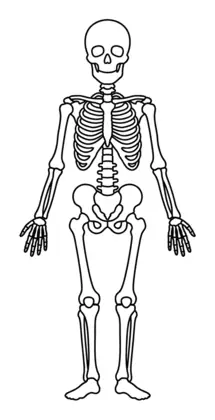
Years 3–4 · Human bodySheet 114
Label the Human Skeleton
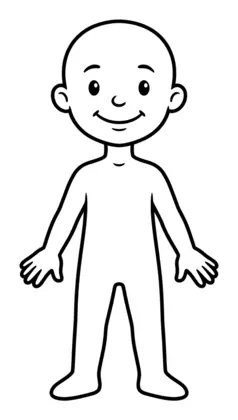
Reception–Year 1 · Human bodySheet 34
Label the Parts of the Body

Years 3–4 · Human bodySheet 115
Muscles That Move Us
Years 5–6 · Human bodySheet 180
The Heart and Healthy Exercise
Year 6 · Human bodySheet 181
The Human Heart
Years 3–4 · Human bodySheet 116
The Human Skeleton: Major Bones
Educational quiz app · Ages 5-10
More learning in the Owee app
Owee turns topics like this into quizzes for children aged 5 to 10, and a treehouse grows as they learn. No ads, no chat, no strangers.
- Family-friendly
- No ads
- Private
Educational quiz app · Ages 5-10
More learning in the Owee app
Owee turns topics like this into quizzes for children aged 5 to 10, and a treehouse grows as they learn. No ads, no chat, no strangers.
Scan with your phone camera
- Family-friendly
- No ads
- Private