Educational quiz app · Ages 5-10
This is what learning looks like


Educational quiz app · Ages 5-10
This is what learning looks like
No nagging required. Keep the learning going after the worksheet, with every question read aloud and Owee guiding each step.
Scan with your phone camera
- Family-friendly
- No ads
- Private
Maths · Counting and short-answer worksheet
Faces, Edges and Vertices Worksheet (Free KS2 3D Shapes)
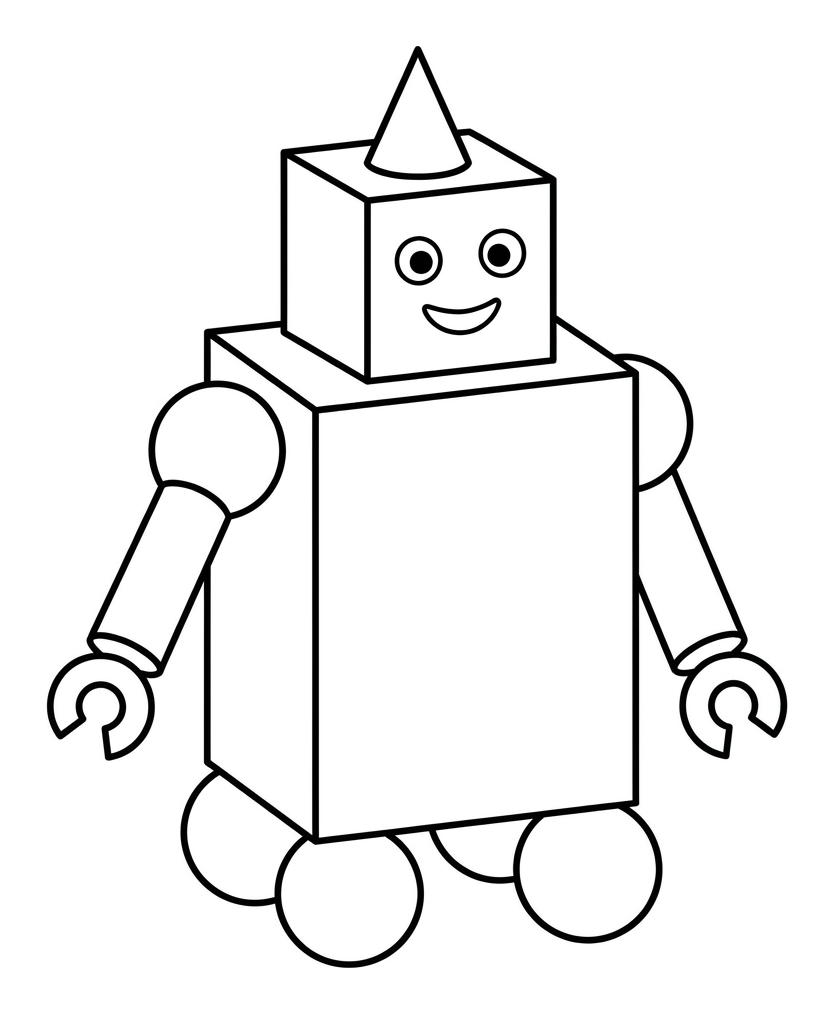
This free printable worksheet gives Years 5 and 6 a friendly way to revise the properties of common 3D shapes. The whole page is built around a single robot assembled from a cuboid, a cube, cylinders, a cone and spheres, so children can name each solid and then count its faces, edges and vertices.
Faces are the flat (or curved) surfaces, edges are where two faces meet, and vertices are the corners where edges meet. The sheet prints cleanly onto one sheet of A4, making it ideal for homework, a quick starter, or extra practice at home.
What your child is learning
‘identify and describe the properties of 3-D shapes, including the number of edges, vertices and faces’
Year 2 Maths: Geometry – properties of shapes, National Curriculum in England. Source and licence
Robot 3D Shapes: Faces, Edges and Vertices
Free Maths worksheet · Ages 9 to 11
Count the robot's shapes
Each part of the robot is a 3D shape. Find the part, then write the answer in the box. Remember to count the faces, edges and vertices you cannot see.
- How many faces does the cube head have?
- How many edges does the cuboid body have?
- How many vertices does the cuboid body have?
- How many flat faces does one cylinder arm have?
- How many vertices (corners) does a sphere foot have?
- How many flat faces does the cone hat have?
Describe the shapes
Answer in full sentences. Use the word bank to help you spell the shape and property words.
Explain the difference between an edge and a vertex.
Name a 3D shape on the robot that has a curved surface and give a real object that is the same shape.
Which two different kinds of solid on the robot have the same number of faces, edges and vertices?
 Robot 3D Shapes: Faces, Edges and VerticesSheet 56
Answers: Robot 3D Shapes: Faces, Edges and Vertices
Sheet 56
- How many faces does the cube head have? — 6
- How many edges does the cuboid body have? — 12
- How many vertices does the cuboid body have? — 8
- How many flat faces does one cylinder arm have? — 2
- How many vertices (corners) does a sphere foot have? — 0
- How many flat faces does the cone hat have? — 1
- Explain the difference between an edge and a vertex. — An edge is the line where two faces meet; a vertex is a corner point where edges meet.
- Name a 3D shape on the robot that has a curved surface and give a real object that is the same shape. — Accept any reasonable answer, e.g. cylinder (a tin of beans), sphere (a ball) or cone (an ice-cream cone).
- Which two different kinds of solid on the robot have the same number of faces, edges and vertices? — The cube head and the cuboid body (both have 6 faces, 12 edges and 8 vertices).
For grown-ups. Free worksheets and the Owee quiz app at owee.world
Answer key
- How many faces does the cube head have? — 6
- How many edges does the cuboid body have? — 12
- How many vertices does the cuboid body have? — 8
- How many flat faces does one cylinder arm have? — 2
- How many vertices (corners) does a sphere foot have? — 0
- How many flat faces does the cone hat have? — 1
- Explain the difference between an edge and a vertex. — An edge is the line where two faces meet; a vertex is a corner point where edges meet.
- Name a 3D shape on the robot that has a curved surface and give a real object that is the same shape. — Accept any reasonable answer, e.g. cylinder (a tin of beans), sphere (a ball) or cone (an ice-cream cone).
- Which two different kinds of solid on the robot have the same number of faces, edges and vertices? — The cube head and the cuboid body (both have 6 faces, 12 edges and 8 vertices).
What this worksheet covers
This worksheet focuses on identifying common 3D shapes and describing their properties using the correct vocabulary: faces, edges and vertices. Children name the solids that make up the robot and then count the three properties for each one. The robot is made from a cube (the head), a cuboid (the body), a cone (the hat), two cylinders (the arms) and spheres (the shoulders and feet). Counting faces, edges and vertices is first taught in Year 2; in Years 5 and 6 children revisit it and are expected to identify 3D shapes from flat drawings, which means picturing the faces and edges they cannot see. Working from a single picture rather than separate diagrams encourages exactly that, and helps children recognise a solid even when it is part of a larger object.
Faces, edges and vertices explained
It helps to settle the vocabulary before starting. A face is a flat or curved surface of a solid; an edge is the line where two faces meet; and a vertex (plural: vertices) is a corner point where edges meet. A cube, for example, has 6 faces, 12 edges and 8 vertices, while a square-based pyramid has 5 faces, 8 edges and 5 vertices. Curved shapes can challenge this language: a cylinder has 2 flat faces and 1 curved surface, a cone has 1 flat face and 1 curved surface with a single apex (often counted as a vertex), and a sphere has a single curved surface with no straight edges or vertices at all. There are different conventions for counting the curved surfaces and the apex, so it is worth agreeing the rule your school uses before marking.
How to use the worksheet
Print the page and ask the child to colour the robot first, perhaps using a different colour for each type of solid so the cube, cuboid, cylinders, cone and spheres stand out. Then they work through the counting questions, finding each shape on the robot before recording its faces, edges and vertices. The short-answer section asks children to explain the difference between an edge and a vertex and to name a real-world object for a chosen solid, which encourages them to use the vocabulary in full sentences. Counting from the picture and from memory together helps move children from recognising shapes to reasoning about their properties.
Helping children at home
You do not need any maths background to support this topic. Hunt for 3D shapes around the house: a cereal box is a cuboid, a tin of beans is a cylinder, a ball is a sphere, an ice-cream cone is a cone, and dice are cubes. Let your child run a finger along an edge and tap each vertex while counting aloud, as the physical action makes the abstract definitions concrete. If counting hidden edges and vertices is tricky, encourage them to handle the real object and rotate it, rather than relying only on a flat drawing. Steady, low-pressure practice like this builds the confident shape vocabulary expected by the end of Year 6.
Frequently asked questions
What are faces, edges and vertices?
A face is a flat or curved surface of a 3D shape, an edge is the line where two faces meet, and a vertex (plural vertices) is a corner where edges meet. For example, a cube has 6 faces, 12 edges and 8 vertices.
How many faces, edges and vertices does a cube have?
A cube has 6 faces, 12 edges and 8 vertices. A cuboid has the same counts (6 faces, 12 edges and 8 vertices), but its faces are rectangles rather than all squares.
Does a sphere have any edges or vertices?
No. A sphere has a single curved surface with no flat faces, no edges and no vertices. This makes it a useful contrast when children are learning to count the properties of other solids.
What age or year group is this 3D shapes worksheet for?
It is aimed at children aged 9 to 11, covering Years 5 and 6 of Key Stage 2. It also works well as revision for confident younger pupils or as consolidation at the start of Year 7.
Is this worksheet free to print?
Yes. The worksheet is completely free to download and print. It is designed to fit on one sheet of A4, so it is easy to use for homework, a lesson starter, or extra practice at home.
Curriculum links
- Year 2 Maths: Geometry – properties of shapes (statutory): 'identify and describe the properties of 3-D shapes, including the number of edges, vertices and faces'
- Year 5 Geometry, properties of shapes: 'identify 3-D shapes, including cubes and other cuboids, from 2-D representations'
- Year 6 Geometry, properties of shapes: 'recognise, describe and build simple 3-D shapes, including making nets'
- Lower KS2 Year 3 (prior learning): 'make 3-D shapes using modelling materials; recognise 3-D shapes in different orientations and describe them'
Quoted word for word from Department for Education documents: the National Curriculum in England, the EYFS framework or the RSHE guidance. Contains public sector information licensed under the Open Government Licence v3.0.
Made by The Owee education team. Updated 13/10/2026. Free to print and share.
More maths worksheets
All Year 2 Maths worksheets →
Years 1–2 · 3D shapesSheet 11
3D Shapes Around Us
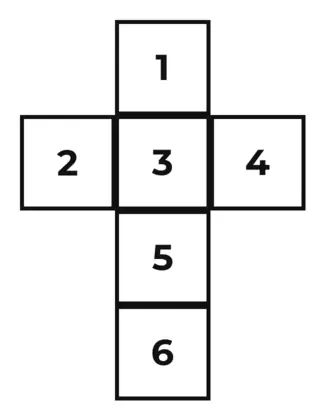
Years 5–6 · 3D shapesSheet 178
Net of a Cube
Years 3–4 · AnglesSheet 135
Acute, Right and Obtuse Angles Castle
Years 2–4 · SymmetrySheet 63
Butterfly Lines of Symmetry
Years 3–4 · Addition and subtractionSheet 96
Column Addition
Years 3–4 · Addition and subtractionSheet 97
Column Subtraction
Educational quiz app · Ages 5-10
More learning in the Owee app
Owee turns topics like this into quizzes for children aged 5 to 10, and a treehouse grows as they learn. No ads, no chat, no strangers.
- Family-friendly
- No ads
- Private
Educational quiz app · Ages 5-10
More learning in the Owee app
Owee turns topics like this into quizzes for children aged 5 to 10, and a treehouse grows as they learn. No ads, no chat, no strangers.
Scan with your phone camera
- Family-friendly
- No ads
- Private