Educational quiz app · Ages 5-10
This is what learning looks like


Educational quiz app · Ages 5-10
This is what learning looks like
No nagging required. Keep the learning going after the worksheet, with every question read aloud and Owee guiding each step.
Scan with your phone camera
- Family-friendly
- No ads
- Private
Science · Colouring and writing worksheet
Everyday Materials Worksheet: What Is It Made From? (Free KS1 Science)
Everything around us is made from a material. A chair might be an object, but the material it is made from could be wood. This free worksheet helps children aged 5 to 7 begin to separate those two ideas, which is one of the first big concepts in Year 1 Science.
Print it on a single sheet of A4, hand over the colouring pencils, and let your child colour, talk about and name four familiar objects. It works at home or as a quick classroom warm-up, with no preparation needed beyond a printer.
What your child is learning
‘distinguish between an object and the material from which it is made’
Year 1 Science: Everyday materials, National Curriculum in England. Source and licence
What Is It Made From?
Free Science worksheet · Ages 5 to 7
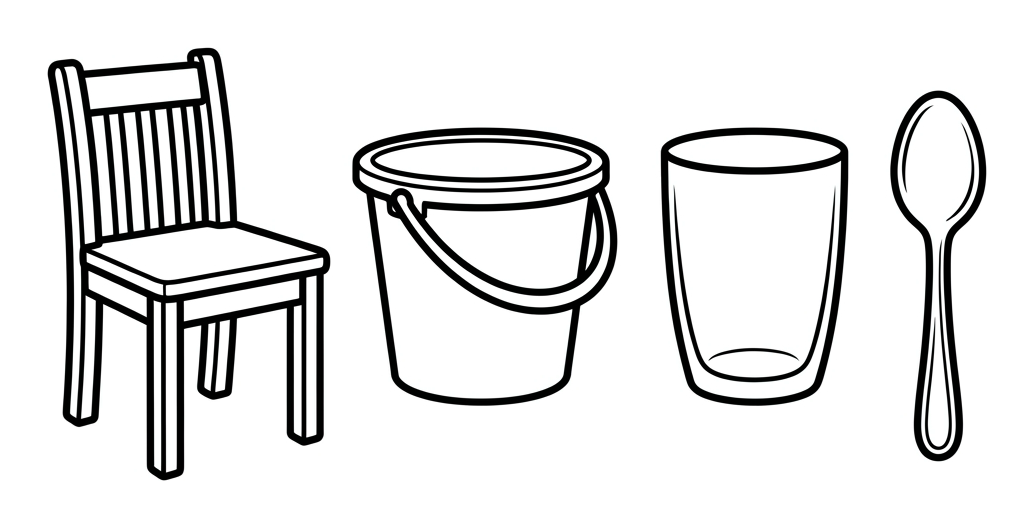
Activity 1
Colour the four objects. Choose colours that look like the real thing. Colour the glass very lightly so it still looks see-through.
Activity 2
Finish each sentence. Write the material on the line. Use the word bank to help you.
The chair is made from
The bucket is made from
The cup you can see through is made from
The spoon is made from
Which object is see-through?
 What Is It Made From?Sheet 38
Answers: What Is It Made From?
Sheet 38
- The chair is made from — wood
- The bucket is made from — plastic
- The cup you can see through is made from — glass
- The spoon is made from — metal
- Which object is see-through? — the glass cup
For grown-ups. Free worksheets and the Owee quiz app at owee.world
Answer key
- The chair is made from — wood
- The bucket is made from — plastic
- The cup you can see through is made from — glass
- The spoon is made from — metal
- Which object is see-through? — the glass cup
Telling an object apart from its material
One of the trickiest ideas for young children in Year 1 Science is that an object (the thing itself) is not the same as the material (what it is made from). A spoon is an object; the metal it is made from is the material. The same material can be used to make many different objects, and the same object can sometimes be made from different materials. Encouraging your child to finish the sentence "This is made from..." for everyday things builds this distinction naturally over time.
The everyday materials children should know
By the end of Year 1, children are expected to identify and name a variety of everyday materials, including wood, plastic, glass, metal, water and rock. This worksheet focuses on the four solid materials children meet most often around the house: wood, plastic, glass and metal. Pointing at objects during the day and asking what they are made from is one of the simplest ways to reinforce these words.
How to use this worksheet at home or school
Start by looking at the four pictures together and naming each object out loud: chair, bucket, glass, spoon. Then talk about what each one is made from before your child writes the material on the lines. The word bank above the sentences means children who are still learning to spell can copy the correct word. Watch for two common slips: naming the object again ("it's made of spoon") or naming a colour ("it's made of silver"). If that happens, ask "What stuff is it made from?" and point to the word bank.
Talking about why materials are chosen
Once your child is confident naming materials, you can stretch the conversation a little. Ask why a drinking glass is made from glass and not wood, or why a bucket is made from plastic rather than metal. This gentle questioning introduces the idea that materials have properties, such as being see-through, waterproof, strong or bendy. The last sentence on the sheet asks which object is see-through, as a first step. In Year 2, children go on to compare which materials suit which jobs.
Frequently asked questions
What age is this everyday materials worksheet for?
It is designed for children aged 5 to 7 (Year 1 and into Year 2), matching the KS1 Science topic on everyday materials. Confident younger children and those needing a little revision will also find it useful.
Which materials does the worksheet cover?
It focuses on the four solid everyday materials children meet most often: wood, plastic, glass and metal. The full Year 1 list also includes water and rock, which you can discuss alongside the sheet.
What is the difference between an object and a material?
An object is the thing itself, such as a spoon or a chair. The material is what it is made from, such as metal or wood. Telling these apart is a key Year 1 Science objective and the main aim of this worksheet.
Is this printable free and how do I print it?
Yes, it is completely free. Print it on a single sheet of A4 from your browser. No login or sign-up is needed, and there is nothing to assemble.
Does this match the National Curriculum?
Yes. It supports the Year 1 'everyday materials' objectives, helping children distinguish an object from its material and name common everyday materials such as wood, plastic, glass and metal.
Curriculum links
- Year 1 Science: Everyday materials (statutory): 'distinguish between an object and the material from which it is made'
- Year 1 Science (Everyday materials): 'identify and name a variety of everyday materials, including wood, plastic, glass, metal, water, and rock'
- Year 1 Science (Everyday materials): 'describe the simple physical properties of a variety of everyday materials'
Quoted word for word from Department for Education documents: the National Curriculum in England, the EYFS framework or the RSHE guidance. Contains public sector information licensed under the Open Government Licence v3.0.
Made by The Owee education team. Updated 13/10/2026. Free to print and share.
More science worksheets
All Year 1 Science worksheets →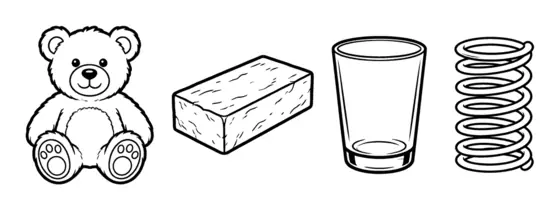
Years 1–2 · MaterialsSheet 36
Material Properties Sort
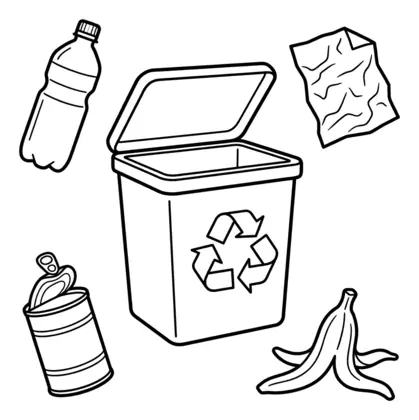
Years 1–2 · MaterialsSheet 37
Sort It for Recycling
Years 1–2 · AnimalsSheet 79
Animals and Their Survival Needs
Years 1–2 · AnimalsSheet 27
Animals of the Frozen Poles
Years 1–2 · AnimalsSheet 28
British Garden Birds Spotting Sheet
Years 1–2 · AnimalsSheet 29
Carnivore, Herbivore or Omnivore?
Educational quiz app · Ages 5-10
More learning in the Owee app
Owee turns topics like this into quizzes for children aged 5 to 10, and a treehouse grows as they learn. No ads, no chat, no strangers.
- Family-friendly
- No ads
- Private
Educational quiz app · Ages 5-10
More learning in the Owee app
Owee turns topics like this into quizzes for children aged 5 to 10, and a treehouse grows as they learn. No ads, no chat, no strangers.
Scan with your phone camera
- Family-friendly
- No ads
- Private